
Learn with us
Teachers, book your students into one of our free, exclusive experiences at the Australian Space Discovery Centre.
Our Schools in Space program is designed for students in Years 3 to 12. If you are enquiring about other year levels, please contact us before booking.
Each program includes embedded learning outcomes and is aligned with the Australian Curriculum v9.0.
General learning outcomes
- Learn about the impacts of space technology on everyday life.
- Discover examples of modern Australian space activities and innovation, including the establishment of the Australian Space Agency in 2018.
- Identify a wide range of careers and training pathways associated with the growing space sector.
- Understand and identify relevant scientific principles governing space activities.
General Australian Curriculum (v9)
- Science as a Human Endeavour.
- Science inquiry and understanding, including Earth and space sciences and Physical sciences.
- Critical and Creative Thinking.
- Ethical Understanding.
- Asia and Australia’s Engagement with Asia.
In-centre experiences
Schools can book either a General Session or a Workshop visit to the Discovery Centre.
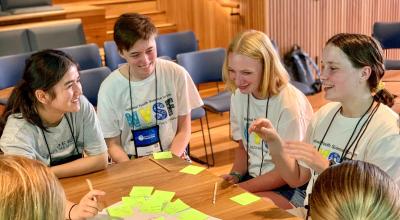
During their visit, students will explore our Space Gallery, rotating exhibitions, and space-related career content.
General sessions
In-centre
General sessions
These visits are free, 75-minutes in duration, and can accommodate up to 50 students plus teachers.
Workshops
In-centre
Workshops
These visits are free, 75-minutes in duration, and can accommodate up to 30 students.
Listed below are our topic-focused workshops with targeted learning experiences.
Space Garden 4 Schools (Years 6 to 10)
Participants will investigate the most useful plants to send on a space mission.
In this workshop, participants will:
- Explore the reasons for growing plants in space, and how research in this field helps improve life on Earth.
- Consider the challenges of growing plants in extreme environments.
- Use critical and creative thinking to select a suitable plant for a space experiment.
- Design and prototype their own ‘grow-box’.
This workshop links to the AC (V9) Food and Fibre Curriculum Connection.
S.C.R.A.P. 4 Schools
(Years 3 to 8)
In this workshop, participants will think like engineers as they iteratively design, test and improve paper rockets.
In this workshop, participants will:
- Explore basic principles of rocket design and projectile motion.
- Design, make, and test a paper stomp rocket.
- Investigate how launch conditions and design changes influence flight distance.
- Science Inquiry.
- Physical Sciences.
- Processes and Production Skills.
- Measurement and Geometry.
- Critical and Creative Thinking.
Galactic Quest
(Years 7 to 10)
In this workshop, participants will use clues to solve challenges and build a cube satellite.
In this workshop, participants will:
- Use critical and creative thinking skills to solve exhibit-based challenges.
- Identify the key components of a CubeSat and understand their functions.
- Build a cube satellite as a team.
- Develop an understanding of satellite technology and its real-world applications.
- Science as a Human Endeavour.
- Science Understanding.
- Critical and Creative Thinking.
- Number sense and Algebra.
- Literacy.
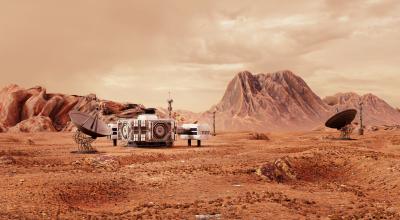
Mission Control
Combining Civics and STEM skills this is a two-part workshop, delivered at the Australian Space Discovery Centre and Parliament of South Australia.
Virtual
Online experiences
These free sessions are 45-minutes in duration and require a minimum of 15 students.
Operation: Goldilocks
(Years 5 to 8)
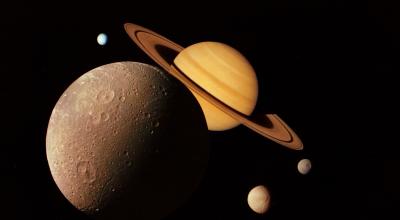
Using concepts of scale and distance, participants can create their own scale model of the solar system.
By the end of this activity, participants will be able to:
- Understand that Astronomical Units (AU) are used to describe planetary distances.
- Recall that our solar system consists of Terrestrial (rocky), Gas and Ice planets.
- Describe the ‘Goldilocks Zone’ and recall characteristics that make Earth suitable for supporting life.
- Create a scale diagram of planetary distances within our solar system.
- Earth and Space Sciences.
- Science Inquiry (Processing, Modelling and Analysing).
- Number and Algebra (Representing Ratios).
Space Fact or Fiction
(Years 3 to 12)
Test your space knowledge to see if you can tell the difference between space facts or space fibs.
In this session, participants will:
• Learn about the impacts of space technology on everyday life.
• Discover examples of modern Australian space activities and innovation, including the establishment of the Australian Space Agency in 2018.
• Identify a diverse range of careers and training pathways associated with the growing space sector.
- Science as a Human Endeavour.
- Critical and Creative Thinking.
- Ethical Understanding.
Space Garden 4 Schools
(Years 6 to 10)
Participants will investigate the most useful plants to send on a space mission.
Teachers, in this session, students will use Space Garden resources available on our website. Please have these resources ready before attending your registered session.
In this activity, participants will:
- Explore the reasons for growing plants in space, and how research in this field helps improve life on Earth.
- Consider the challenges of growing plants in extreme environments.
- Use critical and creative thinking to select a suitable plant for a space experiment.
- Begin to design and prototype their own ‘grow-box’.
This workshop links to the AC (V9) Food and Fibre Curriculum Connection.
Ask our Space Communicator
(Years 3 to 12)
In this 15-45 minute session, you can ask us anything about space, planetary science, rocketry, space careers, or more.
In this session, participants will:
- Get a chance to ask questions about space, planetary science, rocketry, space careers, and more.
- Hear from a real person working in the space sector.
- Explore a wide range of space science concepts and technology.
- Gain exposure to possible career pathways in the space sector.
- Science as a Human Endeavour.
- Science understanding, including Earth and space sciences and Physical sciences.
- Asia and Australia’s Engagement with Asia.
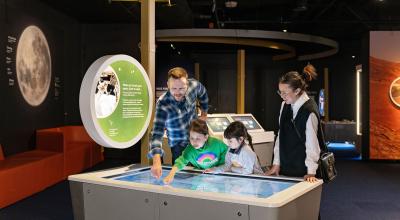
Downloadable resources and activities
We have created learning resources for parents and teachers to continue inspiring young people at home and in the classroom.
Venue safety information
The Australian Space Discovery Centre has created several resources for teachers and schools to learn more about the venue, its operations and the Centre-wide disability access.
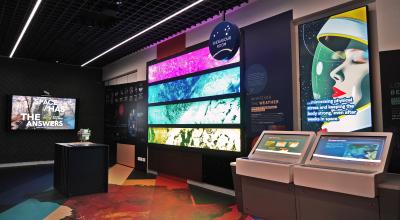
Teacher-led resources


Frequently Asked Questions
The Discovery Centre uses Humanitix, an event management platform, to schedule bookings for all school sessions.
At the time of booking, teachers will need to provide the following information:
- Teacher's name and contact number (attending the session)
- Student year level
- Group size including adults and students
- Choice of session.
Once a session has been booked, the teacher will be emailed their booking confirmation and materials to use in the classroom before the session date.
School sessions and workshops are not intended for public or individual student bookings. Bookings made by these groups may be cancelled.
From time-to-time, we may have urgent need to cancel your booking due to operational conflicts. We will endeavour to provide you as much advanced notice as possible if your booking needs to be cancelled.
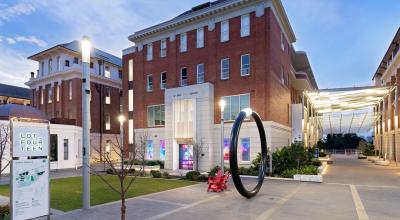
The closest drop off zone for school coaches is on the western side of Frome Road, in front of the Adelaide University. There is an event bus park just after the main bus stop.
Duty of Care rests with the teachers or adults associated with each group.
Liability insurance and conserving visitor safety through Workplace Health & Safety initiatives are core components of the Australian Space Discovery Centre’s operations.
Resources are available for teachers to know more about the Discovery Centre's Certificate of Currency (General Liability) and Venue Risk Assessment.
While our school sessions are designed for Year Levels 3 to 12, teachers can book for any Year Level.
If the Year Level does not meet our minimum recommendations, we suggest emailing us at info@discover.space.gov.au, where we can provide advice on the content difficulty.
Sometimes, our staff may recommend changing to a different workshop type that is more suitable.
We usually request that larger groups be split into smaller sub-groups. Sub-groups may either be rotated through different activities or have separate start/finish times assigned to them. We will work with you to find a suitable solution.
The Discovery Centre may contact a teacher to discuss bookings that are made for groups smaller than 15 students.
Please email us at info@discover.space.gov.au to discuss possible alternative arrangements.
Please email us at book@discover.space.gov.au to discuss potential session times and availability.
Downloadable resources and activities
We have created learning resources for parents and teachers to continue inspiring young people at home and in the classroom.