
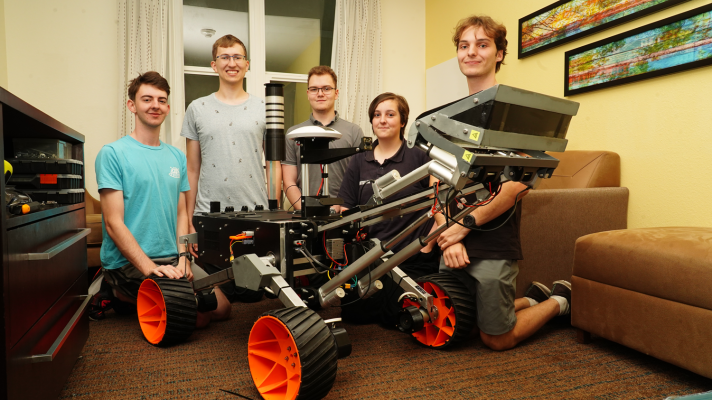
ROAR-ing to the Moon.
Australia is home to world-class robotics talent, and Queensland University of Technology (QUT) is leading the innovative charge.
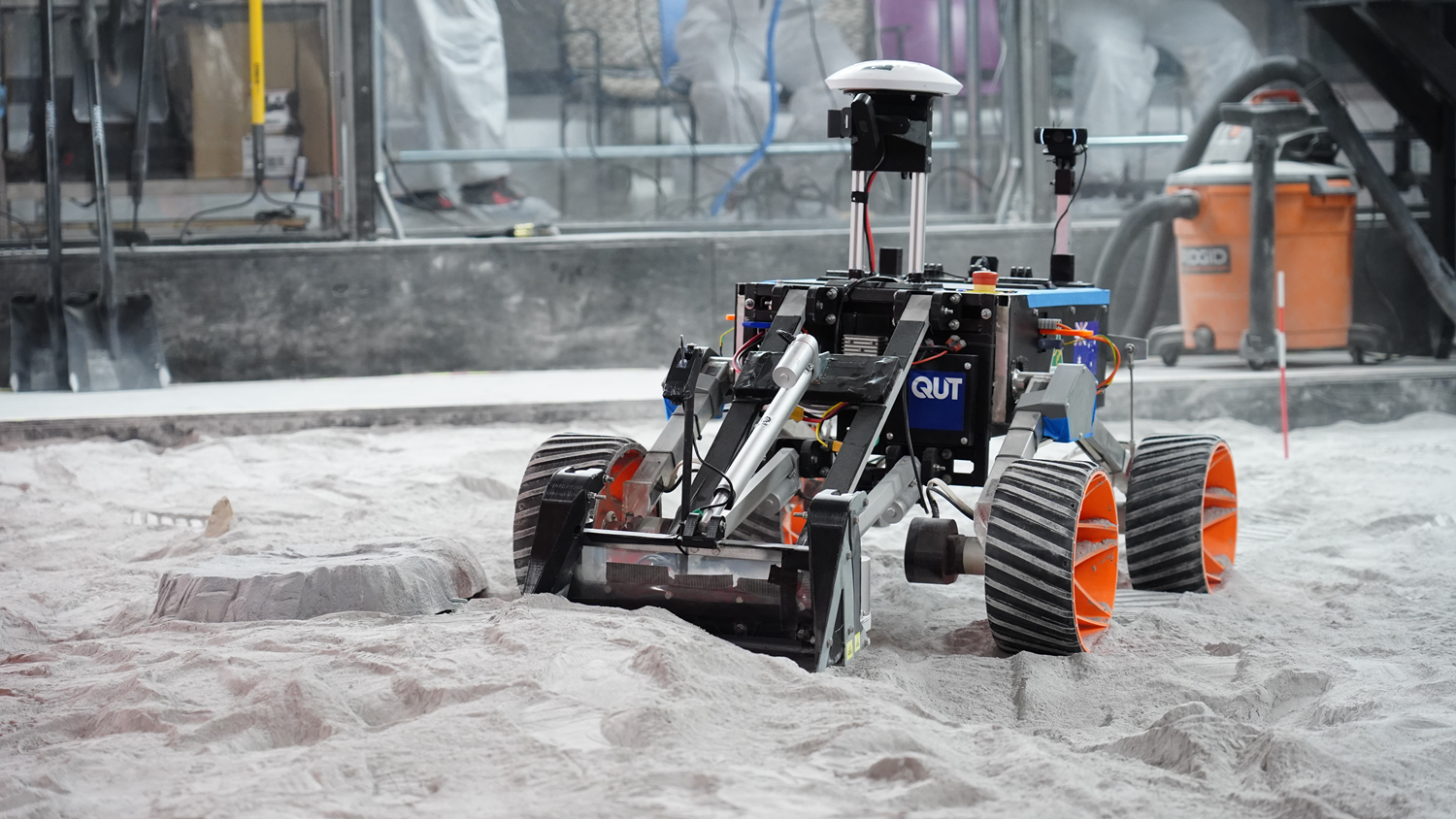
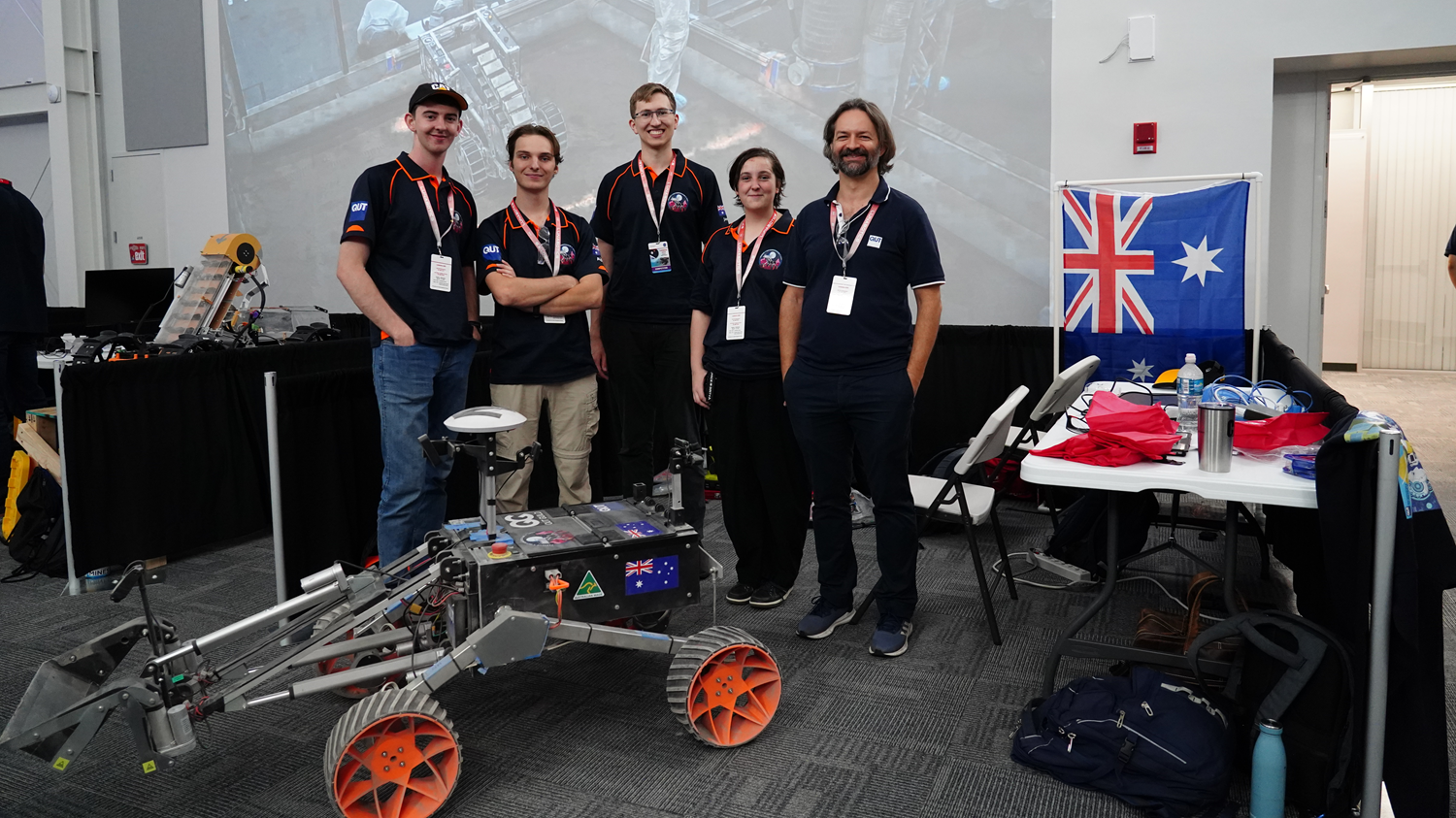
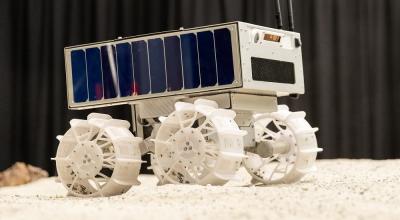
We caught up with the University's ROAR (Remote Off-world Autonomous Robotics) team that has made waves with its rover Perseus, including showcasing the cutting-edge Aussie technology at NASA’s 2025 Lunabotics Challenge.
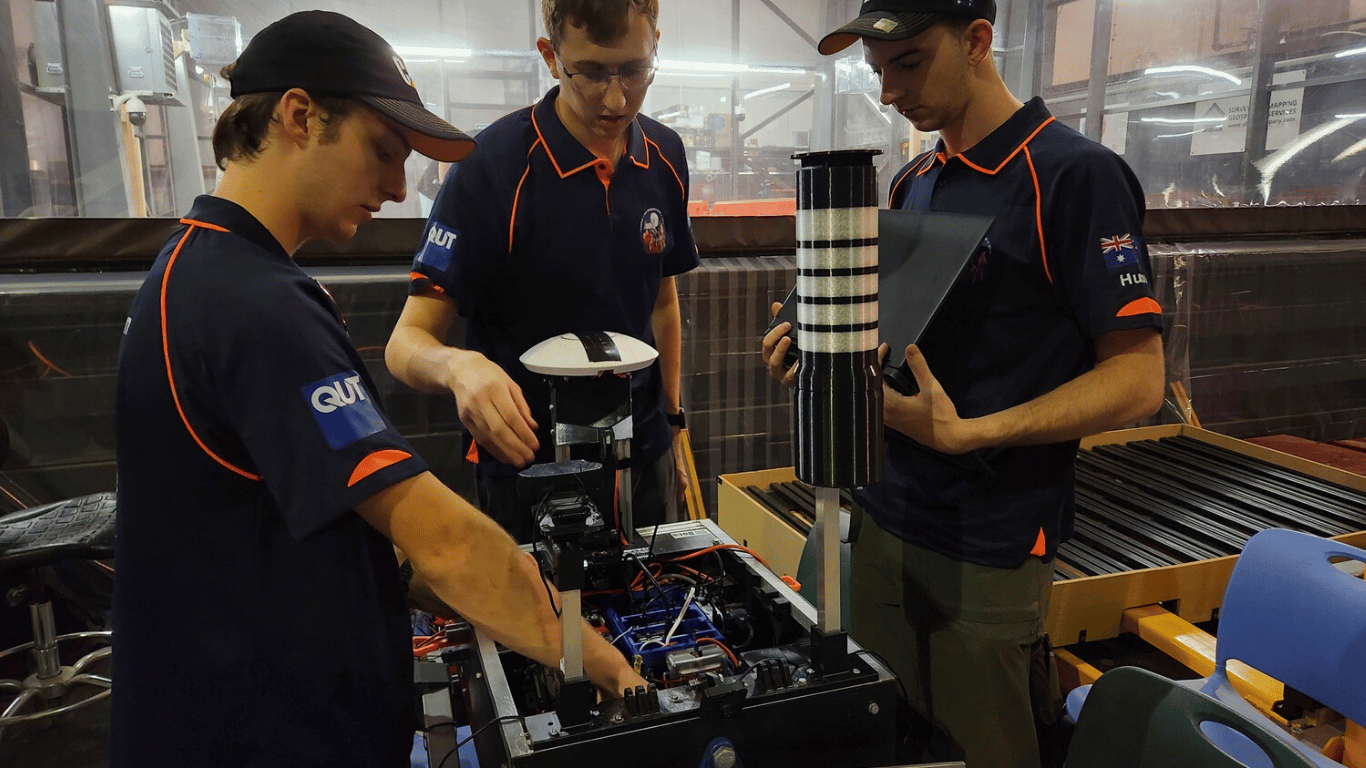
In this feature, five mechatronics engineering students from the ROAR team share how hands-on experience with Perseus sharpened their technical expertise and project management skills.
Their academic mentor Associate Professor Thierry Peynot highlights Yandiwanba, QUT's unique testing facility that simulates lunar and terrestrial conditions, which is critical for advancing rover technology and automation.
Named from a Yugara word meaning ‘to go from the ground to a higher place’, Yandiwanba supports research for Roo-ver, Australia’s first lunar rover, which is expected to land on the Moon around the end of this decade.
Meet Roo-ver
The Australian-made rover that will go to the Moon with NASA.
Associate Professor Thierry Peynot, Team's Academic Mentor
Thierry is also one of the QUT's researchers that are part of the ELO2 consortium developing Roo-ver, Australia's first lunar rover.
Australia has a well-recognised, world-class robotics research and education landscape, which inspires our talented students to study robotics and develop a career in the field.
Many of our alumni are being hired by the top Robotics and AI companies in the world or create new robotics companies here in Australia.
It is a unique space to develop and test the operation of rovers, and robots more generally, in realistic field conditions found on the moon or on Earth.
The Yandiwanba facility is the largest covered testing environment in Australia for field robotics and equipment under realistic lunar conditions.
This type of testing is essential for research, education and future deployment of future robotics and automation capabilities in industry.
Aidan Lipinski, Team's Lead
Aidan joined ROAR in his first week of his course at QUT.
The biggest challenge I have faced while managing the Perseus project has definitely been tracking and managing communications between all stakeholders.
From ensuring the sub-system leads are working to designing compatible systems as well as organising media opportunities with the university, there is so much essential information that must be relayed.
I have been grateful to have a lot of amazing support within the core ROAR team and across the University, including the QUT Robotics Club and Executives, who ensured we were provided our lab access and funds.
QUT’s Faculty of Engineering, School of Robotics and Electrical Engineering and Centre for Robotics for overseeing our work and support with the budget.
Huon Swales, Website UI Lead
Huon is also pursuing Masters of Robotics and AI.
The professional standard that we hold ourselves to has pushed me to elevate my own personal standards and helped make me a better team player and capable engineer.
At ROAR, I've taken part in a number of public events and demonstrations, which has developed my confidence and communication abilities.
The work I do as part of the rover team and my coursework are mutually beneficial. Being able to work on Perseus and learn by doing has given me experience I can apply to my degree
Likewise, as a student at QUT I am pushed to learn new useful tools and concepts that I wouldn't have found on my own. The best advice I can give a new student is to get involved in clubs and their projects even if you don't already have skills. They're an excellent place to learn just as I have.
Maurice Blake, Team Member
Maurice is also pursuing a minor in Nuclear and Particle Physics, and Cosmology.
It is a major leap for Australia in terms of the space sector and our general presence in robotics.
It's a project that is actively being developed and is close enough to home that robotics’ enthusiasts like me can hopefully be involved with.
It was an eye-opening experience to learn more about other internationally developed robots and their unique solutions to tackle the problem of excavation.
The teams in the US had years to refine solutions in a different environment to the one at the Australian Rover Challenge and hence had some really interesting designs that I wouldn't have thought of.
James Nichol, Embedded Lead
James is also studying a second major in Computer and Software systems.
It would be the importance of good administration. If any one of your tasks don't happen, get delayed, or aren't properly communicated, the entire project stalls.
Much of that work never gets noticed until it goes wrong, but when it's going well, the entire project runs more smoothly.
Far longer than I can list here! Everything from software development to electronic and hardware design, to CAD modelling, report writing, documentation, and more.
Almost all of my engineering-related skills come from actually making things, most of which have been either in a professional capacity or building robotic systems.
Brianna Rablin, QUT Robotics Club President
Brianna is also studying a Bachelor of Paramedicine with a minor in Advanced Electronics.
Organising travel to Lunabotics in the US. We were invited to demonstrate our technology in six weeks with no immediate funding. But thanks to incredible support from QUT and QUT Guild, we secured funds, navigated international travel, and embarked on an unforgettable journey.
Lunabotics brought together such a diverse community from NASA engineers, students and researchers from across America.
One of my most memorable conversations was on Space Medicine, a field I hadn’t known existed! The exposure broadened my perspective on what’s possible.

Which space career is right for you?
Navigate a day on the Moon in our short interactive quiz to find out which role best suits your strengths.
All images in this article were supplied by the QUT's ROAR team.