Australia is taking a significant step toward safeguarding the future of space.
As the newest Associate Member of the Inter-Agency Space Debris Coordination Committee (IADC), the Australian Space Agency is strengthening the nation’s role in setting international standards for space debris mitigation. The IADC is a global body dedicated to coordinating efforts to address the growing challenge of space debris.
With more satellites and rockets being launched than ever before, the risk of collisions in orbit is increasing and threatening essential services that support our everyday lives.
Enhancing cooperation and global safety
Through collaboration, conferences, and a proposed Australian Space Debris Research Community, the Agency aims to harness national expertise to ensure space remains safe and sustainable for generations to come.
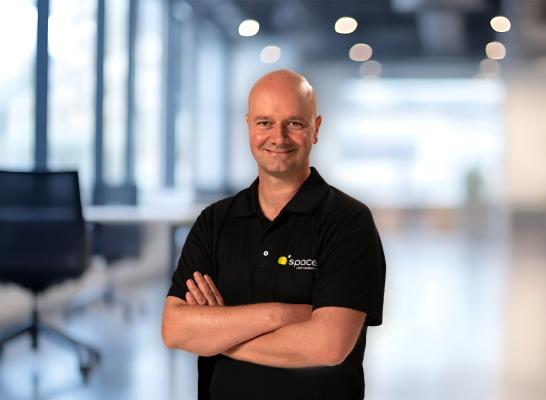
In this interview, Associate Professor Melrose Brown from UNSW Canberra briefly reflects on the urgency of space sustainability.
Last month’s UNSW Canberra Space Domain Awareness and Space Traffic Management Conference highlighted Australia’s leadership in this area. This included Christopher De Luis, General Manager from the Agency's Office of the Space Regulator delivering a keynote that reinforced Australia's commitment to ensuring space remains secure and sustainable for future generations.
Associate Professor Brown was one of the key organisers of this premier conference, which helped spotlight how the Australian space sector can safely and responsibly operate within the space domain.
What inspired you to research space domain awareness?
My interest in space domain awareness crystallised during a workshop in 2016 that explored what managing space traffic might look like a decade into the future. The exercise revealed just how quickly the space environment was becoming fragile, and how few safeguards were in place.
It was a moment that shifted the issue from an abstract “tragedy of the commons” to a practical, urgent challenge. I realised that anyone who cares about the future of space needs to contribute — and I chose to see where I could help make a difference.
What's your view of Australia’s role in managing space debris incidents?
Australia experiences an outsized number of debris re-entries, which gives us both a national interest and a responsibility to lead. We’re well placed to contribute practical research, improve prediction and response, and work constructively with partners to manage risks.
With our geography, technical expertise, and growing research community, Australia can play a unique global role in ensuring space remains safe and usable for generations to come.
Australia is now part of the IADC. Why is this a significant moment for our space sector?
Becoming an Associate Member of the IADC is a significant milestone because it aligns Australia’s growing space activity with a stronger role in global stewardship.
Our nation is launching more mass into orbit each year, shifting from only a few kilograms at a time to 350 kg or more per launch, with further growth expected.
As our contribution to the space economy increases, so does our responsibility to help shape safe, practical, evidence-based approaches to debris mitigation. Membership ensures Australia is directly engaged in setting those international standards.
What were some key highlights from the recent UNSW Conference?
For the space-debris community, one of the most valuable outcomes was uncovering just how much expertise and experience exists across Australia.
The conversations highlighted an untapped opportunity for deeper connection between the Agency and researchers. Regulators often can’t easily see emerging work, and researchers don’t always know what information is most helpful for decision-making.
More broadly, the conference has become a leading regional forum for both Defence and civilian space-domain-awareness issues, attracting strong international engagement. I’m proud to help create a place where our community can connect and collaborate to bridge gaps between disciplines.
Why should the sector get involved in the proposed Australian Space Debris Research Community?
This community is an opportunity to bring together Australia’s strengths — technical expertise, geographic advantage, and a collaborative culture — to address one of the most important challenges in space.
By participating, organisations can help shape practical, nationally relevant solutions and contribute to international leadership in debris mitigation. It’s also a welcoming environment for new researchers and students, and we encourage anyone motivated by the future of space sustainability to get involved.
EOI applications close on 12 December 2025
Submissions will assist the Agency map Australia’s current research landscape, identify strengths and gaps, and highlight emerging areas of relevance.