
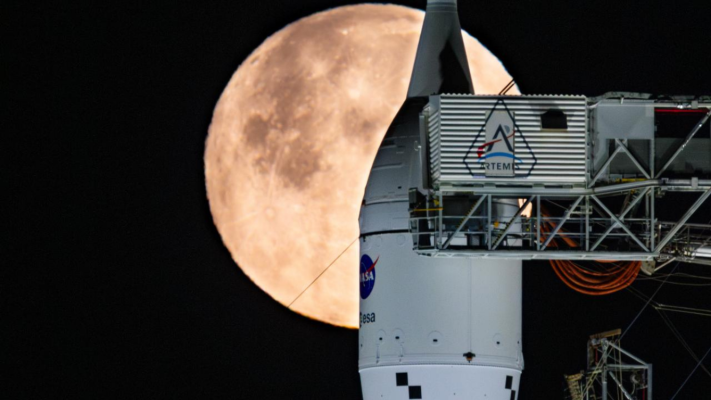
Get ready, Moon‑watchers!
NASA will soon take a giant leap back into deep space with the launch of Artemis II — the first crewed mission to venture beyond Earth orbit since Apollo 17 in 1972.
Four astronauts will take their Orion spacecraft for a highspeed loop around the Moon, fully testing the launch vehicle, the spacecraft and its systems before humans return to the lunar surface.
If this sounds familiar, it should. Artemis II is following in the footsteps of Apollo 8, the legendary 1968 mission that first carried astronauts around the Moon.
The connections between the two missions run deeper than engineering — they’re rooted in mythology.
Apollo, the Sun-associated god of knowledge, and Artemis, the Moon-linked goddess of the hunt, were twins in classical lore — making their NASA missions fitting siblings too.
NASA’s spacefaring naming traditions
During the Space Race of the 1960s and 70s, NASA used names from classical mythology for its human spaceflight programs: Mercury, the messenger of the gods, for their first spacecraft carrying a single astronaut; Gemini, the twins, for the two-person vehicle; and Apollo, for the missions that would return knowledge from the Moon.
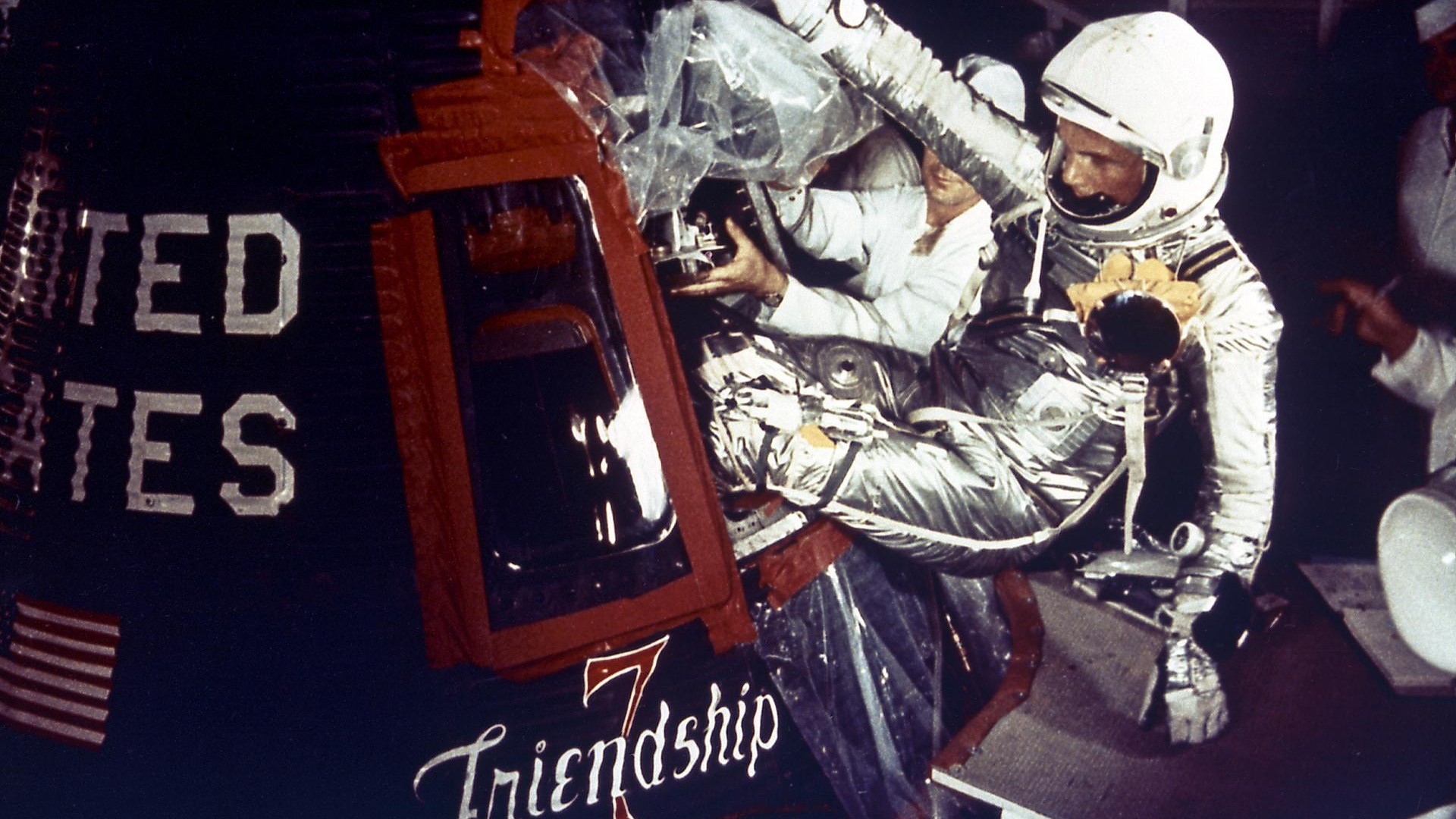
Individual spacecraft in the Mercury program were named by their astronaut pilot. First American in space Alan Shepard named his spacecraft Freedom 7 – the “7” because it was the seventh Mercury capsule made.
This started a tradition and the other Mercury astronauts added 7 to the name of their spacecraft to honour the seven members of the Mercury astronaut team: Liberty Bell 7, Friendship 7, Aurora 7, Sigma 7, Faith 7.
Although Gemini spacecraft did not have individual names, naming conventions took on operational importance during Apollo missions. Starting with Apollo 9, both the Command Module and Lunar Module received distinct names to avoid confusion during radio communications. Some became iconic: Apollo11’s Columbia and Eagle; Apollo 17’s America and Challenger.
Name change
Since the 1970s, NASA has tended to give its human spaceflight programs more prosaic names such as Skylab, Space Shuttle, and International Space Station, although individual Space Shuttles were named after ships significant in the exploration of the world’s oceans: Columbia, Challenger, Discovery, Atlantis and Endeavour.
The five SpaceX Crew Dragon spacecraft currently used for NASA, SpaceX and Axiom flights were named by their first crews, honouring historic spacecraft like Endeavour and Freedom and celebrating the human spirit through the Resilience, Endurance, and Grace vehicles.
Artemis II continues this long‑standing tradition of meaningful naming. Its Orion crew capsule has been christened Integrity — a fitting title for a mission built on trust, precision, and the enduring human drive to explore.
As the world watches Artemis II begin its journey, these names remind us that space exploration is not just an engineering feat but an epic — one woven from history, mythology, and the timeless quest to reach beyond our world.
Artemis unlocking Earth-based innovations
Learn about the Earth-based innovations and multifaceted goals of the Artemis program.
Main image caption: A full Moon is seen shining over NASA’s SLS (Space Launch System) and Orion spacecraft, atop the mobile launcher in the early hours of February 1, 2026.