
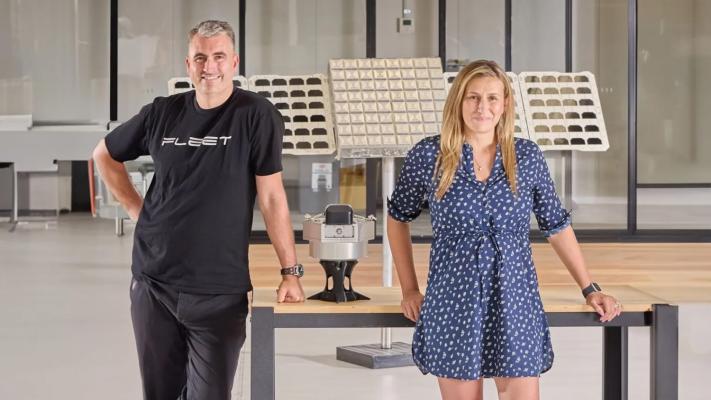
In ten years, Fleet Space has gone from a start-up to an $800m global company – revolutionising resource exploration on Earth and in space.
Key facts
Key facts
- Adelaide-based Fleet Space provides advanced geophysical technology, enabled by its own network of satellites, to accelerate sustainable mineral resource exploration worldwide.
- SPIDER, a space version of its ExoSphere technology, is designed to identify potential resources on the Moon and other celestial bodies useful to human space exploration efforts.
- Backed by Agency programs, Fleet Space will deploy SPIDER as part of US company Firefly Aerospace’s Blue Ghost Mission 2.
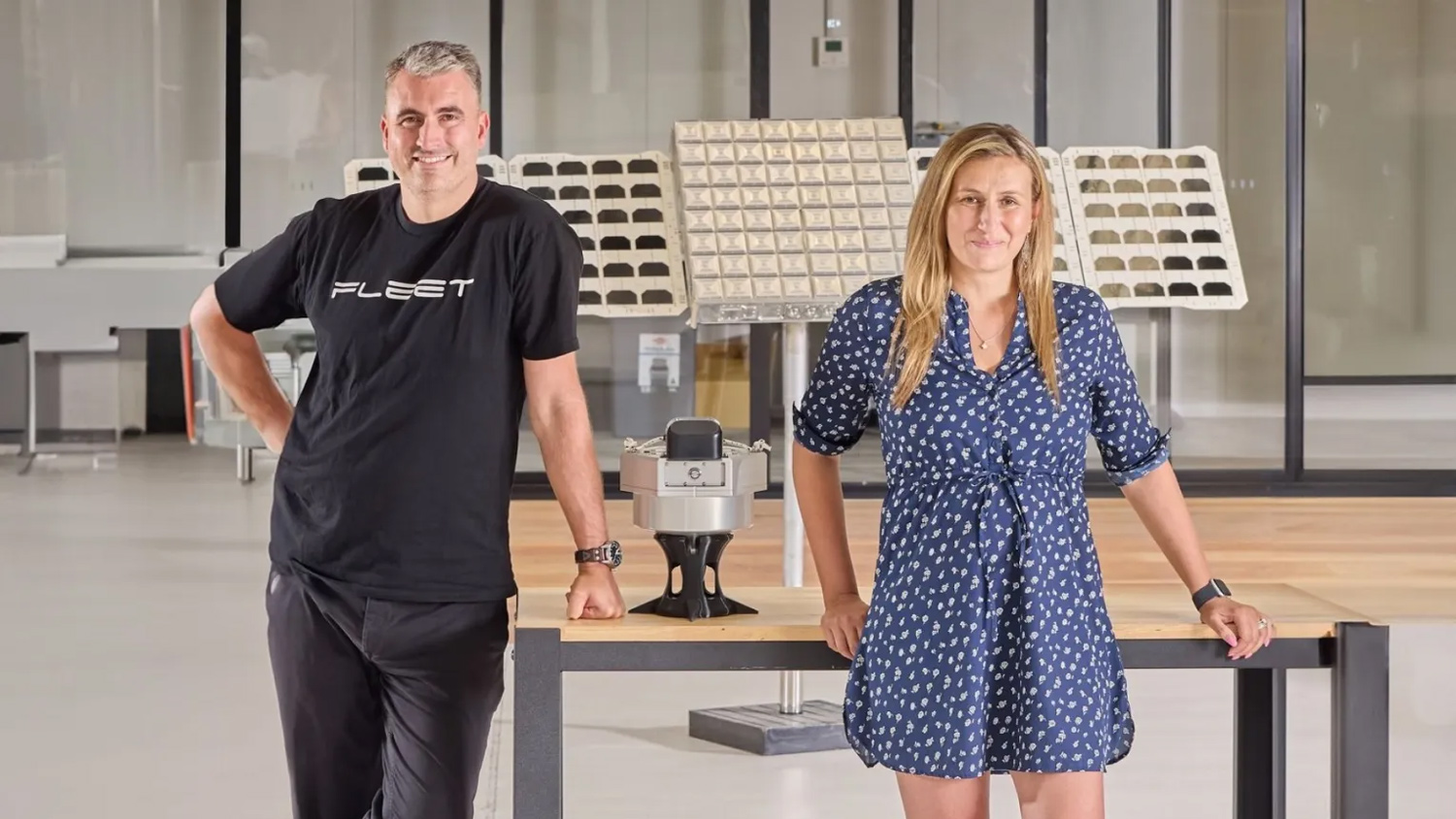
Founded by space engineer Flavia Tata Nardini and entrepreneur Matt Pearson in 2015, Fleet Space is a prime example of Australian ingenuity delivering benefits on both sides of the Karman line.
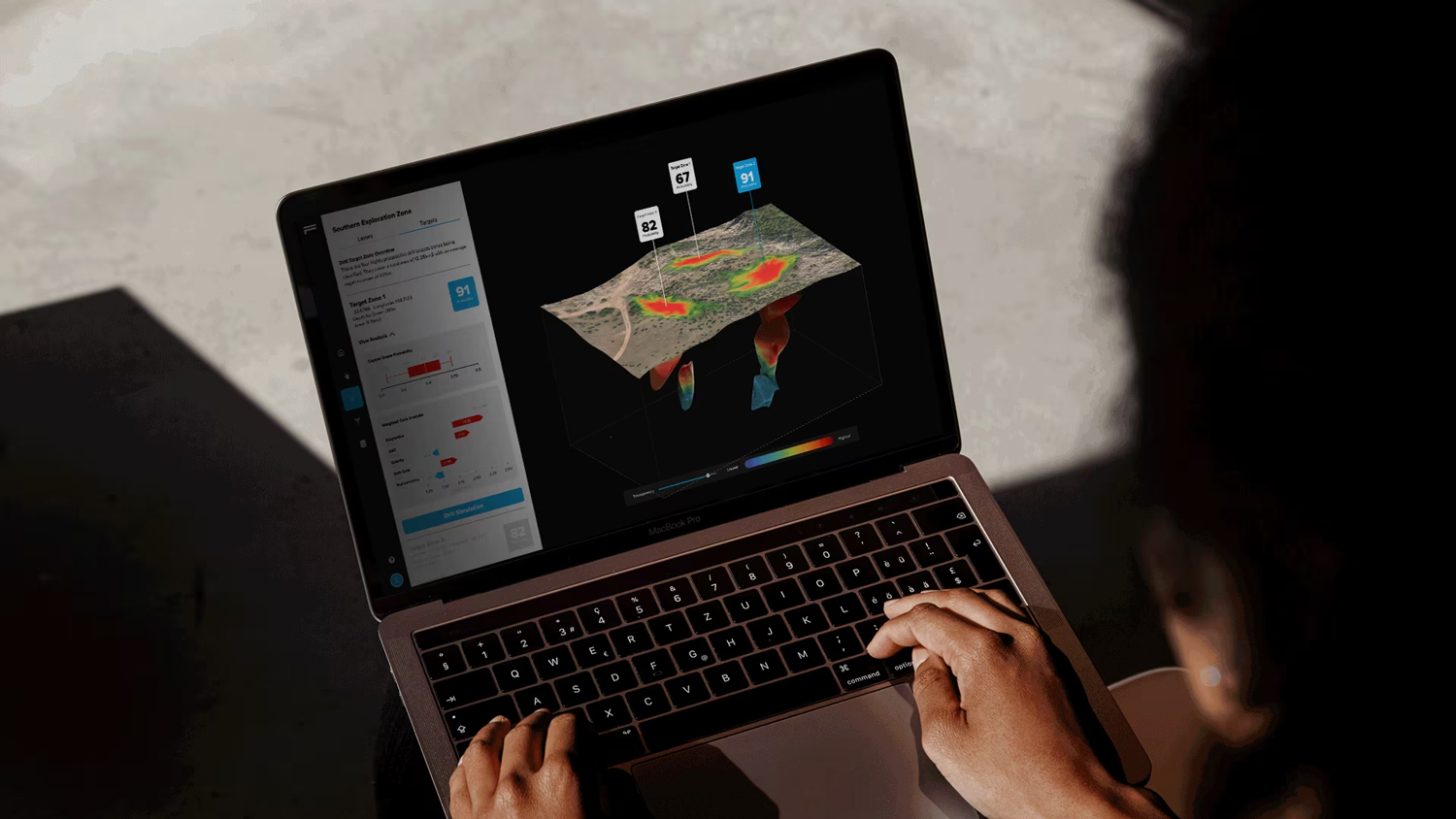
The company combines Low Earth Orbit (LEO) satellites, Internet of Things-enabled geophysical sensors in the ground, and AI technology to deliver real-time 3D imaging of the Earth’s subsurface. This system, called ExoSphere, enables a fast, scalable, and low-impact process for discovering critical mineral resources and accessing them responsibly.
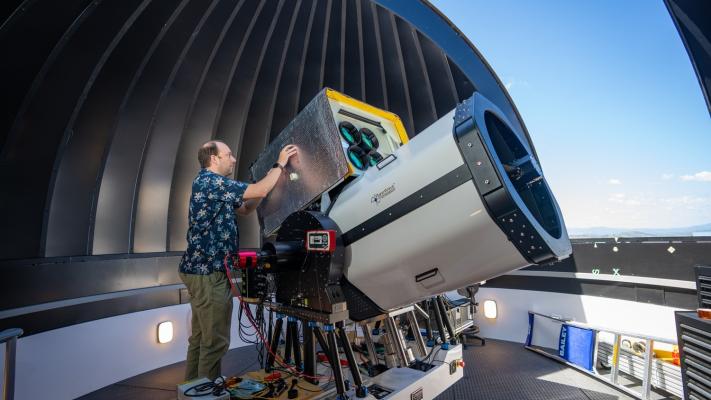
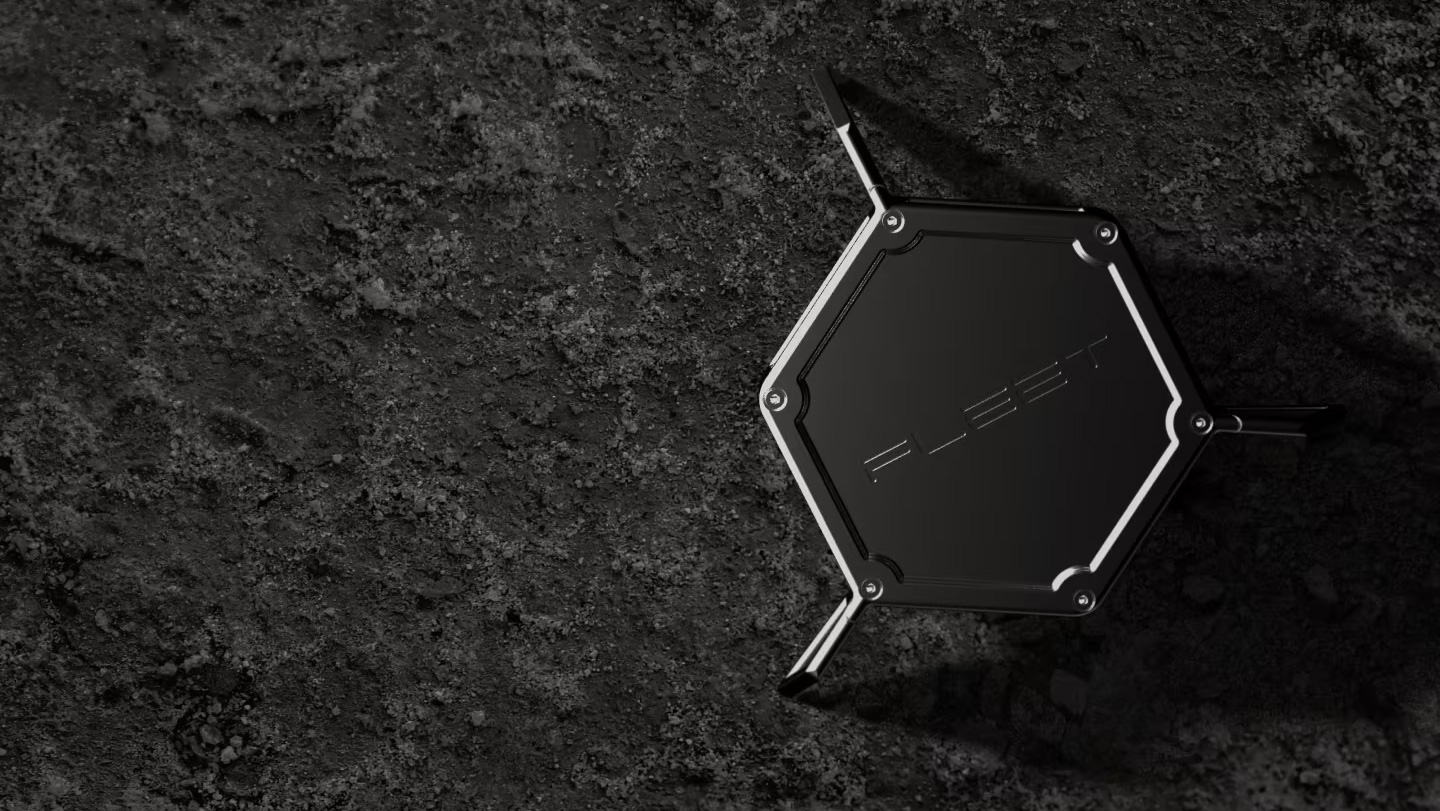
Hundreds of surveys have been deployed across five continents worldwide to date – and the company isn’t stopping on Earth. By applying the same principle to space exploration, Fleet Space has developed a device called SPIDER (Seismic Payload for Interplanetary Discovery, Exploration and Research) to image the subsurface of the Moon and other interplanetary terrain.
US company Firefly Aerospace is set to deploy SPIDER on the Moon with its Blue Ghost Mission 2. It will search for water ice deposits, which will prove to be a valuable resource as human space exploration efforts like NASA’s Artemis venture further.
The combination of terrestrial and interplanetary potential has resonated with investors and market observers. Fleet Space closed a 2024 investment round with a valuation of $800m, and was named Australia’s Most Innovative Company by the Australian Financial Review in 2025. The Agency’s Moon to Mars initiative has also invested in Fleet Space, initially through the Supply Chain stream and most recently through a $4m Demonstrator Mission grant to develop SPIDER for the Moon.
Flavia's reflections on success
Having just ticked over the ten-year mark, Fleet Space now operates a proprietary network of satellites, serves leading mining customers worldwide, and employs more than 180 people. To mark the anniversary, we spoke with co-founder Flavia – who has served since the beginning as CEO – about the company’s journey so far, and what’s coming next.
Going back to 2015, how – and why – did Fleet Space begin?
Fleet Space was founded to address the rising gap between the urgent global demand for critical minerals and the lack of innovation in the legacy toolkit needed to find them responsibly. It was clear that traditional methods weren’t enough – so we applied the capabilities of advanced space technology, reinventing how exploration for energy transition minerals is done in the process. Australia – one of the harshest, most geologically diverse testing grounds on Earth – was the perfect place to build next-gen technologies that can operate in the most remote areas on Earth and responsibly explore the Moon, Mars, and other worlds beyond.
How did that translate into your initial vision — and how has it evolved over time?
Our original vision was to deliver connectivity to critical industries in remote areas with state-of-the-art nanosatellite technology. But as the gap between the world’s demand for critical minerals and the tools available to find them continued to widen, it was clear our technologies had profound implications for driving faster, more sustainable mineral discovery on Earth. As a result, we integrated Fleet Space satellites, next-gen sensing, and AI into ExoSphere: a full-stack exploration platform used by the world’s largest mining companies to deliver agile geoscience across five continents. SPIDER extends those same agile geoscience principles to off-world environments where every gram, watt, and data point will define humanity’s future in space. Both technologies originated from a simple philosophy: if we design for the Moon or Mars, we can radically outperform on Earth.
What’s been the biggest impact of your technology in your ten years so far?
Fleet Space has transformed exploration by collapsing geophysical survey timelines from years to as little as 48 hours, while improving success rates up to four times and reducing drilling costs by up to 60%: a step-change in the speed, cost, and environmental impact of mineral exploration. By giving explorers real-time, non-invasive subsurface insights, we’ve enabled cleaner, smarter discovery at planetary scale. Recently, ExoSphere has helped unlock new lithium and uranium mineralisation – demonstrating how agile geoscience is becoming the new exploration methodology for the global mining industry.
What role have young professionals played in your technology development?
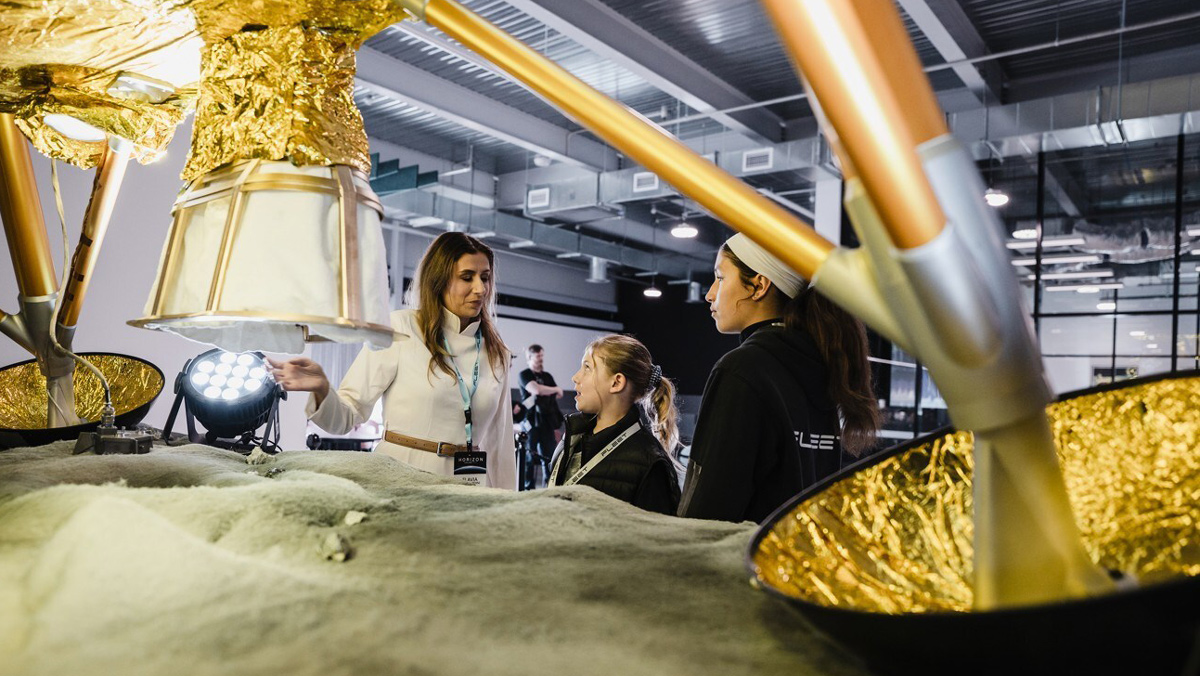
Young engineers and scientists have been fundamental to every breakthrough – bringing first-principles thinking, fearless experimentation and a strong sense of responsibility for the planet. Many came to Fleet Space because they wanted to work on frontier technologies without having to leave Australia, and they’ve helped shape everything from our satellites to ExoSphere to SPIDER.
You've just moved into a newly built facility in Adelaide — what does that mean for you?
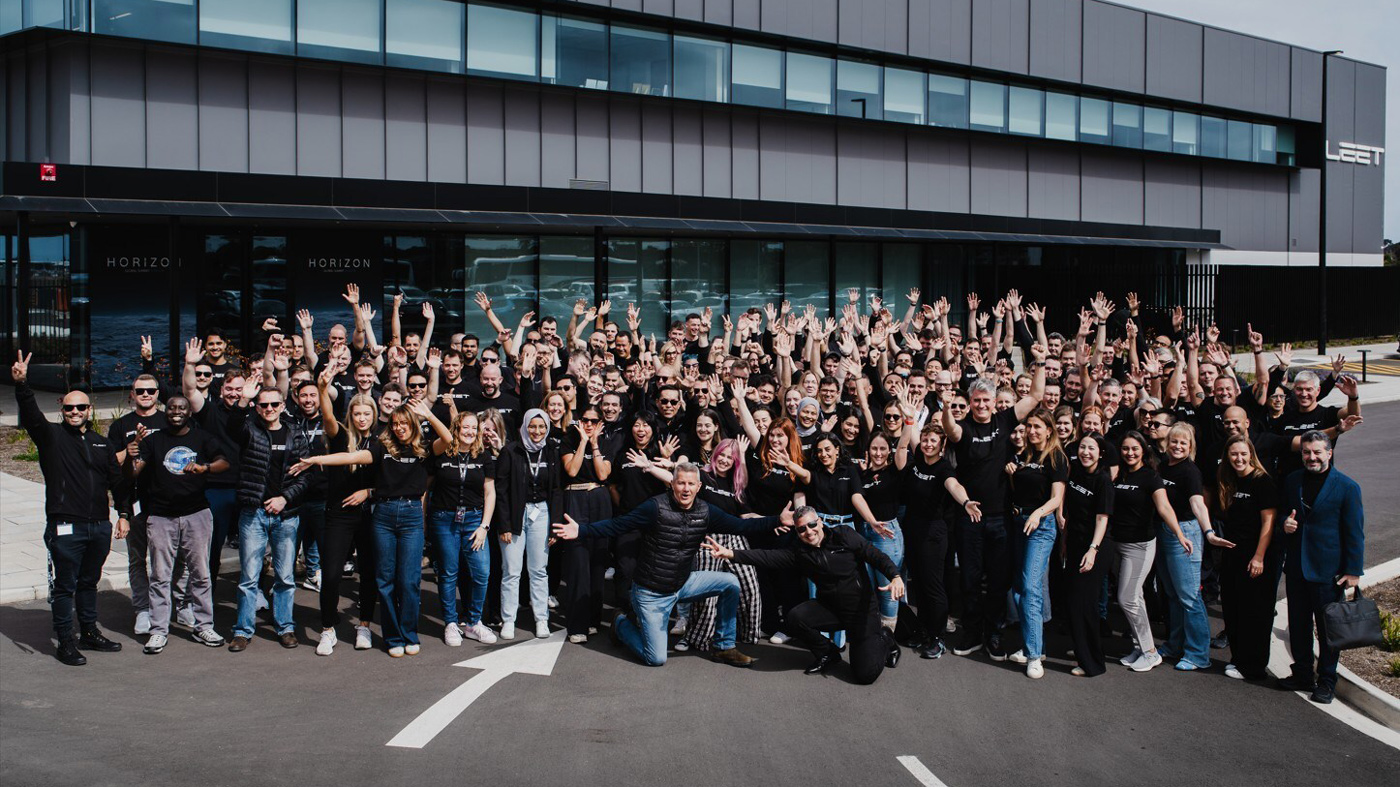
Our new 5,300m² global headquarters and space tech hyperfactory mark a major leap forward for Australian advanced manufacturing, expanding Australia’s production capacity for hundreds of next-gen satellites and thousands of advanced geophysical sensors annually. Bringing satellite production, geophysical sensor manufacturing, R&D, and mission operations together under one roof will allow us to scale faster and deliver frontier technologies in urgent demand on Earth – and for future missions to the Moon, Mars, and beyond.
What excites you about the next ten years and the possibilities on Earth and in space?
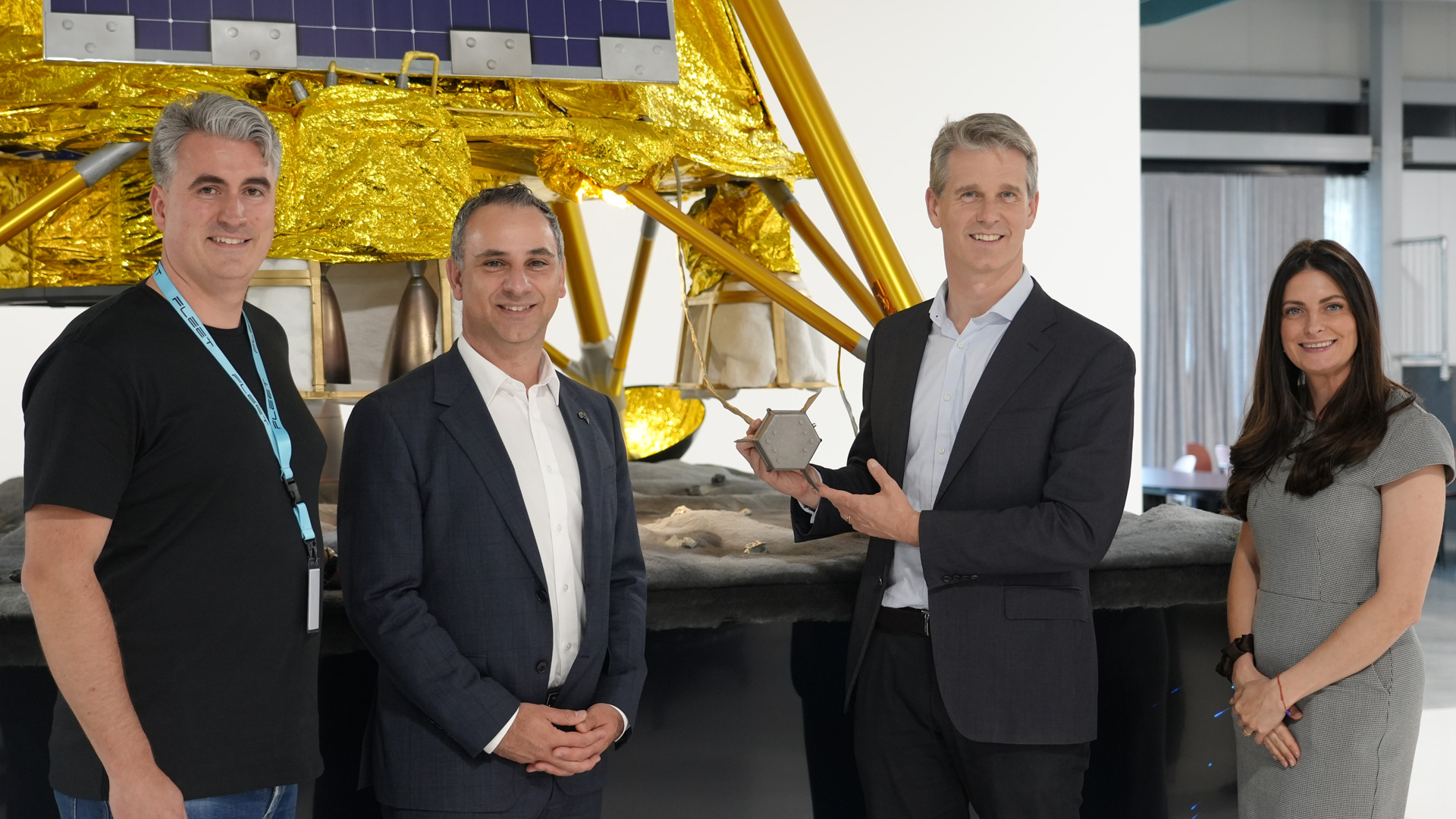
We’ll continue pushing our technology by designing as if it must operate off-world: lighter, smarter, portable, and energy-efficient. On Earth, we’re excited about enabling a cleaner, faster path to uncovering the critical minerals needed for the global energy transition. In space, SPIDER and our broader off-world exploration stack will be used to help locate water, safe areas to build, and map the subsurface of new worlds – essential steps toward sustainable human presence on the Moon and eventually Mars. Deploying SPIDER on the Moon on Firefly Aerospace’s Blue Ghost Mission 2 will give us the lunar data needed to refine our sensing systems, and deliver new capabilities that solve hard problems on Earth while accelerating the exploration of our solar system.
Industry showcase
Australian space innovations making an impact.