A short “whoosh!” a 100 years ago changed space history.
On 16 March 1926, in a quiet field in Massachusetts, United States (US), a slender experimental rocket sputtered to life and leapt into history.
Fuelled by petrol and liquid oxygen, the rocket climbed only about 12.5 metres, covered roughly 56 metres, and hung in the air for just 2.5 seconds. A brief hop that proved a world‑changing idea.
The inventor of the experiment was Dr. Robert H. Goddard, whose mix of bold theory and hands‑on tinkering laid the groundwork for modern rocketry. By showing that liquid propellants deliver greater thrust — and can be throttled — he unlocked the control and power that real spaceflight demands.
One hundred years on, the same liquid‑propellant principle still drives our biggest dreams, powering heavy‑lift rockets like NASA’s Space Launch System for the Artemis II mission to the Moon.
Photo essay
From that first 2.5‑second hop to lunar journeys and beyond, every countdown echoes back to Goddard’s daring start — and to a moment when spaceflight truly began.
Below is a selection of images that illustrates some of parts of this century-long history.
From Goddard's tests assisted by his wife Esther to South Australian launches and the Apollo eras, click on the below graphics to read their descriptions.
Dr. Robert Hutchings Goddard (1882-1945), wasn’t the first early rocketry pioneer to suggest the use of liquid-propellant rockets for space vehicles, but he was the first to carry out the practical experiments necessary to develop a rocket using this technology.
Inspired by science fiction, as a teenager Goddard dreamt of travelling to Mars. The idea of making space travel possible gave purpose to the rest of his life: “It is difficult to say what is impossible, for the dream of yesterday is the hope of today and the reality of tomorrow”.
Goddard obtained his PhD in physics in 1911. By 1914, he had obtained patents for a multi-stage rocket and a liquid-fuel rocket, the first of 214 patents that his work would generate, covering virtually every aspect of modern rocket technology.
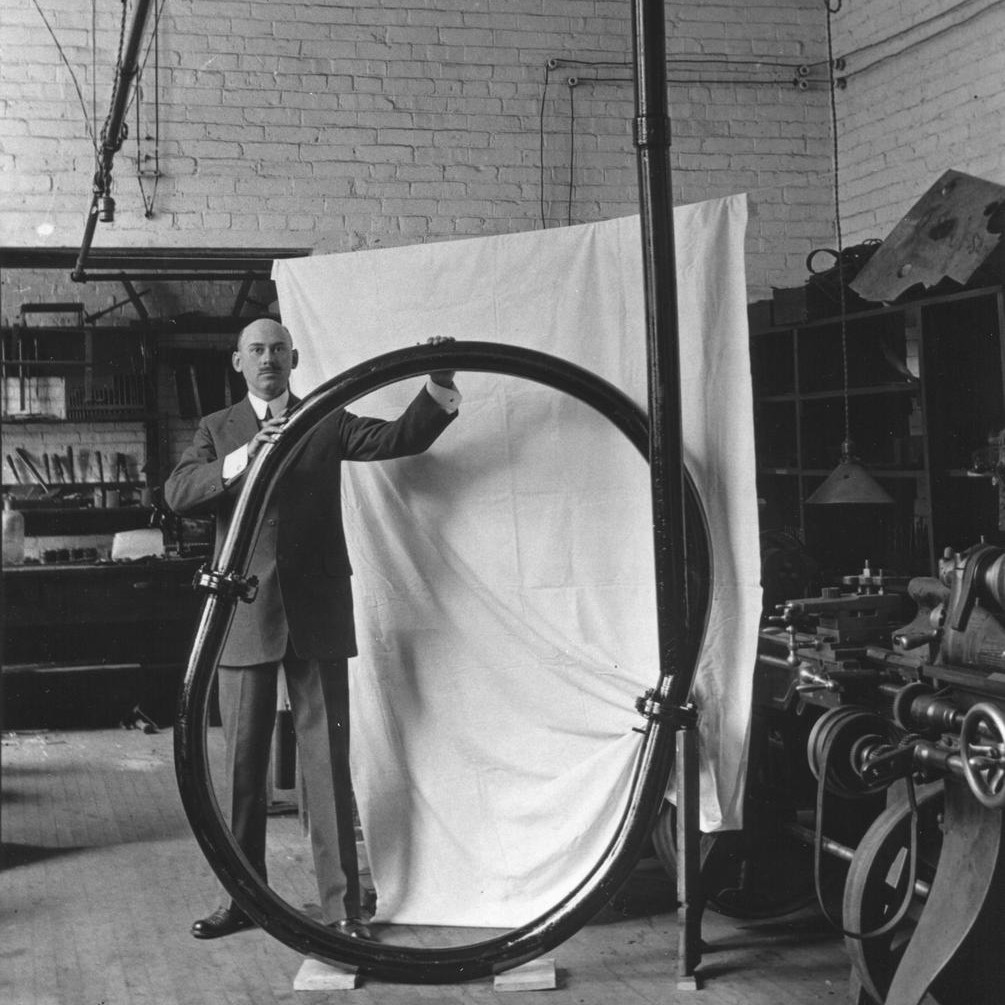
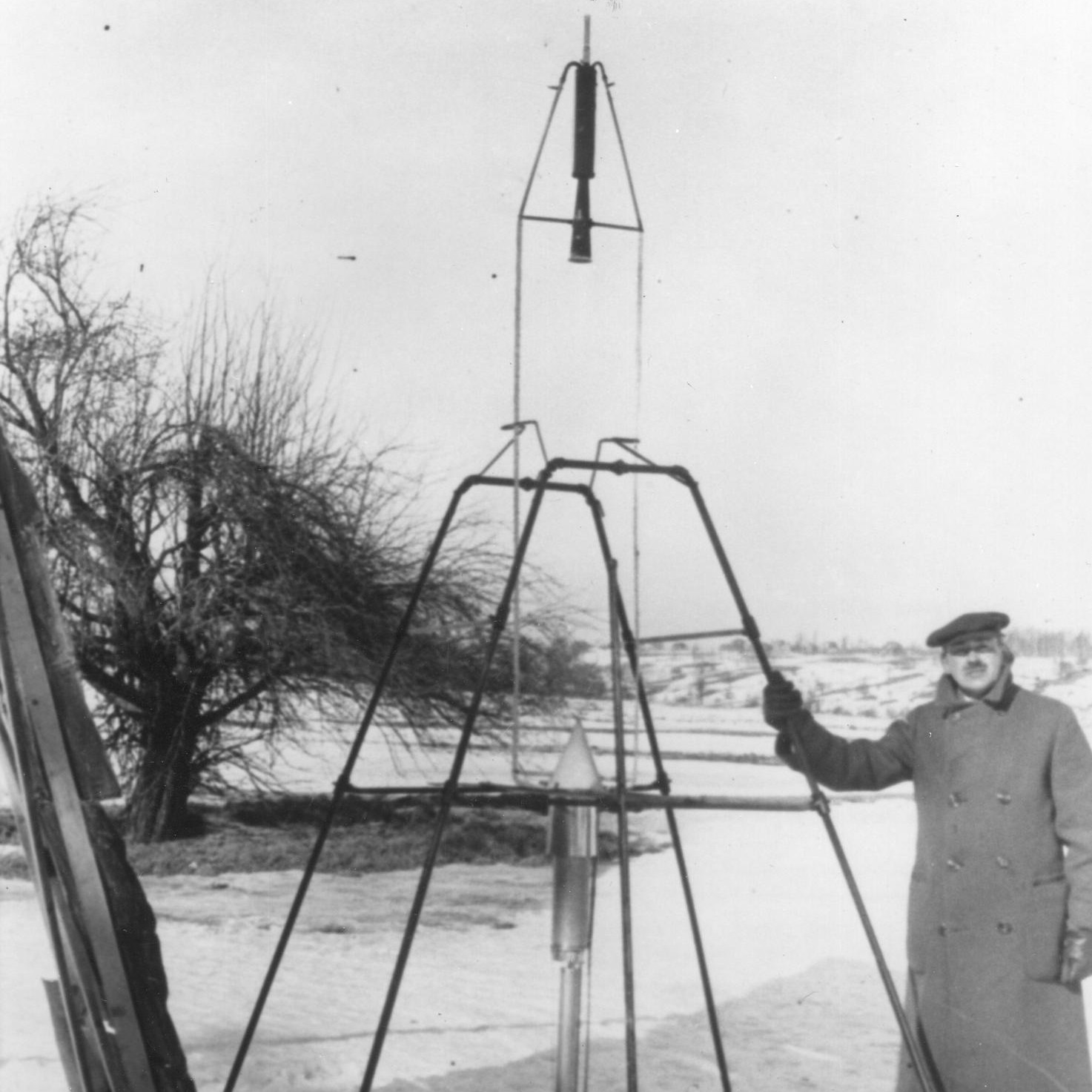
In this photo, Goddard is with his first liquid-fuel rocket, prior to its flight. The engine is at the top of the rocket with the fuel tanks below, as Goddard thought this would improve its stability in flight.
Credit NASA
In 1916, Goddard devised an experimental vacuum device that demonstrated that rockets worked better in the vacuum of space than in the air.
When the Smithsonian Institution published his research in a paper in 1919, it included the suggestion that it would be possible for a rocket to reach the Moon.
Unfortunately, this attracted ridicule from the newspapers of the day, and Goddard then avoided publicity for his work. This meant that its full significance was not recognised until many years after his death.
Credit: NASA
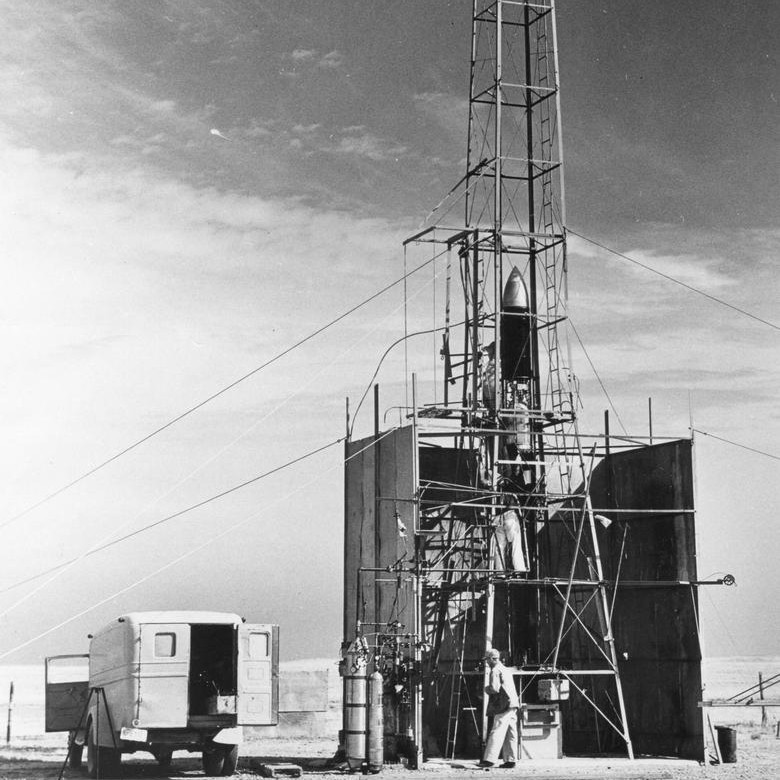
With some funding from the Smithsonian Institution and the Guggenheim Foundation, and support from Clark University, where he was a professor, Goddard established a rocket research test site near Roswell, New Mexico, in 1930.
Here he tried out various rocket engine designs, fuel feed systems, guidance and control systems, developing progressively larger rockets that eventually reached altitudes around 2,700 meters.
Credit: NASA
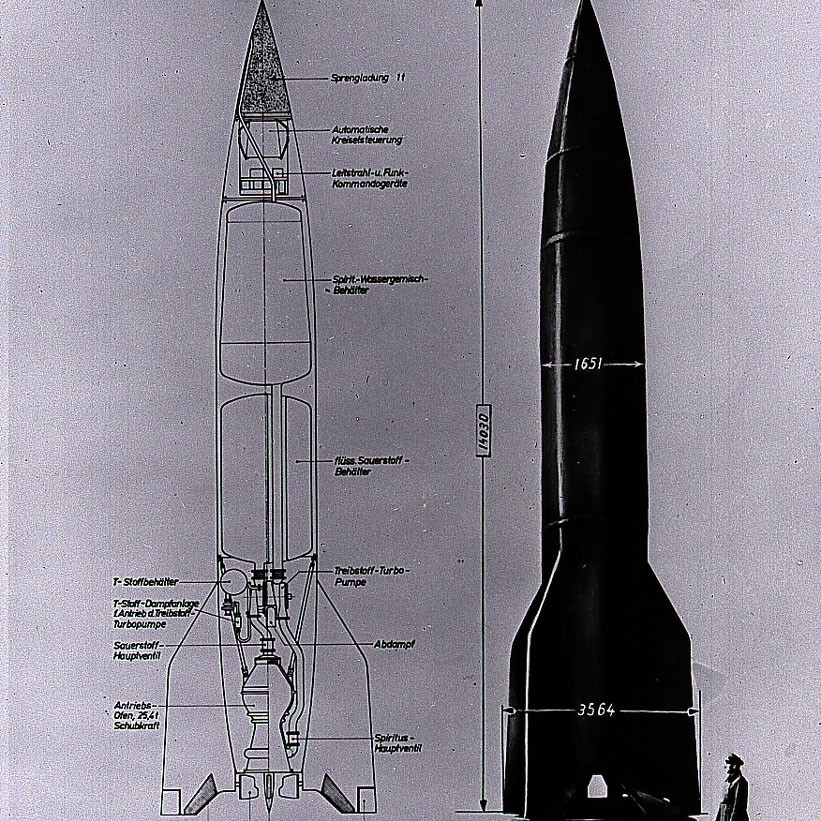
In the 1930s and 40s, some members of a 'Society for Space Travel', who worked independently of Goddard, went on to develop the world’s first long-range ballistic missile – the Aggregat-4 (A-4).
In1944 the A-4 became the first rocket to reach space, climbing to an altitude of 176km during a test flight.
Powered by an ethanol-water mixture and liquid oxygen, it became the prototype for the development of liquid-fuelled long-range missiles and the world’s first space launchers.
Many of the engineers and scientists who developed the rocket later came to the United States and eventually became a driving force behind the rockets of the US space program.
Credit: NASA
Goddard, Romanian-German rocket pioneer Hermann Oberth, and Russian space pioneer Konstantin Tsiolkovskii, all envisaged liquid-propellant rocket planes capable of reaching hypersonic speeds (five times the speed of sound).
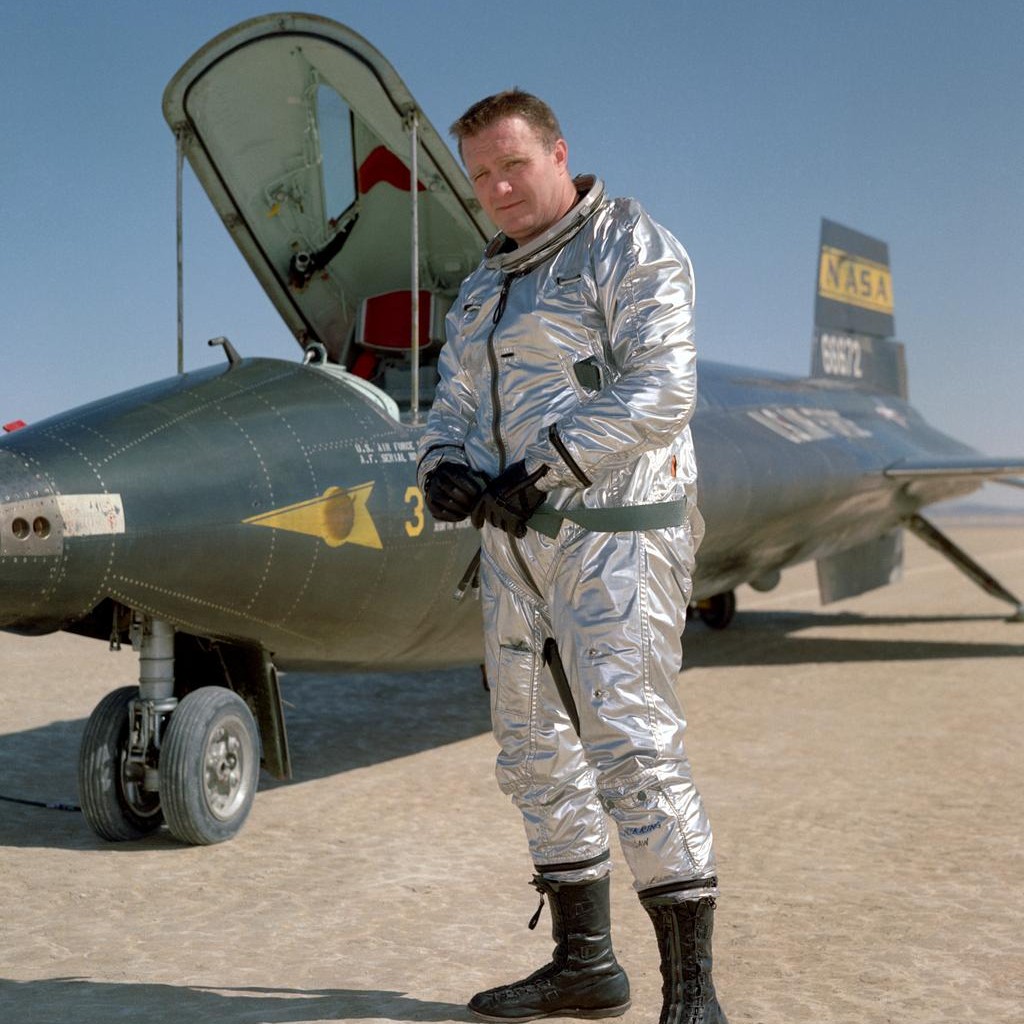
NASA’s predecessor, the National Advisory Committee for Aeronautics, developed the X-15 rocket plane, which made 199 flights between 1959 and 1968. Across its lifetime, the X-15 used two different engines with different liquid propellants, reaching speeds up to Mach 6.7 and altitudes up to 108km, technically putting its pilots in space.
Five US Air Force X-15 pilots met the Air Force definition of spaceflight by reaching more than 80km altitude and received military astronaut wings. Two flights by civilian test pilot Joseph Walker exceeded the generally recognised international definition of outer space (100 km). He and the two other civilian pilots to exceed 50km were eventually awarded NASA astronaut wings in 2005.
NASA astronauts Neil Armstrong and Joe Engle were also X-15 test pilots before being selected as astronauts.
Credit: NASA
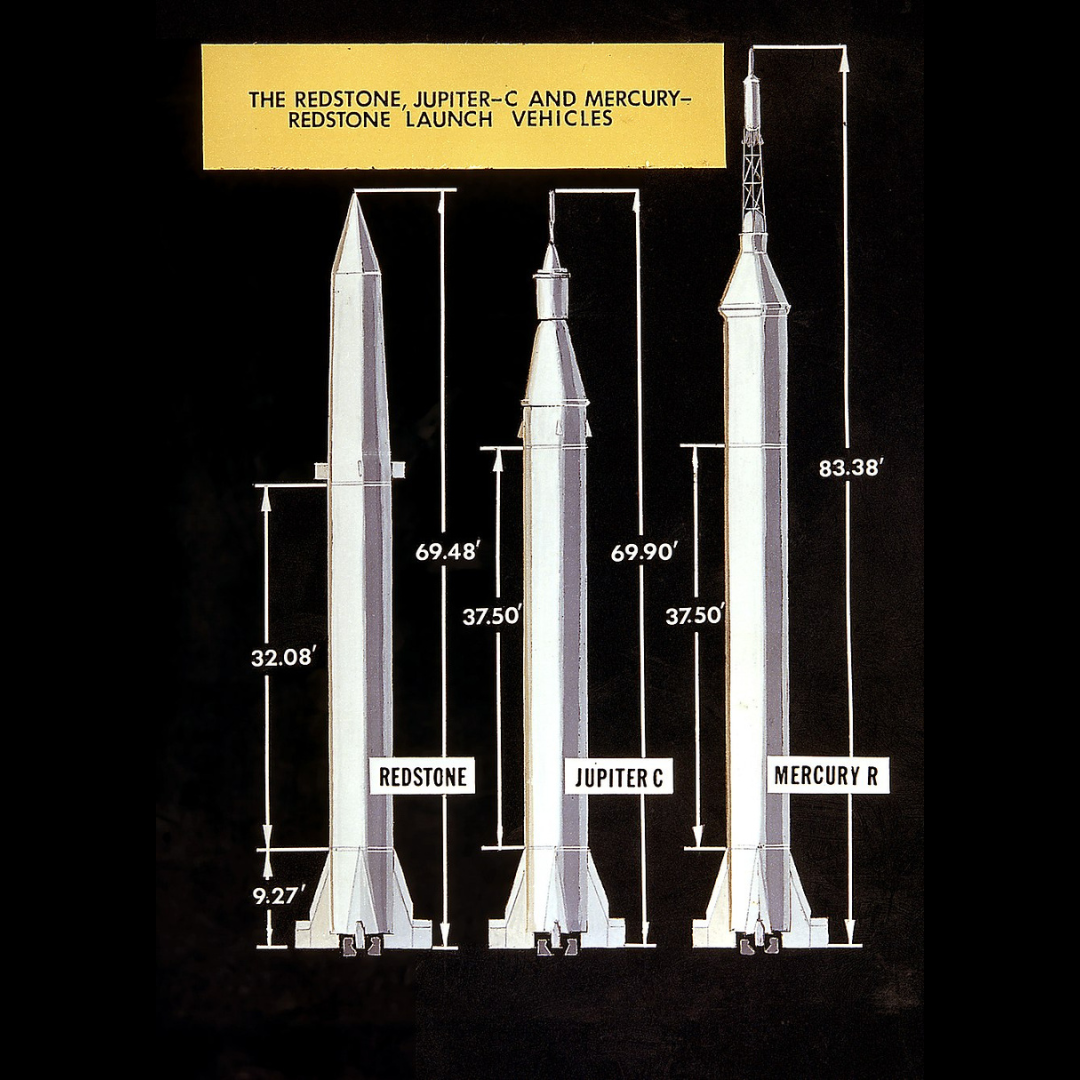
The German rocket team under Wernher von Braun, who came to the United States, developed the US Army’s first Intermediate Range Ballistic Missile, the Redstone (named for the Redstone Arsenal, where it was developed). This missile was a direct descendent of the A-4/V-2 and used the same liquid propellants.
The Redstone missile became the basis for the United States’ first launch vehicles: the Jupiter-C, used to launch America’s first satellite, Explorer-1 in 1958; and the Mercury-Redstone launcher that put the first NASA astronaut, Alan Shepard into space in May 1961.
Another Redstone variant, known as SPARTA-Redstone, was used for a joint US-UK-Australia atmospheric physics re-entry research program at the Woomera Rocket Range in 1966-67. A spare rocket from this project was donated to Australia and used to launch our first satellite, WRESAT-1, in November 1967.
Credit: NASA
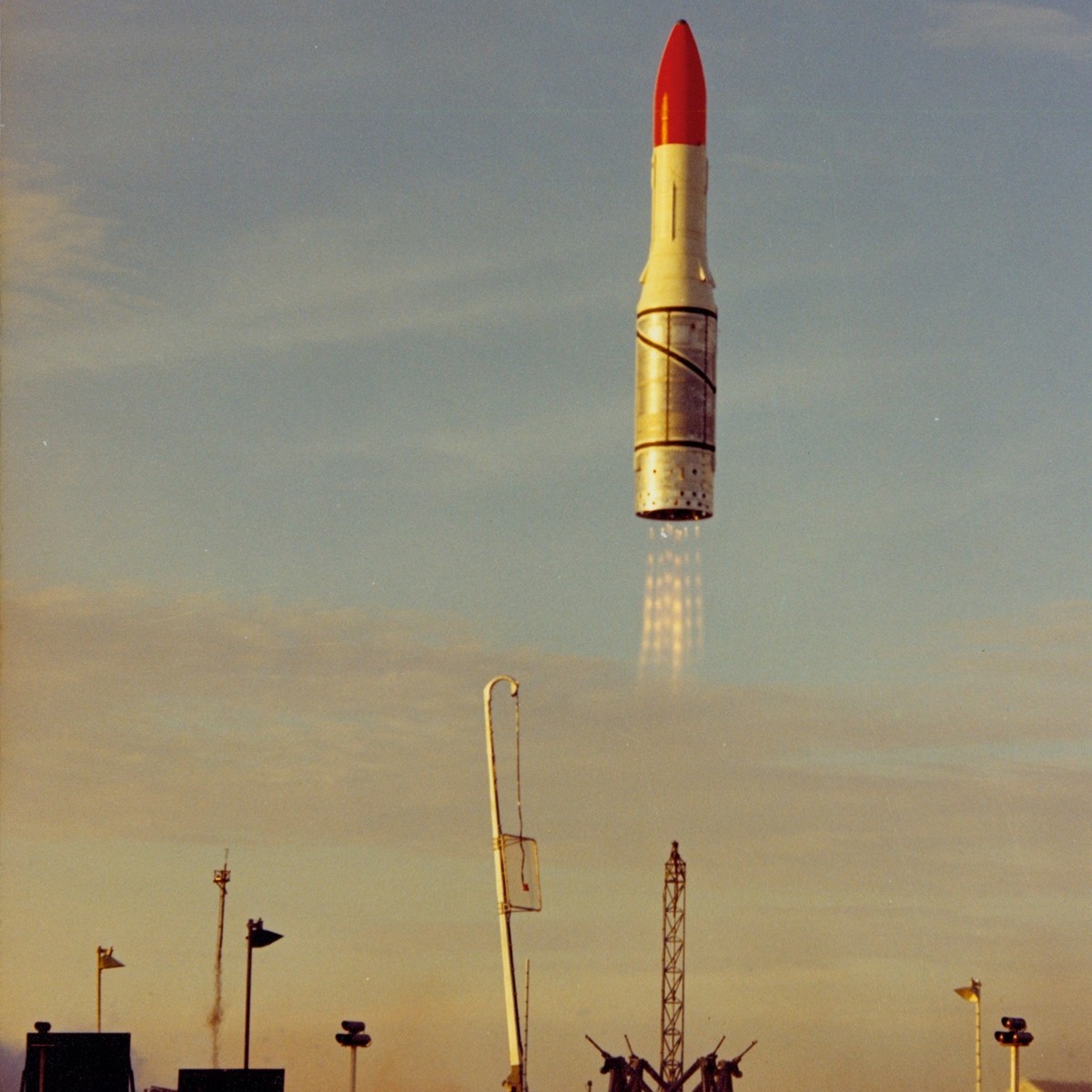
As the Space Race heated up in the 1960s, several countries wanted to develop their own, independent satellite launch vehicles. France, the UK and the European Launcher Development Organisation (ELDO - a consortium of six European countries, plus Australia) all tried to develop their own liquid-fuel rockets for this purpose.
ELDO and the UK both conducted their test flights at the Woomera Rocket Range (now the Woomera Range Complex). The British Black Arrow rocket (pictured above) was derived from the earlier Black Knight research rocket that had also been used at Woomera.
Four Black Arrow test launches took place at Woomera between 1969 and 1971, with the last flight putting the UK’s first independently-launched satellite, Prospero, in orbit, although the UK Government had already cancelled the program.
Credit: Defence Science and Technology Group
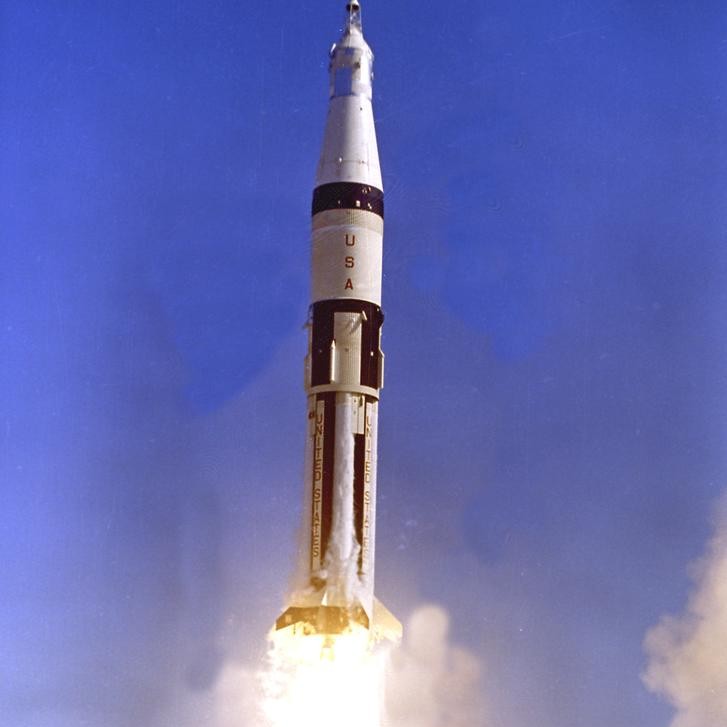
To support the Apollo Moon landing program, NASA developed the Saturn-IB rocket to test out the technology for the Saturn-V heavy lift rocket and the spacecraft that would carry the astronauts.
The S-IB first stage consisted of eight fuel and liquid oxygen tanks, clustered around a central liquid oxygen tank. The rocket’s S-IVB second stage, which would be used on the Saturn-V, was one of the earliest rockets to use the cryogenic combination of liquid oxygen and liquid hydrogen. The early rocket pioneers had recognised the greater thrust that could be obtained by using liquid hydrogen, but the technology to handle its extremely low temperature did not develop until after World War II.
Four Saturn-IB launchers were used to test Apollo technology, with five flights used for crewed launches: Apollo-7 (1968), ferrying three crews to the Skylab space station (1973-74) and the Apollo-Soyuz joint US-USSR mission in 1975.
Credit: NASA
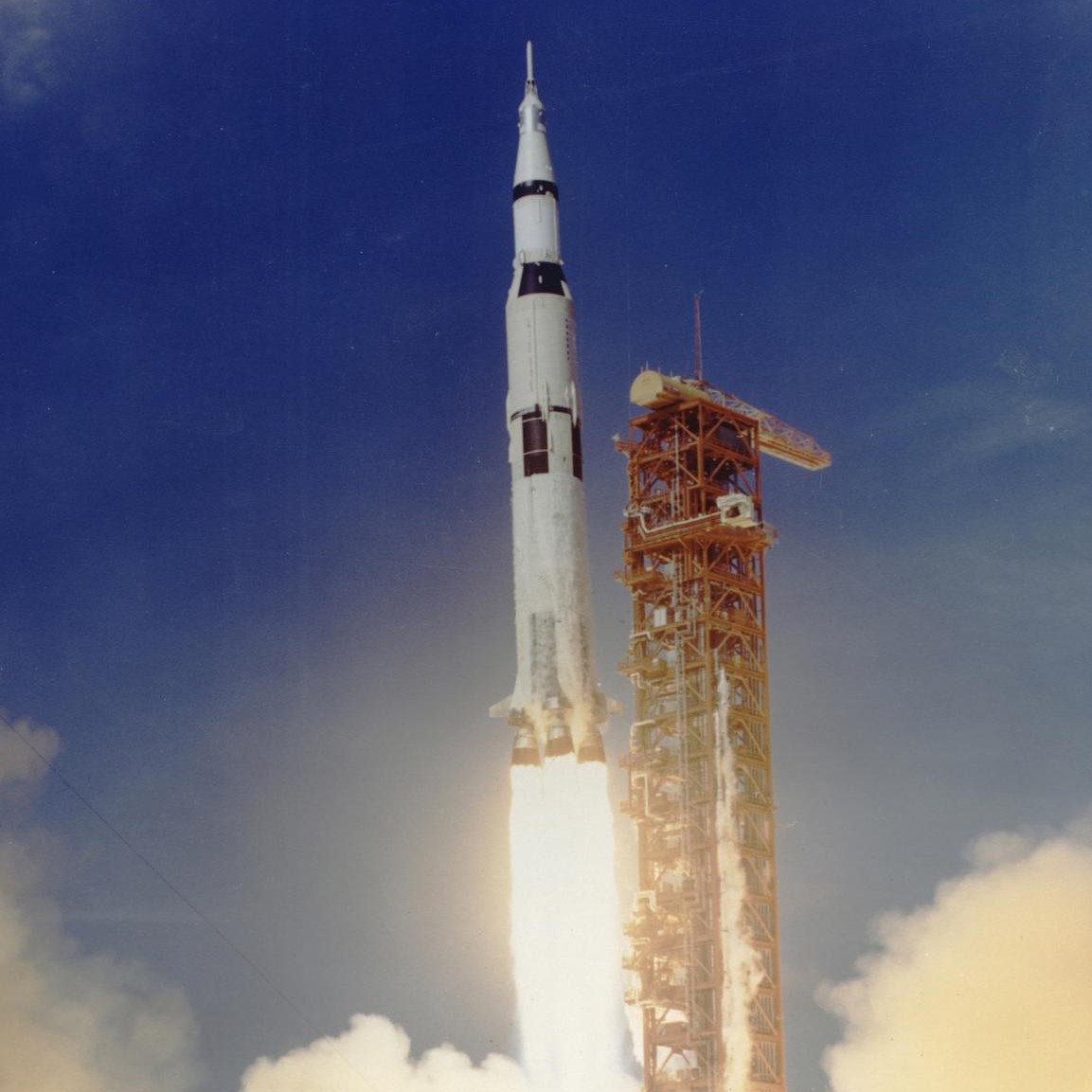
The most powerful rocket operational rocket prior to today’s Starship and Space Launch System, generating 33.4 meganewtons of thrust, the first stage (S-IC) of the Saturn-V Moon rocket burned approximately 12,900 to 13, 600kg of RP-1 kerosene and liquid oxygen every second.
It’s five F-1 first-stage engines were the most powerful of their time, burning for approximately 2 minutes and 41 seconds – just slightly longer than Goddard’s first rocket flight forty years earlier!
The two upper stages of the 110m tall rocket (roughly equivalent to a 27-30 storey building) ran on liquid hydrogen and liquid oxygen, with the S-IVB third stage sending the astronauts out of Earth orbit and on the way to the Moon.
Saturn-V vehicles launched 10 Apollo missions – eight to the Moon and one (Apollo-9) into Earth orbit. The rocket was also used to put the first US space station, Skylab into orbit.
Credit: NASA
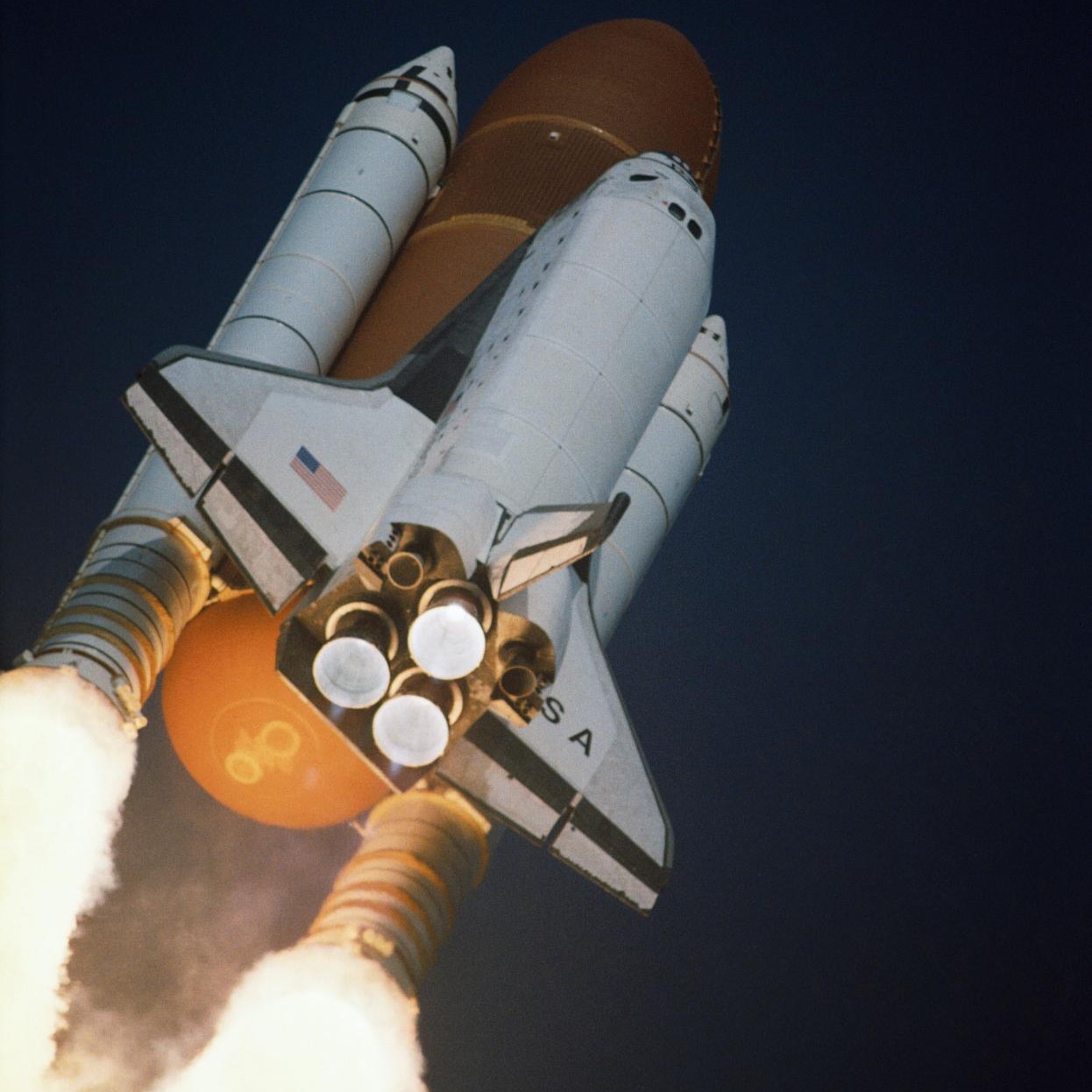
After the Apollo lunar program, NASA turned its attention to developing a re-usable spacecraft, to cut launch costs and carry large cargoes to low Earth orbit. The Space Shuttle, in operation from 1981-2011 launched like a conventional rocket, with the crew vehicle, the Orbiter, landing like an unpowered aircraft.
The Space Shuttle’s onboard main engines burned liquid oxygen and liquid hydrogen, held in the massive External Tank on which the Orbiter was mounted. To help lift the entire stack into orbit, re-usable Solid Rocket Boosters (looking like white candles) were attached on either side of the External Tank.
Across 135 missions, five Space Shuttles (Columbia, Challenger, Discovery, Atlantis and Endeavour) launched satellites and planetary probes, conducted scientific experiments in microgravity and helped build the International Space Station.
Credit: NASA
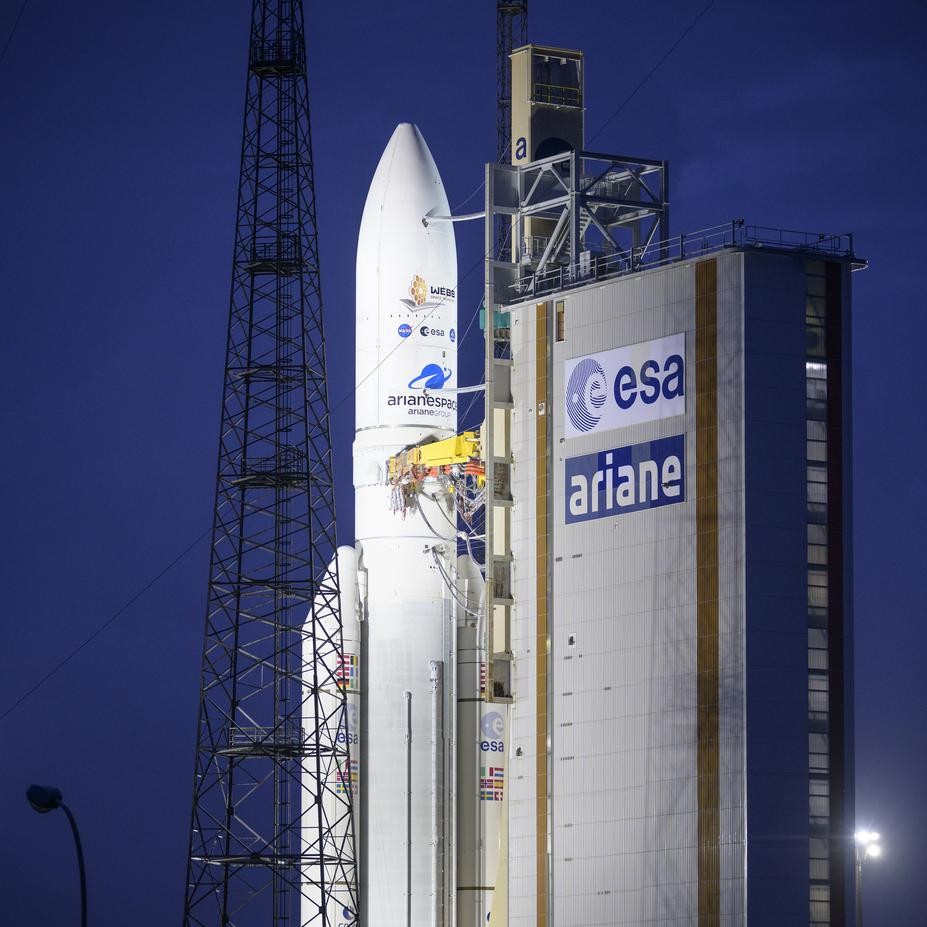
After its formation in 1975, the European Space Agency established the Ariane program to develop an independent launch capability for Europe.
The first Ariane-1 rocket was launched in 1979, with progressive developments over the following decades. Ariane rockets have been popular for launching a wide range of satellites, including some of Australia’s Aussat/Optus and NBN SkyMuster satellites.
The Ariane-5 launcher seen here debuted in 1996 and was retired in 2023. Like the Space Shuttle, the Ariane-5 used solid rocket boosters in combination with liquid-propellant stages in the core rocket body. It was used for launching several large planetary probes and space telescopes, as well as the Automated Transfer Vehicles carrying supplies to the International Space Station.
The newer Ariane-6 also combines solid-fuel boosters with main stages powered by liquid oxygen and liquid hydrogen.
Credit: NASA
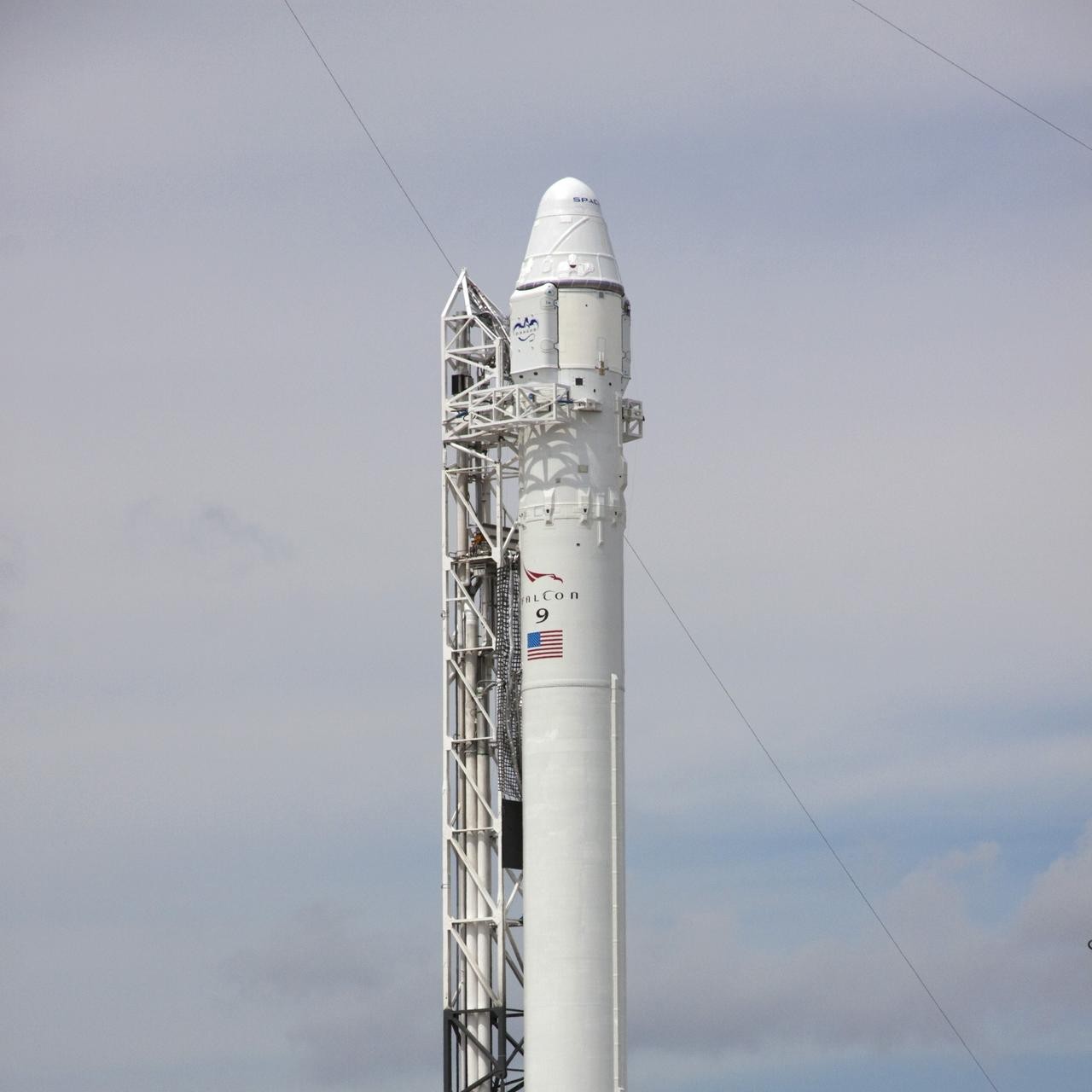
In the 21st Century, commercial spaceflight has grown rapidly, with launch vehicles developed and flown by private companies like SpaceX and Blue Origin. The first private re-supply flight to the International Space Station (ISS) was the COTS (Commercial Off The Shelf) Demo Flight 2, carried out by a SpaceX Falcon-9 flight in May 2012. The first flight with a crew flown commercially to the ISS (Crew-1) took place in November 2020, also using a Falcon-9 vehicle and Crew Dragon spacecraft.
Falcon-9 is a partially re-usable vehicle that has become NASA’s workhorse for the ISS ferrying cargo and crews to the space station. Like many earlier liquid propellant vehicles, its two stages are powered by liquid oxygen and RP-1 kerosene.
Credit: NASA
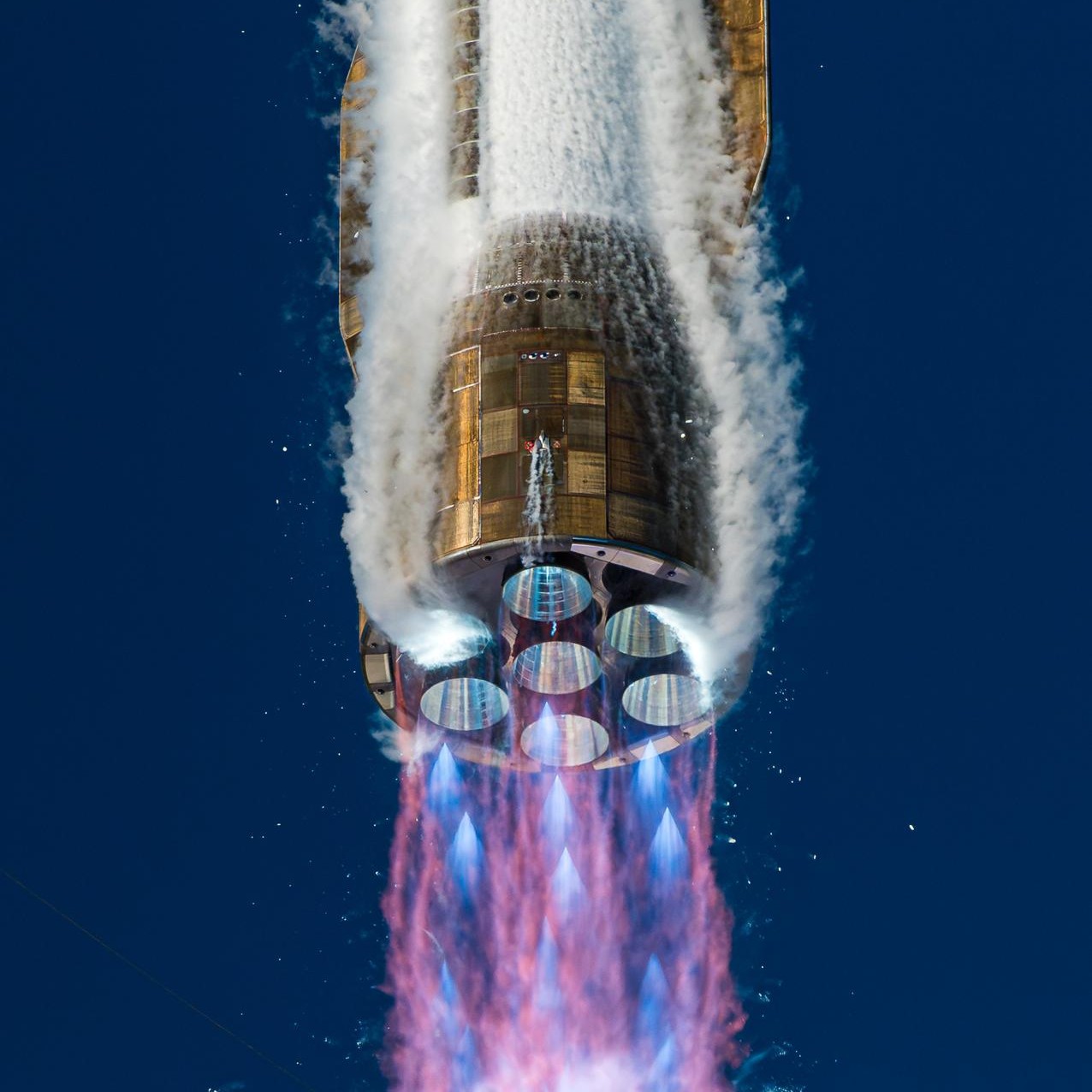
The latest development in liquid propellants is the use of liquid methane and liquid oxygen, referred to as methalox. This technology is now being used by Blue Origin’s New Glenn rocket, the Raptor engines on SpaceX’s Starship and Rocket Lab’s Neutron rocket, among others.
Methalox as a propellant has many advantages: it produces more thrust than kerosene-based fuels such as RP-1; it burns cleanly, leaving little to no soot or carbon residue, which allows for easier refurbishment of reusable engines; methane has a similar temperature to liquid oxygen, allowing for simpler thermal management in tanks; methane is easier to store and transport than liquid hydrogen, and it can be produced on other planets, such as Mars, to provide fuel for a return journey to Earth.
Credit: NASA
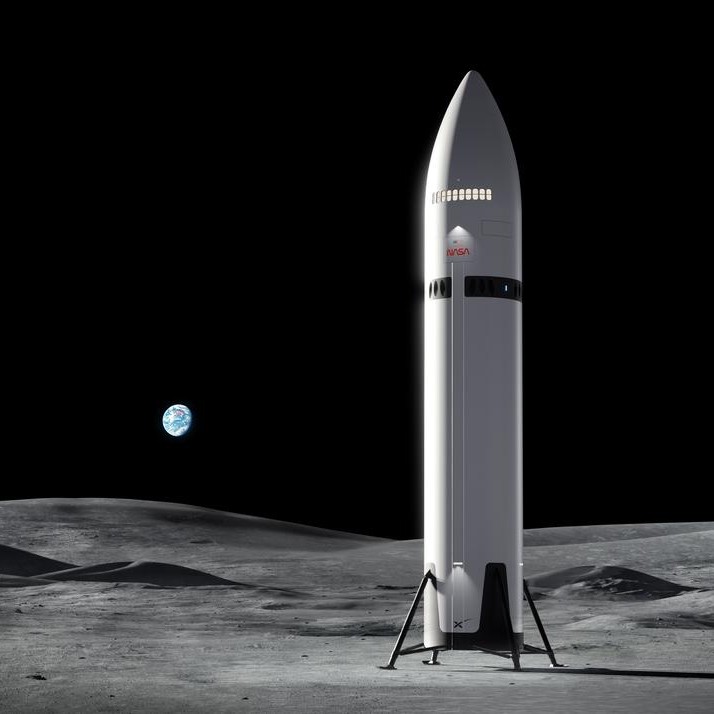
NASA’s Human Landing System (HLS) is intended to carry astronauts from lunar orbit to the surface of the Moon during the Artemis Moon missions, just as the Lunar Module did during the Apollo missions.
SpaceX’s methalox-fuelled Starship vehicle, seen in this artist’s conception, is scheduled to act as the lunar lander during the Artemis IV mission, which will return the first astronauts to the Moon since Apollo-17 in 1972. Blue Origin is also developing an HLS vehicle, Blue Moon, which will be used on later Artemis landings. Both Starship and Blue Moon will also be developed as cargo versions for lunar missions.
For early Artemis missions, the landers will also serve as living quarters for the astronauts while on the Moon, until permanent habitats are established.
Credit: Artist impression / NASA
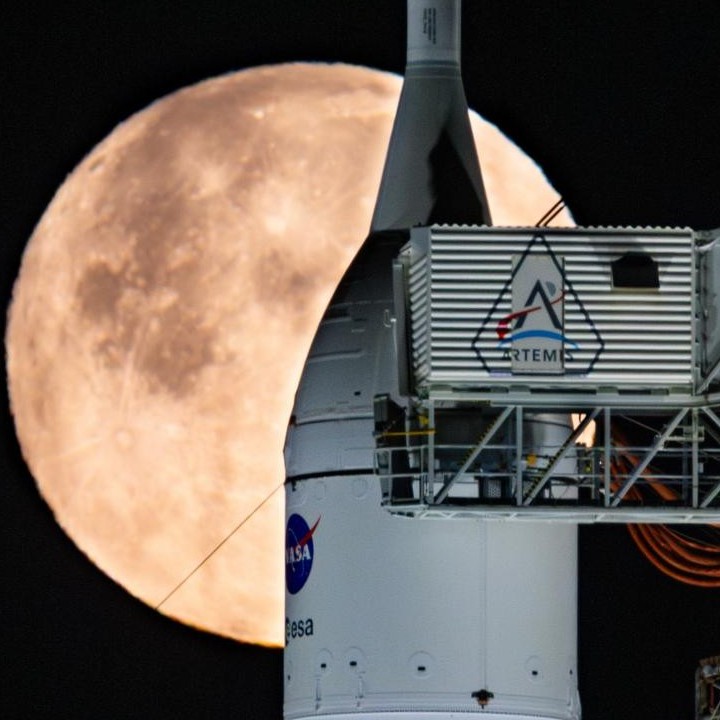
Soon, NASA’s Artemis II mission will be on its way to the Moon, carrying astronauts back to cis-lunar space for the first time in over 50 years. The vehicle that will take them there is the Space Launch System, or SLS. Drawing on the technology of the Space Shuttle program, the rocket incorporates Shuttle RS-25 engines and solid rocket boosters, alongside newly developed elements such as the core stage, which carries the vehicle’s liquid hydrogen and liquid oxygen propellants, and the Orion crew spacecraft.
Purpose-developed for lunar and deep space exploration, in support of the Artemis program’s long-term goal of human missions to Mars, the SLS rocket is more powerful than Apollo’s Saturn-V, generating 39 meganewtons of thrust. Artemis II will launch its crew on a journey that will loop around the Moon, taking astronauts further into deep space than humans have ever travelled before.
Goddard would be proud of how far (literally) the technology of his research has developed, since he lit the fuse on that tiny rocket 100 years ago.
Credit: NASA
Supporting the peaceful use and exploration of outer space
Australia is committed to building a culture of safety, security and sustainability within the Australian space sector.
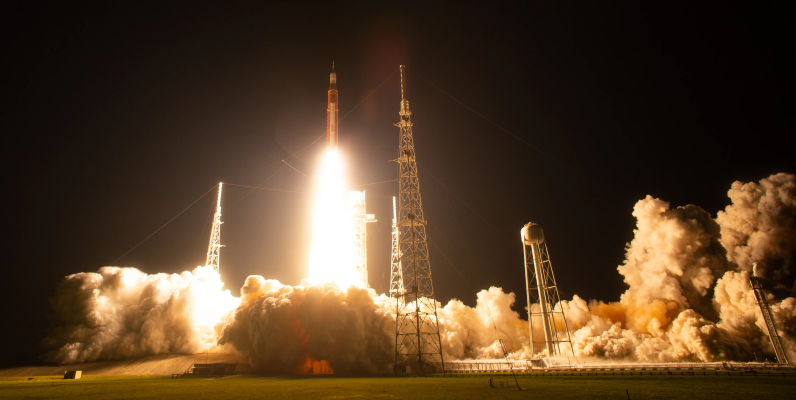
Main image caption: Artemis I lifted off from Launch Complex 39B at NASA’s Kennedy Space Center in Florida.
Credit: NASA/Joel Kowsky.