
When it launched in 2023, Spiral Blue’s compact and energy-efficient SE-1 became the most powerful edge computer ever used in space outside of a space station.
Transferring data back and forth between the Earth and an orbiting spacecraft means sending it on a long journey with limited bandwidth, given the lack of network infrastructure in space. For example, to receive high-resolution images from a satellite, operators have traditionally needed to download packets of data and use processing systems on Earth to piece images together for viewing.
By contrast, an edge computer – like the SE-1 from Sydney-based Spiral Blue – enables data processing at the ‘edge’ of a device carrying it, such as a satellite. When raw images of Earth are captured by a satellite equipped with the SE-1, they are processed immediately, and treated with compression and enhancement to minimise the file size while maintaining picture clarity. The SE-1 also has AI capability, enabling the use of custom algorithms to perform image analysis tasks itself – like detecting objects in a picture, cropping out unnecessary sections, and deciding which images are relevant to mission objectives. The images can then be transmitted back to Earth in one piece without pressuring available bandwidth, and used immediately on the ground.
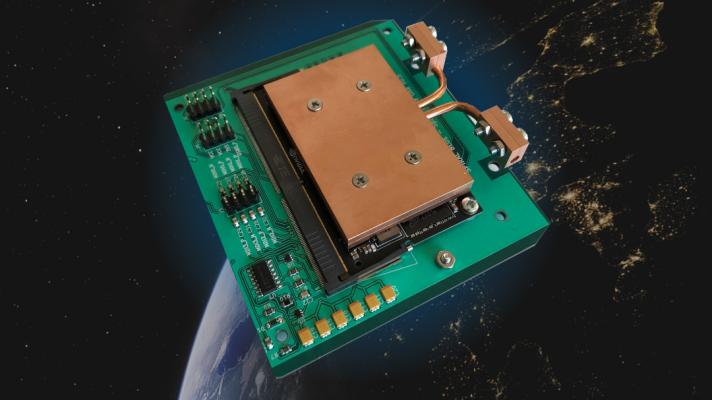
The SE-1 computer
The SE-1 flew to space for the first time aboard a Satellogic satellite in 2023, and many more units have since made their way to orbit. Mining, marine logistics, defence, ocean debris monitoring, and disaster management are key industry areas that the SE-1 and its AI algorithms can support. Beyond Earth observation, the SE-1 is also designed to support in-orbit servicing, autonomously detecting spacecraft faults, computer vision for robotic arms, navigation for planet-based rovers, and detecting asteroids and satellites in star fields.
“I wanted to use space-based technologies to help the Earth… If we are able to process this data on the edge almost straight into the format that’s actually needed for decision makers, then that obviously makes it a lot easier.”
~ Taofiq Huq, CEO of Spiral Blue.
Technology features
- In-orbit AI processing of sensor and imagery data on satellites instead of on the ground.
- Autonomous data selection for identifying, filtering, and prioritising mission‑relevant data before it is downlinked.
- Ability to compress and enhance data to drastically reduce demands on bandwidth.
- Compact, energy‑efficient hardware proven through sustained orbital operations.
- Direct supply chain relevance enabling autonomy, Earth observation, navigation, and future exploration missions.
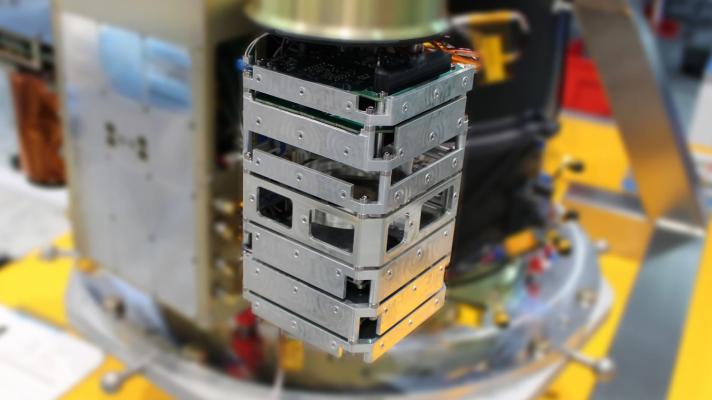
Pictured above: Integrating the SE-1 with the Satellogic satellite before launch in 2023.
Project highlights
- Agency Moon to Mars grant awarded to develop the mission-ready payload.
- First Australian commercial AI computer in space – operational in orbit since 2023, making national history for a commercial high-performance computer.
- Concept de-risked through flight heritage – multiple units deployed moving from a prototype to a scalable product.
- Cross-sector value with immediate applications across defence, disaster response, resources, and agriculture.
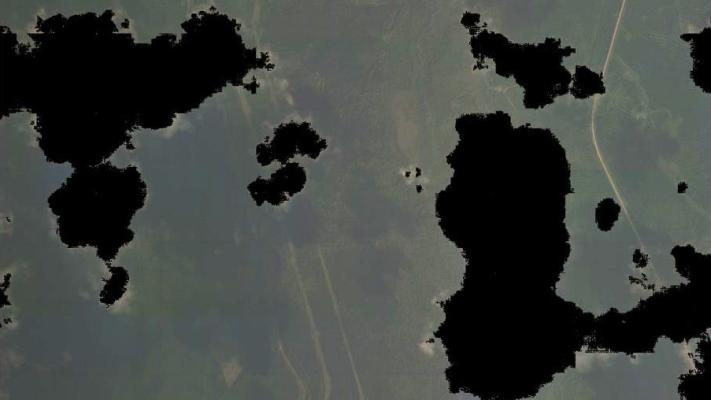
Pictured above: Image produced by the SE-1 Cloud Detect AI algorithm in orbit.
Industry showcase
Australian space innovations making an impact.