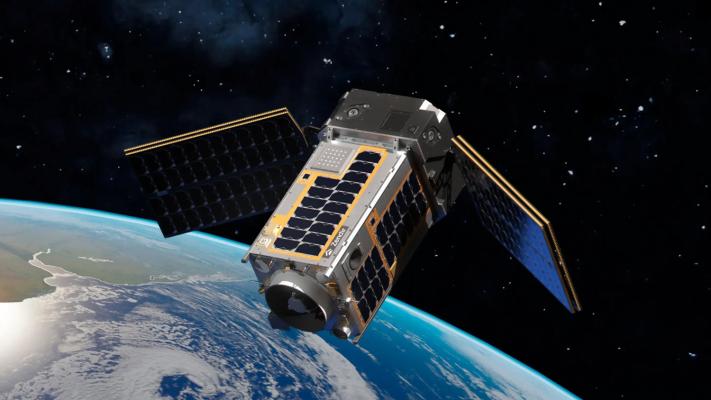
Digital twin simulation from Zendir is helping mission operators practice life-extending service for spacecraft in orbit.
Key facts
Key facts
- Zendir provides space operations training products, using digital twin technology to create computerised replicas of mission environments.
- Backed by Agency funding, Zendir has developed a testbed for complex missions to service spacecraft in orbit – a growing space sustainability initiative.
- The RPO (Rendezvous and Proximity Operations) Testbed was validated through exercises and a joint white paper with Astroscale U.S.
In space, mission failure routinely yields lessons that lead to broader success – and it can even inspire a whole new business addressing a problem.
Canberra-based Zendir, founded by Dr Christopher Capon and Dr Brenton Smith, is one of those businesses.
The two engineers were working on satellite launches with the Australian Defence Force Academy when a deployment failed because of an onboard software problem.
They realised a higher-fidelity mission simulation would have detected the issue, and in 2019, they went into business developing a high-fidelity digital twin platform.
Digital twins are computerised replicas of real-world objects or systems, which can in many cases be continuously updated using streams of live data captured by their real-world equivalent.
Practice makes perfect
Today, Zendir has a small but growing Australian team, plus a US subsidiary – and it’s found a niche in using digital twins to help customers train and rehearse for missions.
Daniel Vivian, Head of Commercial Strategy at Zendir, says a spacecraft can pass every pre-flight test, but still hit trouble in orbit because its operating team hasn’t learned to work together under pressure.
“Communication delays and distributed teams raise the cost of coordination gaps,” Daniel says.
“Rehearsing decision-making under pressure before committing to on-orbit operations is becoming as important as testing whether the spacecraft itself works.”
Through an Agency-backed project, Zendir is now helping rehearse an increasingly popular yet technically challenging type of mission: servicing spacecraft in orbit.
Sharper skills for service in orbit
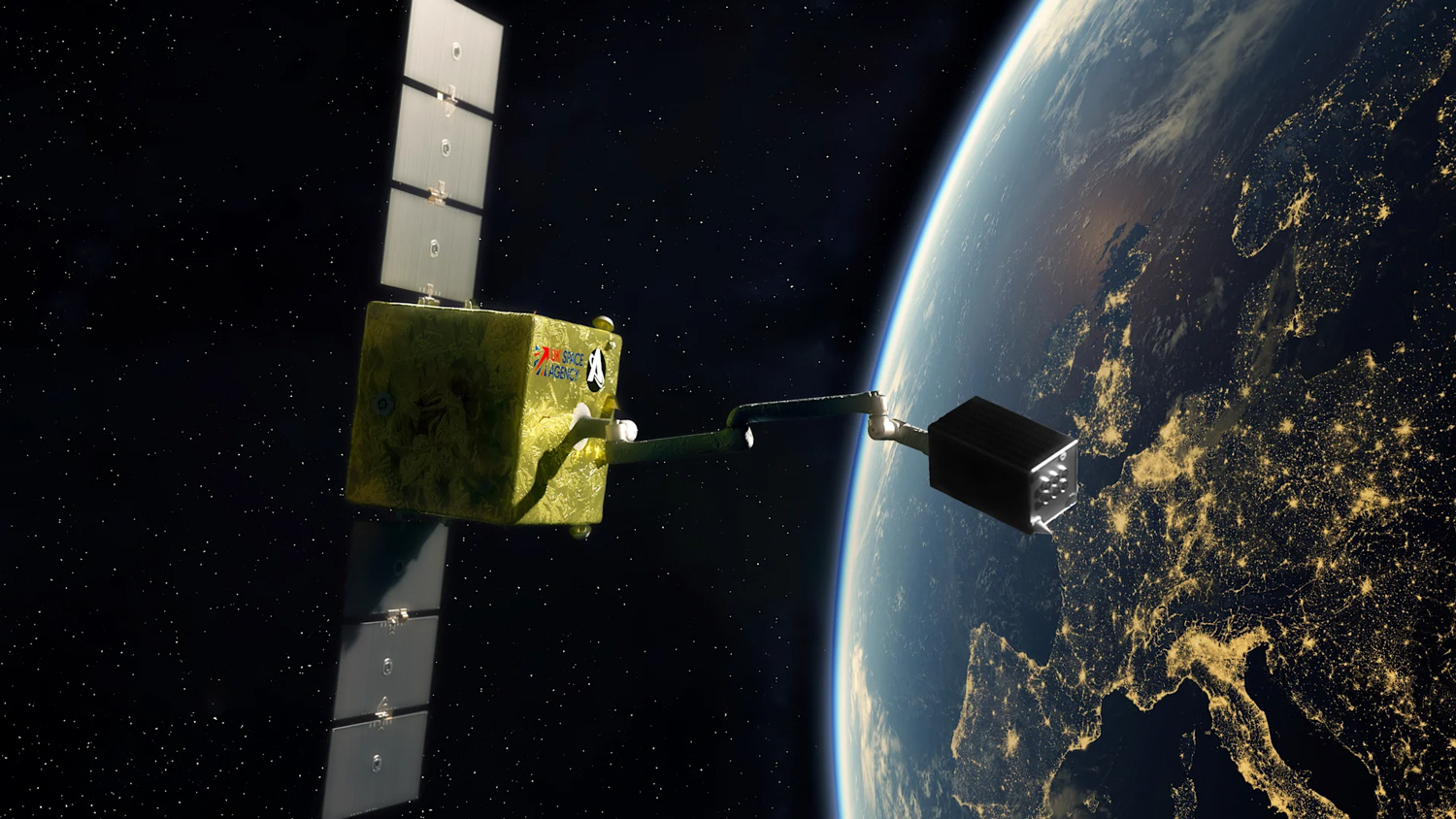
In recent years, global efforts in sustainable mission design have introduced the practice of servicing or refuelling spacecraft while in orbit, to extend their usable life.
These missions involve a service spacecraft approaching a target spacecraft in orbit, safely docking with it, and performing maintenance (such as refuelling its propulsion system or installing modular equipment).
The complexity of these procedures puts unique pressure on operators running the mission from the ground – compounded by the risk of encountering degraded conditions or anomalies with little time to react.
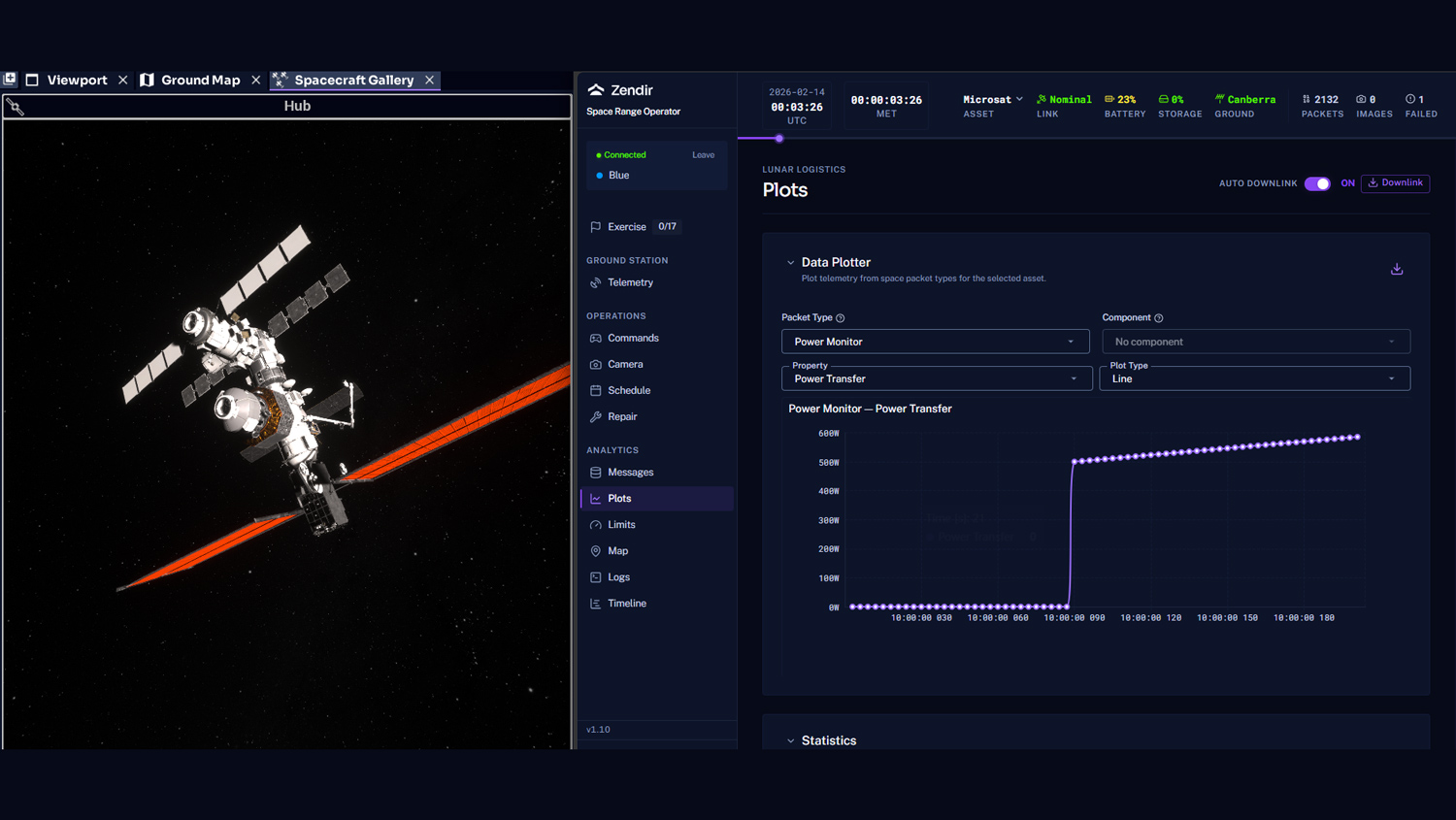
With funding from the Australian Space Agency’s Moon to Mars program, Zendir undertook an 18-month project to expand its simulation platform and create a cloud-based digital twin testbed for on-orbit servicing.
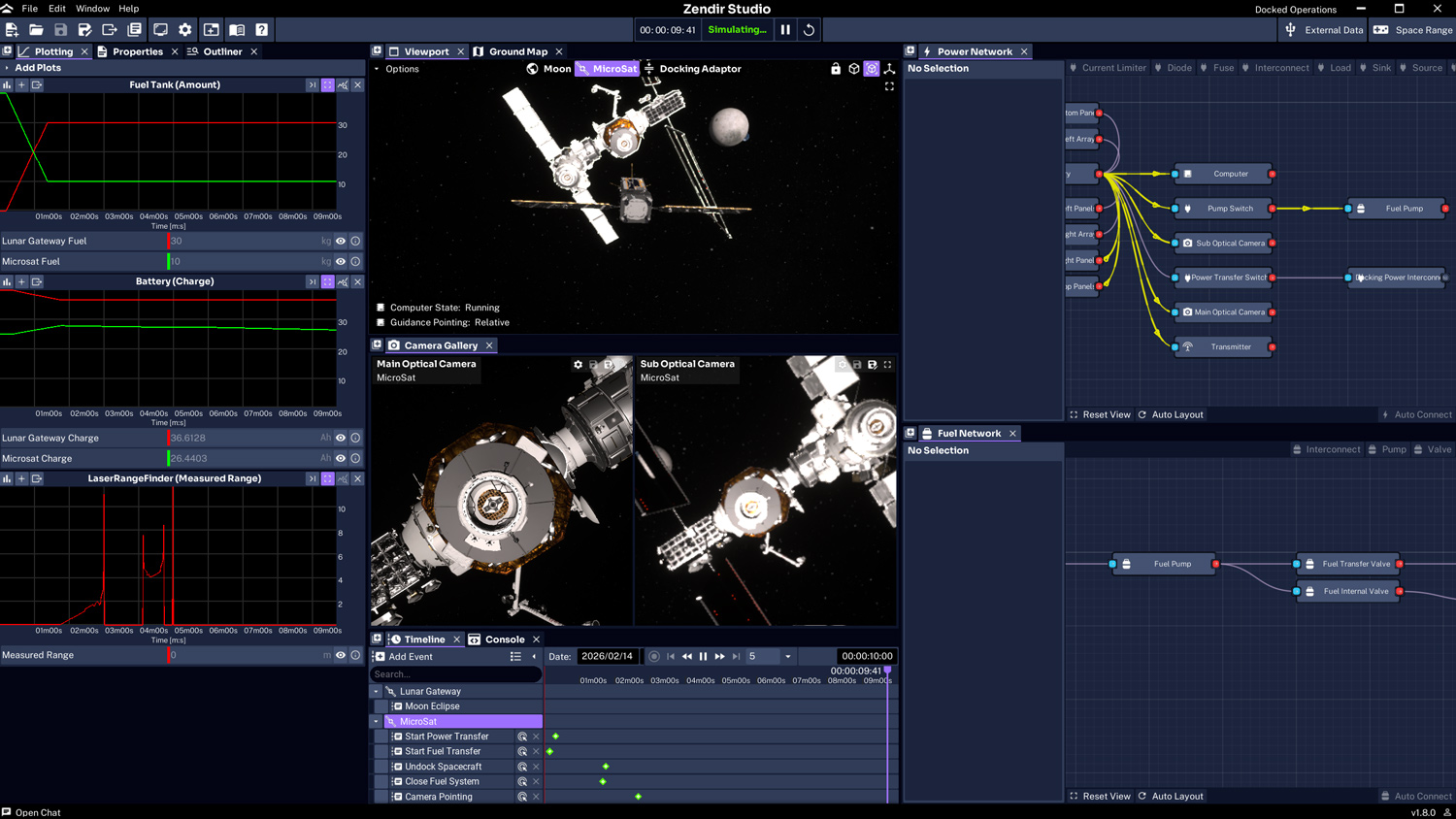
The RPO Testbed models rendezvous, proximity operations, docking, and the transfer of propellant and consumable resources between two spacecraft.
“It’s not a demonstration – it’s a working environment realistic enough to put real operators inside, and support both engineering validation and real operator training,” Daniel says.
“We ran six mission rehearsal exercises with 85 participants – drawn from defence organisations, government agencies, space operators, prime contractors, cyber specialists, universities, and emerging space companies.”
International partnership
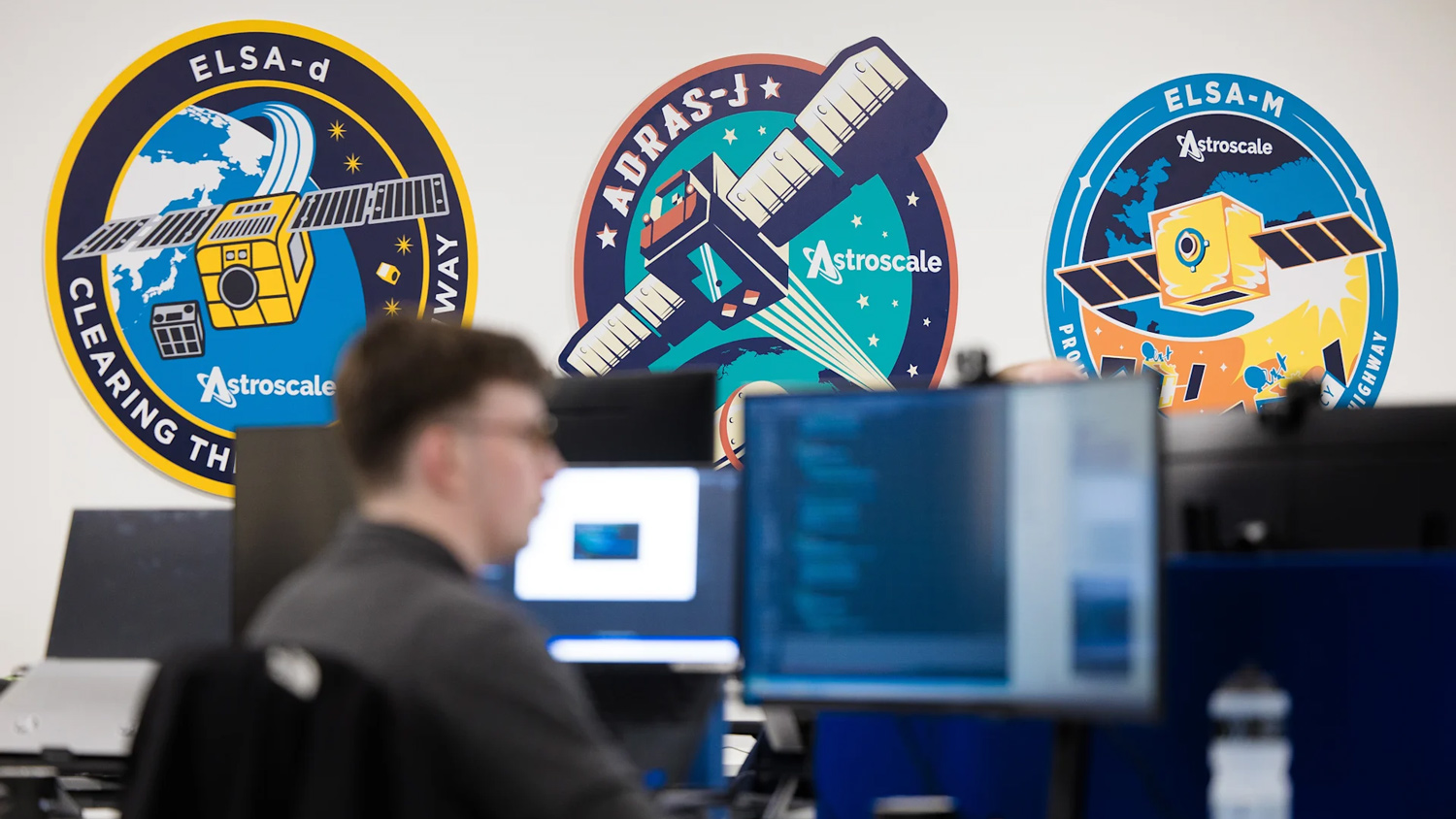
Two of the exercises came through a survey and white paper co-published with Astroscale U.S., headquartered in Denver, Colorado.
Astroscale U.S. is a leading provider of on-orbit servicing solutions and capabilities – including inspection, space domain awareness, transportation, life extension, debris removal, and refuelling – for the U.S. government and commercial operators around the world.
The first exercise began with a spacecraft docked to an uncrewed lunar space station, where operators transfer fuel, make a go/no go undock decision, and carry out a remote inspection after the spacecraft is flying freely – all while managing communication challenges.
The second exercise put operators in control of a surveillance spacecraft under stress, and challenged them to establish whether they were experiencing a spacecraft fault, an environmental effect, or malicious interference, before coordinating a response.
A team of 11 Astroscale U.S. operators – including satellite operators, mission controllers, flight directors, communications specialists, and mission planners – took part and were surveyed afterwards.
The results validated with Astroscale U.S. showed all 11 participants agreed the exercises reduced mission risk.
Meanwhile, 10 of 11 participants said the coordination gaps would not have been obvious without running the scenario, and that they would make it a standard step before on-orbit operations.
“There are simulations that I have used in the past, usually developed in house, that helped simulate certain scenarios of the mission but most of them did not have as high of fidelity as the exercises I saw in Zendir,” says Zak Zafar, Senior Ops Engineer at Astroscale U.S.
“When changes have to be made to ConOps (a Concept of Operations) or software on orbit, the digital twin technology can be utilised by the operation team to test the changes in a real-time scenario to ensure changes had no negative impact.”
Looking to the future
With multiple scenarios now readily available on the platform, Daniel says developing the new testbed has expanded Zendir’s capability and credibility.
“The grant project gave us real exposure, and serves as a strong feasibility study – a validated testbed, built with industry engagement and outside expertise,” Daniel says.
“It strengthened our position to bid for both domestic and international work, and made us credible to international partners.”
Zendir is now commercialising the testbed, offering operator training and mission rehearsal for on-orbit servicing – either off the shelf or tailored to a customer's own spacecraft, tools, procedures, and teams.
"Teams can train against realistic orbital scenarios early, then rehearse the specific mission phase they're most concerned about, with their own people, well before it happens in orbit," Daniel says.
"That value runs across the whole mission lifecycle: from early design decisions, through pre-launch readiness, and into operations once a spacecraft is flying."
"Our goal is for mission rehearsal to become a standard step before any complex operation in orbit… the first time a team handles an anomaly together should be in rehearsal, not on a live mission."
Industry showcase
Australian space innovations making an impact.
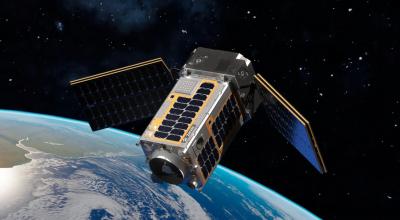
Main image caption: Zendir spacecraft render.
Credit: Zendir