Patching things up – one historical stitch at a time.

Once an astronaut is assigned to a spaceflight, their blue flight suit and other gear soon sport a distinctive mission patch. 

But this embroidered emblem is far more than just decoration – it encapsulates the spirit and goals of their space mission at a glance.  

Space patches had their origins in the early years of the US space program. 

NASA’s initial astronaut groups mostly came from the US military services, where unit insignia and squadron patches were a proud custom. 

During the Gemini program, when the astronauts were not permitted to name their spacecraft, the crew of Gemini-5 instead designed a mission patch that would symbolise the purpose of their flight. 

The idea was quickly adopted by the crews of subsequent flights, establishing the tradition of space mission patches that still continues today.  

Symbolising a space mission

During the Apollo era, each crew was given creative latitude to design their own emblem, often developed with the assistance of a NASA illustrator or professional artist. 

Designs incorporated the mission's title, crew names, and imagery representing the purpose of the endevour.

With more frequent missions and larger, more diverse crews during the Space Shuttle program, patches became increasingly elaborate – featuring orbiters, symbolic stars, scientific instruments, even the national flags of international crew members. 

Each patch remained a crew-driven design, symbolising the intended achievements of their flight.

Today, with missions to the International Space Station (ISS) and beyond, mission patches represent multinational partnerships, with crew members from different space agencies from across the world – all contributing to a shared design. 

Photo essay
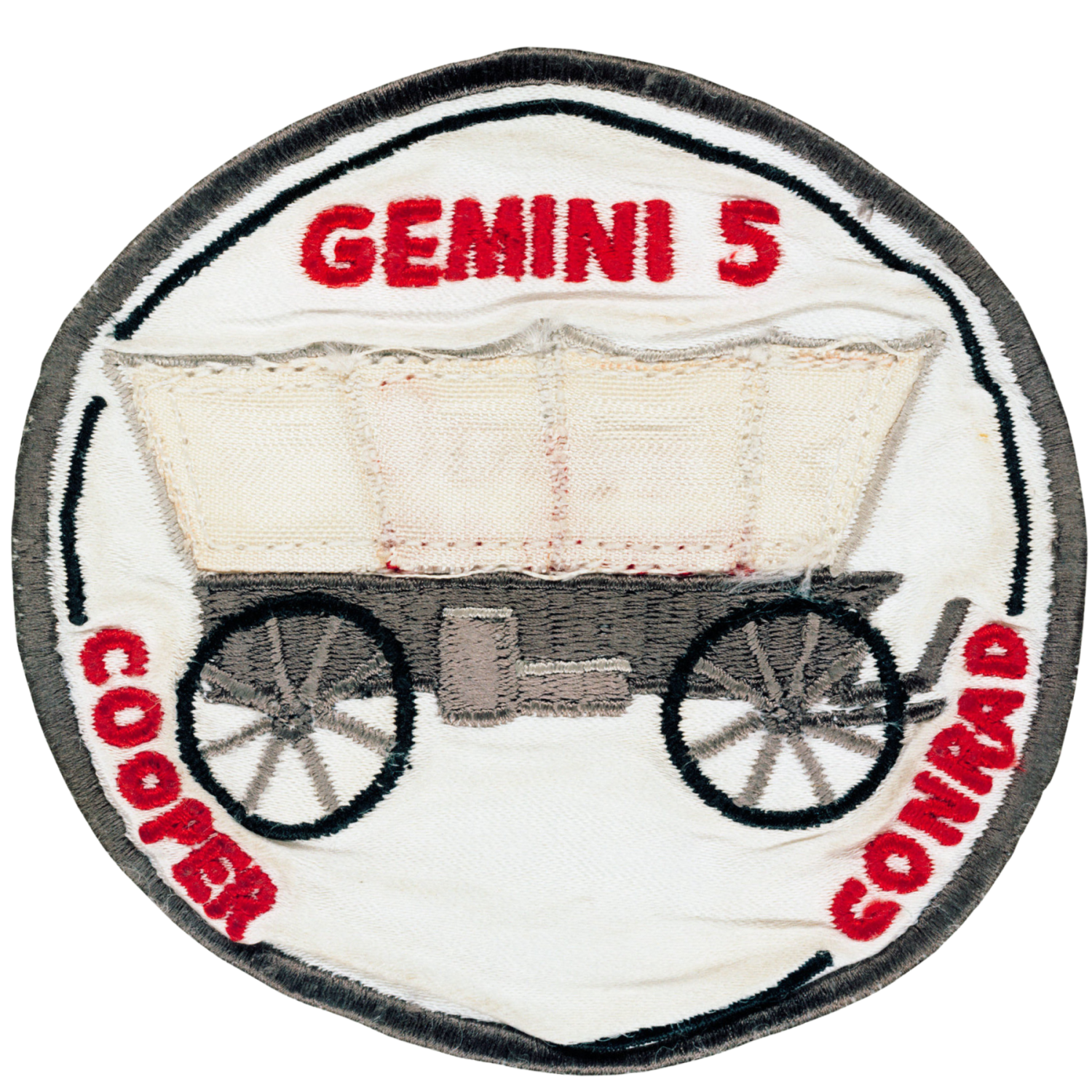
Expand Mission patch for the Gemini V mission flown by L. Gordon Cooper, Jr. (Commander), Charles Conrad, Jr. (Pilot).

When he could not name his spacecraft, Gemini-5 Mission Commander Gordon Cooper, a US Air Force officer, suggested a military style mission patch instead. 

Planning to set a new record for time spent in space, Cooper and his crewmate, Charles “Pete” Conrad, chose the image of a covered wagon from the pioneer days of the American West to symbolise the pioneering nature of the flight. 

This was the first official space mission patch. 

Retro mission patches were later created for earlier missions. 

Image credit: NASA

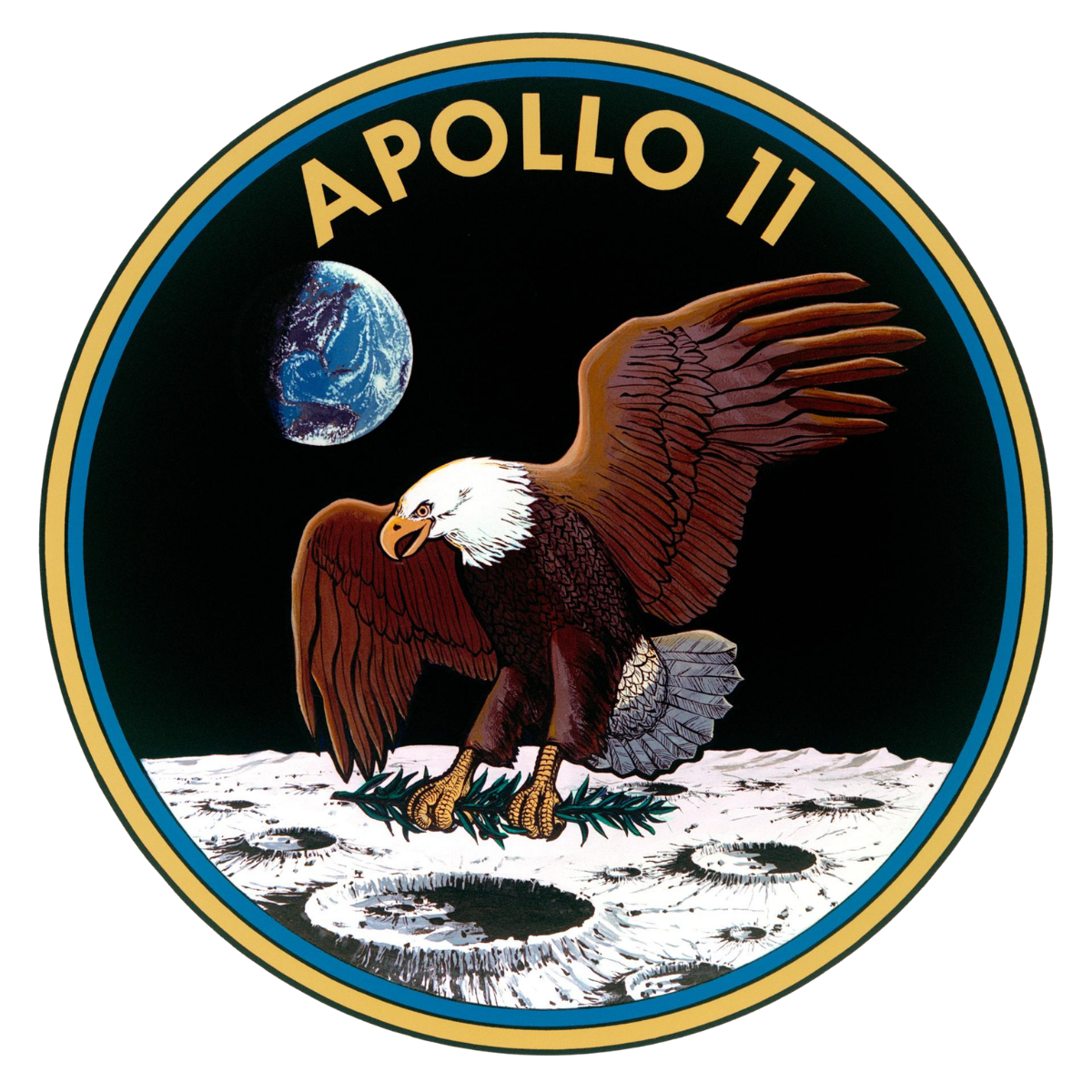
Expand The official emblem of Apollo 11, the United States' first scheduled lunar landing mission.

The crew of Apollo-11 decided that the mission patch for the historic first crewed landing on the Moon should carry the recognisably American symbol of the bald eagle. 

With Earth in the background, the olive branch in the eagle’s claws, symbolised that the crew “came in peace” despite Cold War rivalries.

This was also the first patch not to include the names of the crew, as Armstrong, Aldrin and Collins wanted it to represent the achievement of the 400,000 people who worked on the Apollo program.

Image credit: NASA

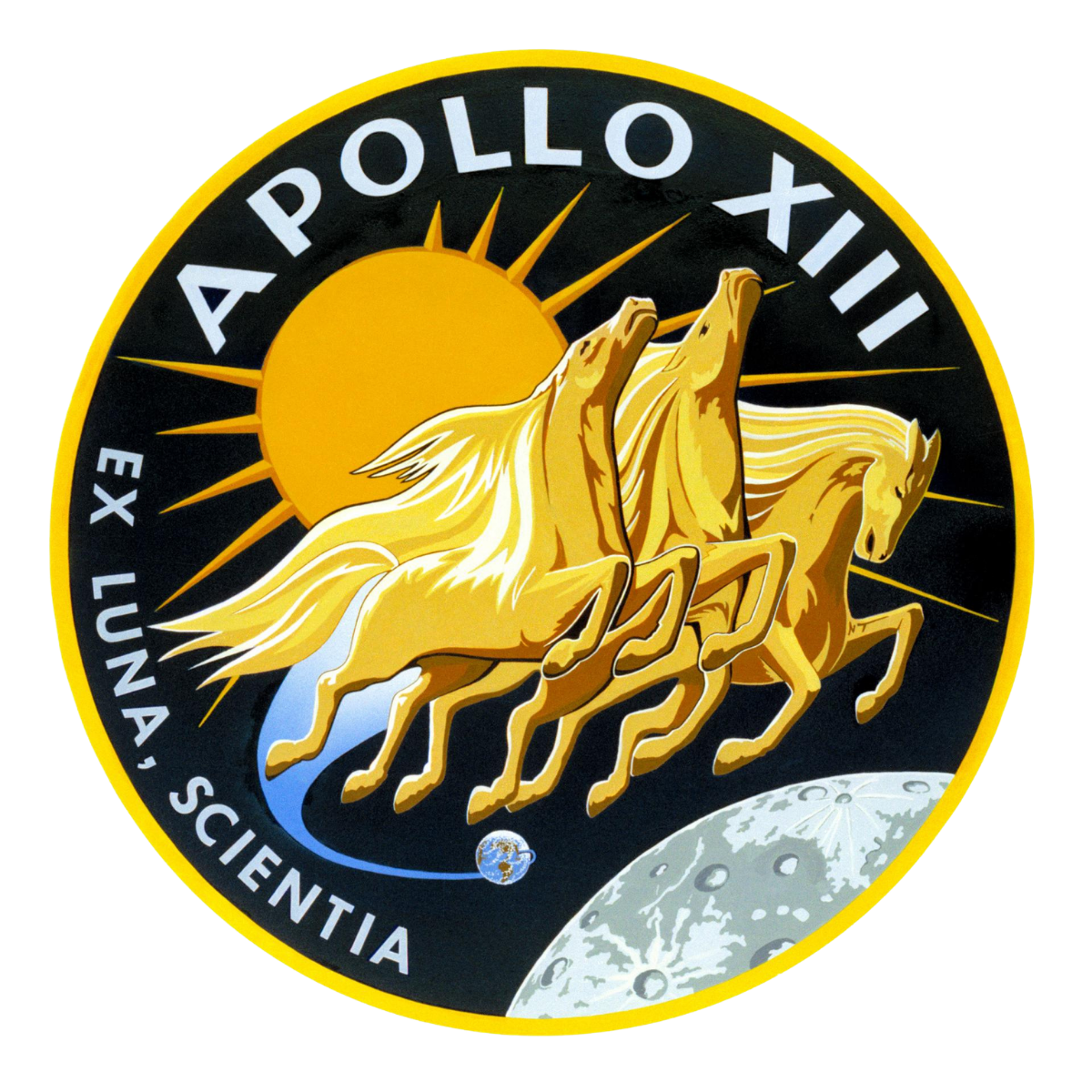
Expand Apollo 13 patch carries carries a Latin motto meaning “From the Moon, knowledge”

Apollo-13’s patch is an interesting example. 

It carries a Latin motto (meaning “From the Moon, knowledge”) in place of the crew’s names, to represent their view that they were exploring the Moon for all Humanity. 

The powerful image of the Sun rising behind the horses of the god Apollo’s chariot plays upon both the project name and the mission motto, as Apollo was the god of both the Sun and knowledge. 

Using Roman numerals for the mission number also complemented the classical connections of the mission’s spacecraft names – Odyssey and Aquarius. 

Image credit: NASA

Expand mission patch for the maiden orbital flight of Space Shuttle Columbia (launched April 12, 1981)

Astronauts John Young and Robert Crippen opted for a simple design for the mission patch of the first flight of the Space Shuttle, the world’s first re-usable spacecraft system. 

Symbolising the test flight nature of the mission, the complete Shuttle vehicle is depicted in its launch configuration, soaring into space, with the re-usable Orbiter seen in orbit around the Earth. 

As NASA operated a fleet of Shuttles, the name of the vehicle assigned to that flight was often included in the mission patch. 

Image credit: NASA

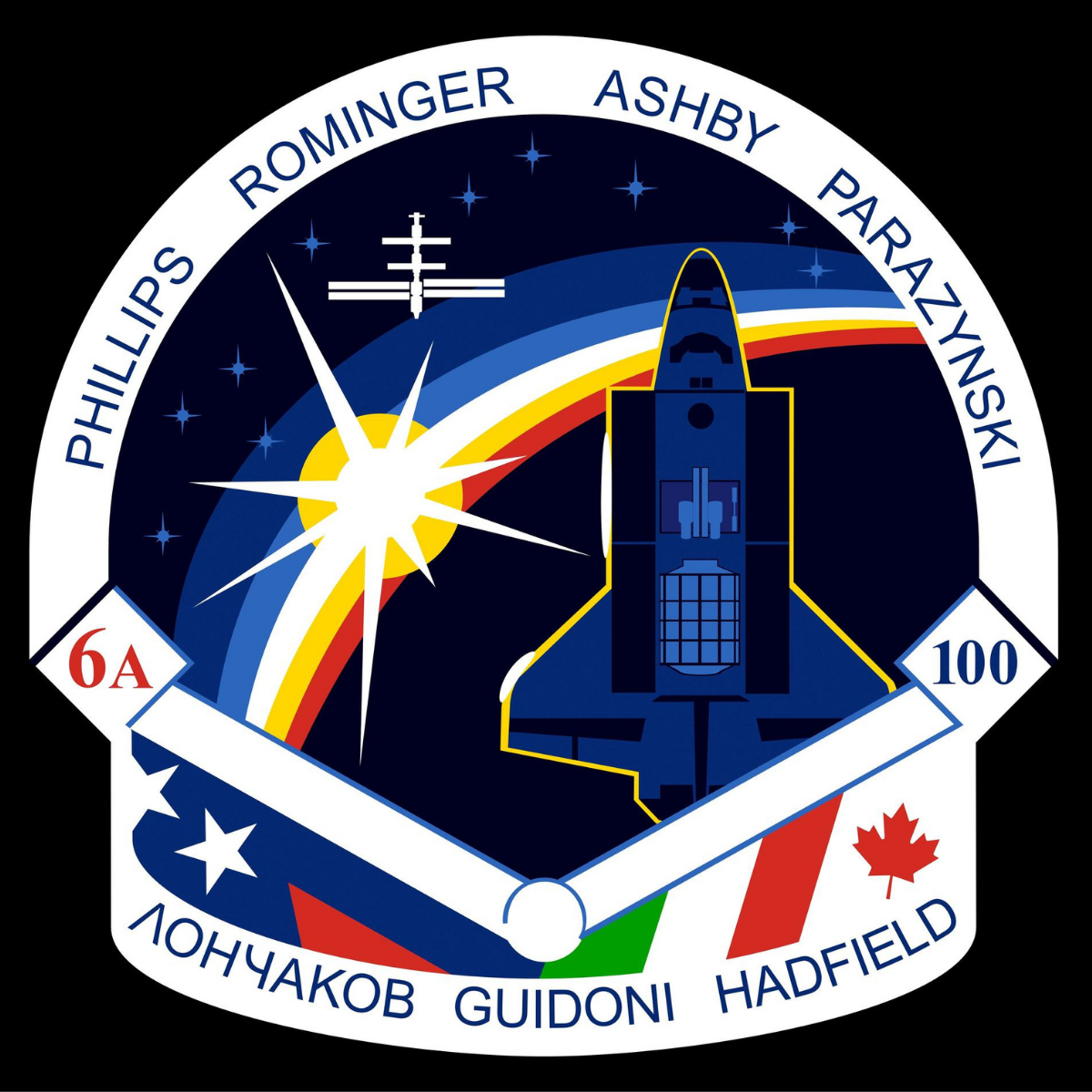
Expand The STS-100/6A emblem reflects the complex interaction of robotics and extravehicular activity (EVA) on this mission.

During the Shuttle era, mission patches became more varied in shape and symbolically rich. 

STS-100 was International Space Station (ISS) assembly flight 6A, with both numbers included on the patch.

The spacesuit-helmet shape represented the spacewalks to attach the Canadian-built Robotic Manipulator System. 

Reflected in the visor is the ISS and Shuttle Endeavour, its cargo bay holding the Italian-built Multi-Purpose Logistics Module “Raffaello.” 

The crew included American, Russian, Canadian, and Italian astronauts, represented by their flags. 

The ten stars represent the crew’s children and the future of space exploration.

Image credit: NASA

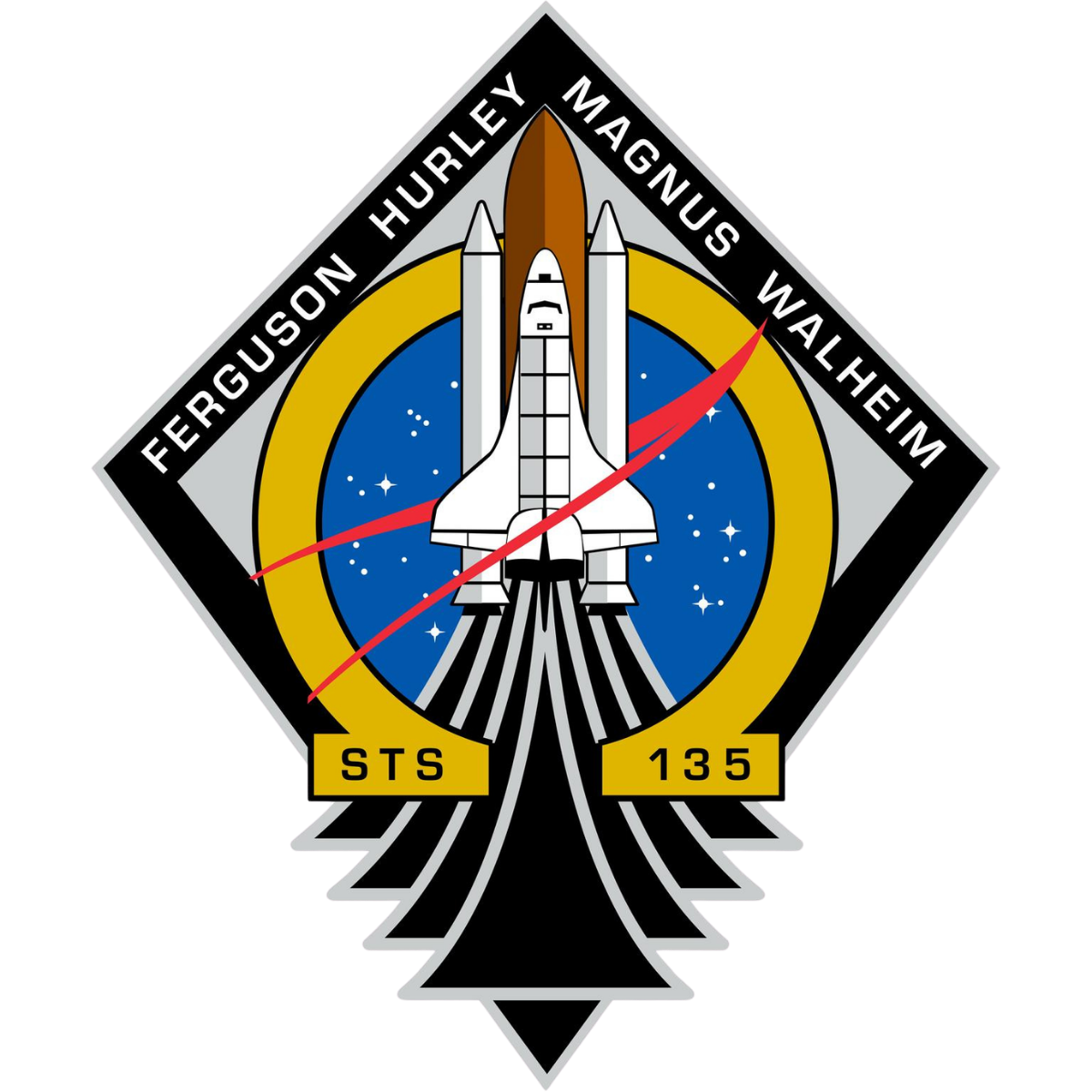
Expand The STS-135 patch represents the space shuttle Atlantis embarking on its mission to resupply the International Space Station.

The design for STS-135, the final Shuttle mission, echoed the STS-1 mission insignia, while also recognising the Shuttle Atlantis embarking on its final resupply mission to the ISS. 

Elements of the NASA logo around the Shuttle represent its 30-year service and pay tribute to the NASA and contractor workforce behind the Shuttle program. Omega, the last letter in the Greek alphabet, signified the mission as last flight of the Space Shuttle program.

Image credit: NASA

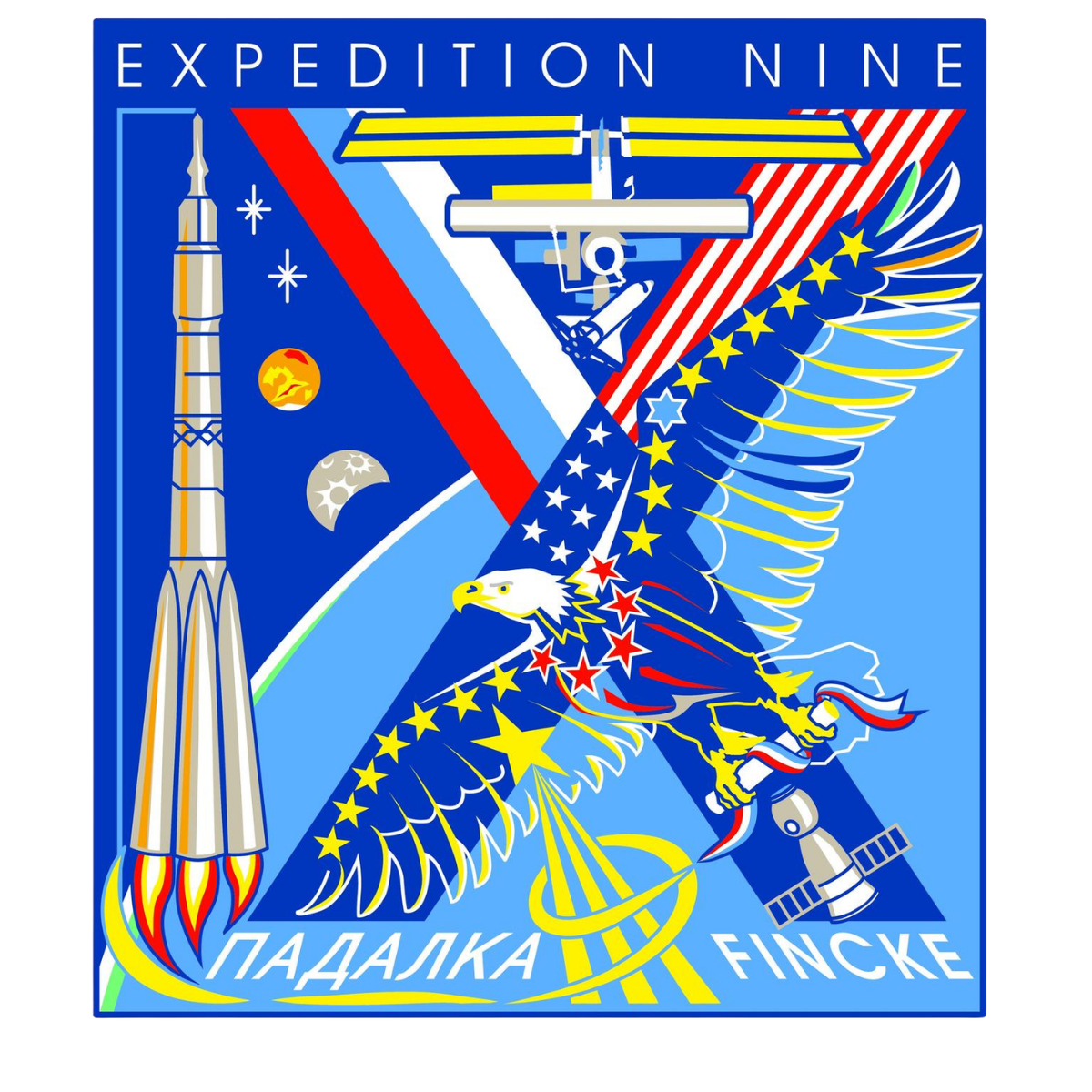
Expand This emblem represents the Ninth Expedition to the International Space Station (ISS). The Soyuz rocket and letter "X" combine into the Roman numeral IX. The "X" evokes Exploration, which is at the core of the indivisible partnership of the two space pioneering nations.

ISS crews initially travelled to the station either via Space Shuttle or Russian Soyuz rocket. 

Both appear on the 2004 Expedition 9 patch, which is crowded with symbolism. 

The Soyuz rocket and letter "X" form the Roman numeral IX, with the "X" evoking Exploration. 

ISS research supports future human exploration of the Moon and Mars, both included in this design. 

The stars along the wings of the eagle spirit honour lost astronauts and cosmonauts, with baton of discovery being passed to the crew aboard the Soyuz vehicle travelling to the ISS. 

The Astronaut symbol is flanked by the crew names, with a "9" stylised as the plume of their rocket. 

Image credit: NASA

Expand The dynamic design of the Expedition 36 patch portrays the International Space Station's (ISS) iconic solar arrays. The slanted angles denote a kinetic energy leading from the Earth in the lower right to the upper left tip of the triangular shape of the patch, representing the infinite scientific research, education,

The unusual design Expedition 36’s 2012 patch portrays the solar arrays of the ISS, providing the energy to support the station’s scientific research, education, and long-duration spaceflight capabilities.

The future destinations of the Moon and Mars appear within the exhibition number, while the central gold orbit around the 36 forms a trident symbolising the Earth’s land, sea and air. 

The flags of the multi-national crew are also included as a symbol of unity.

Image credit: NASA

Expand The Expedition 71 patch celebrates this science as well as the thousands of multinational scientists and technicians that have contributed to numerous groundbreaking experiments.

Marking 25 years of the ISS, the 2023 Expedition 71 mission patch celebrated the science conducted on board, as well as the thousands of multinational scientists and technicians contributing to its groundbreaking experiments. 

The design depicts a wide range of research, while the human eye and microscope objectives at upper left represents the disciplined practice of scientific observation. 

Looking forward to the Artemis program, the Moon and Mars are also depicted as the next steps for exploration.

Image credit: NASA

Expand The patch design for NASA’s first SpaceX Crew Dragon mission to the ISS in 2020, focussed on the spacecraft and the symbolic dragon of its name.

The patch design for NASA’s first SpaceX Crew Dragon mission to the ISS in 2020, focussed on the spacecraft and the symbolic dragon of its name. 

The Crew-1 astronauts dedicated the patch to their families and the NASA and SpaceX employees who worked together on the program, so they did not include individual names or national flags.

Instead, symbols of the Shuttle, Apollo, Gemini and Mercury programs mark the legacy of human spaceflight, with the ISS at the top of the design. 

Image credit: NASA

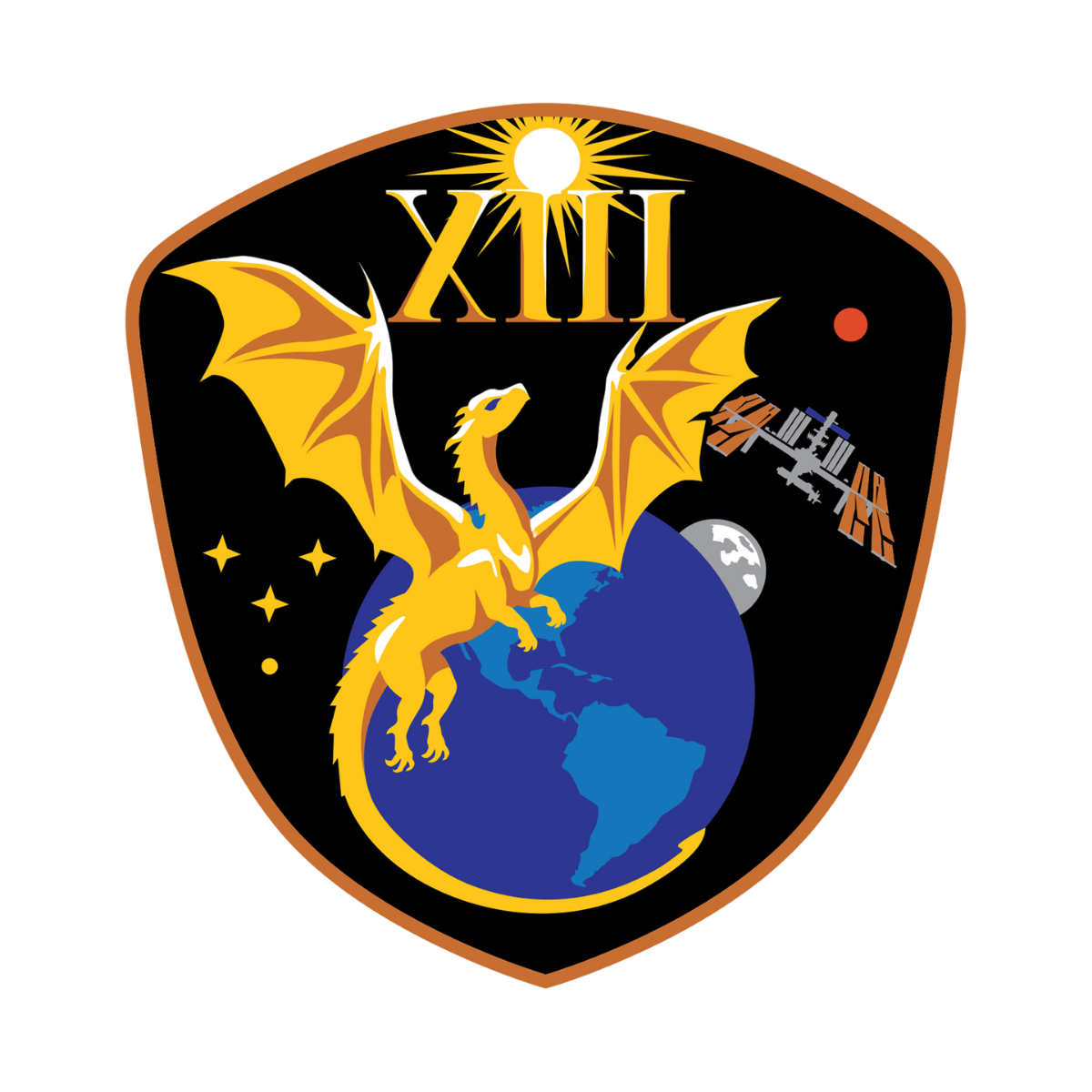
Expand The recent SpaceX Crew-13 mission paid homage to Apollo-13 in many of its mission patch design elements, including the use of Roman numerals, the prominent Sun of knowledge, and the absence of the crew’s names to symbolise all Humanity.

The recent SpaceX Crew-13 mission paid homage to Apollo-13 in many of its mission patch design elements, including the use of Roman numerals, the prominent Sun of knowledge, and the absence of the crew’s names to symbolise all Humanity. 

The golden horses of Apollo’s chariot are matched by Crew-13’s golden dragon, symbolising the SpaceX Dragon that is the modern astronauts’ space chariot. 

The curved path of Apollo’s horses is also echoed in the dragon’s tail that wraps around Earth creating a similar path line that follows along the dragon’s outstretched wing to the ISS. 

The Moon and Mars in the background symbolise the future destinations of the Artemis program.

Image credit: NASA

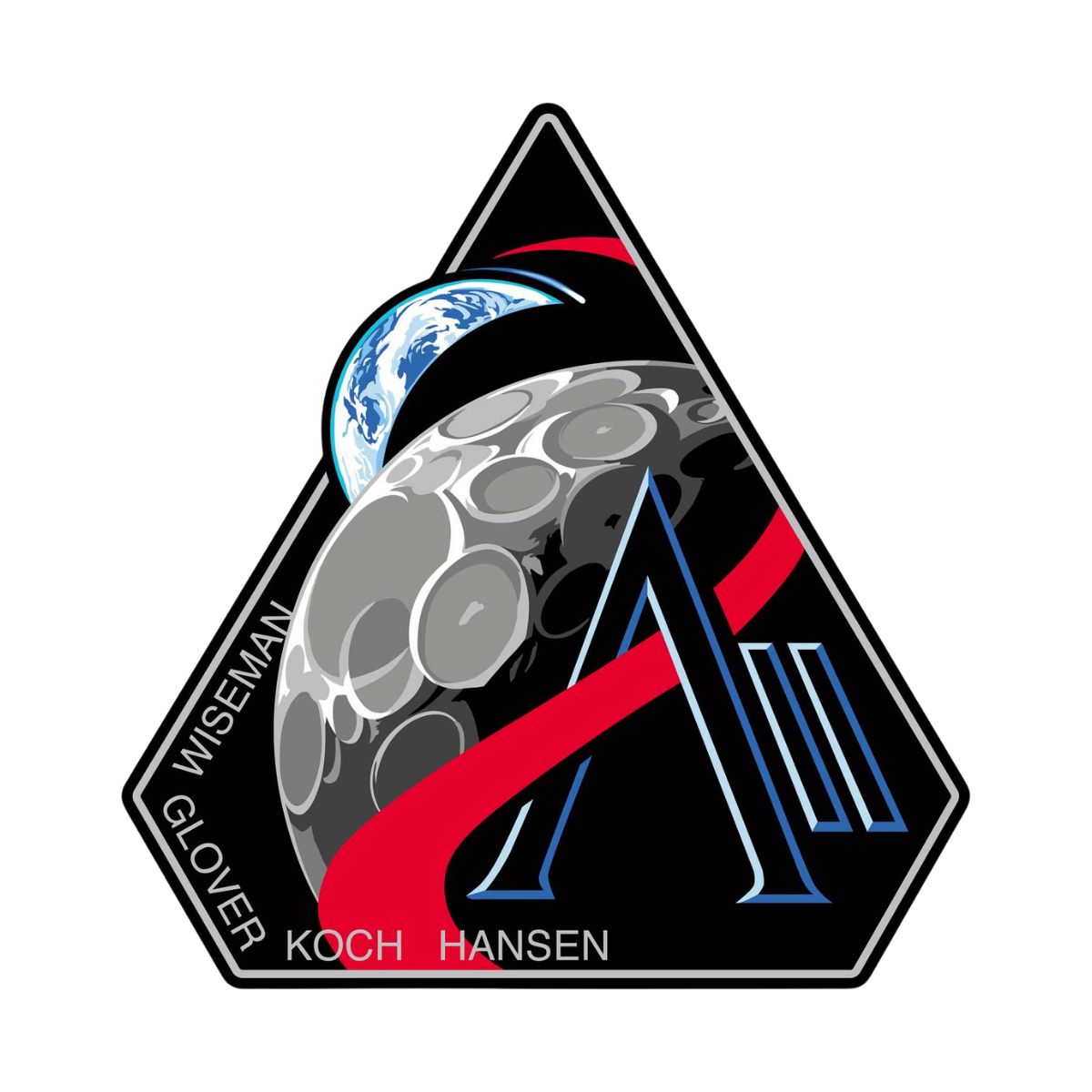
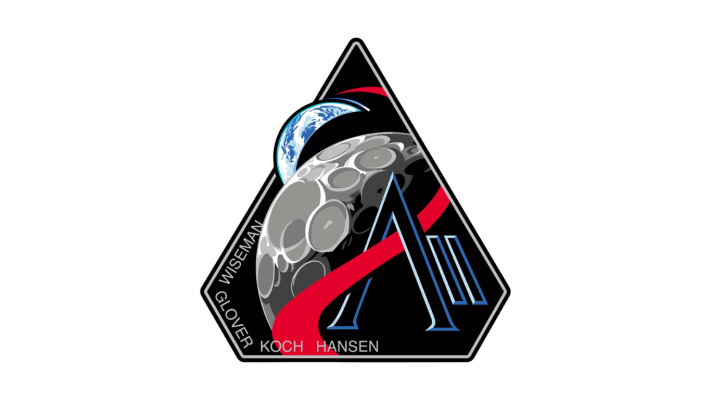
Expand design of the Artemis II mission patch belies its significance as the first human mission to return to the Moon since 1972. The mission number, using the Roman numeral “II”, looks like “AII,” signifying exploration for all and by all.

The simple design of the Artemis II mission patch belies its significance as the first human mission to return to the Moon since 1972.

The mission number, using the Roman numeral “II”, looks like “AII,” signifying exploration for all and by all. 

The depiction of the Earth and the Moon draws on Apollo-8’s famous Earthrise photo, and the red “8” path to the Moon and back on its mission patch.

Image credit: NASA

Expand Illustrated by space artist Pat Rawlings, the mission patch incorporates a group of seven stars, representing the first seven-person crew.

The first Australian-born space traveller, Dr. Paul Scully-Power, an oceanographer, flew aboard the STS-41G Shuttle mission in 1984.

Illustrated by space artist Pat Rawlings, the mission patch incorporates a group of seven stars, representing the first seven-person crew. 

The overall total of 17 stars indicated the 17th flight Shuttle flight, but schedule changes meant that STS-41G was the 13th mission.

Stylised male or female symbols sit beside each name, which includes Sally Ride, the first female US astronaut. 

A Canadian flag marks the first flight of a Canadian astronaut. Scully-Power flew as a US citizen, not an Australian. 

Image credit: NASA

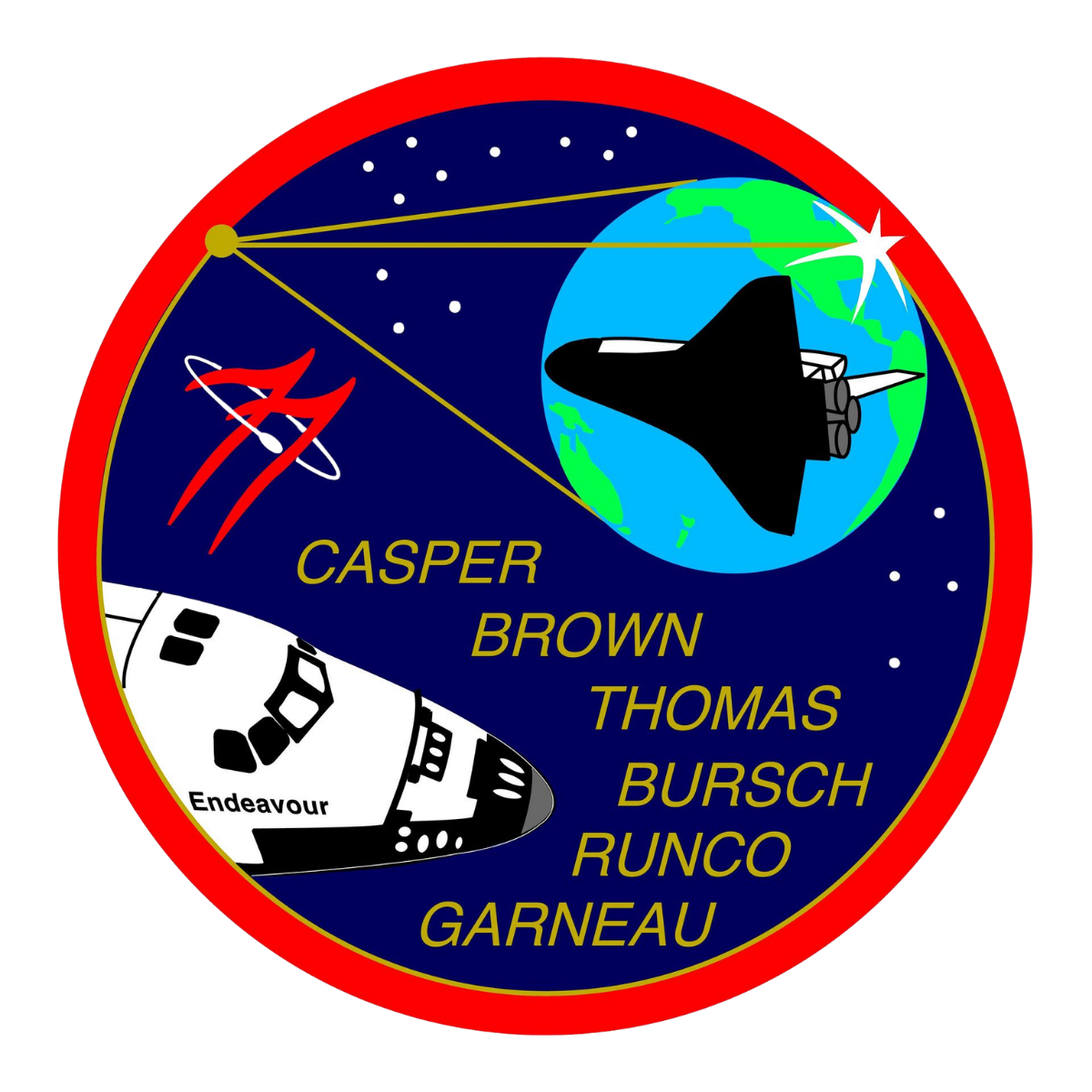
Expand Dr. Andy Thomas, the first Australian-born NASA Mission Specialist, made four space flights, the first on STS-77 in 1996. This mission patch represents that journey

Dr. Andy Thomas, the first Australian-born NASA Mission Specialist, made four space flights, the first on STS-77 in 1996. 

The mission patch shows Shuttle Endeavour and the Earth reflected in the mirror of the SPARTAN Inflatable Antenna Experiment, as well as the star-like PAM/STU satellite. 

Earth is oriented to show the origin countries of the crew and the Pacific Ocean Captain Cook explored in the original Endeavour. 

The mission number “77” is adapted from NASA’s logo, while the field of 11 stars represents the number of experiments and the 11th flight of Endeavour. 

Image credit: NASA

Expand This patch is shaped like a “space hopper”, a bouncy balloon children’s toy, and shows each astronauts bouncing of a space hopper showing their national flag. Katherine Bennell-Pegg, coming from “Down Under”, is upside down

Australian astronaut Katherine Bennell-Pegg and her five colleagues from the European Space Agency (ESA) were nicknamed “the Hoppers”, based on their ambition to hop in low gravity, either on the ISS or the Moon. 

Katherine is the first professional astronaut to officially represent Australia.

She graduated from the ESA’s astronaut training program in April 2024. This makes Katherine eligible for missions to the International Space Station and beyond.

This patch was created by ESA graphic designer Karen Lochtenberg and is shaped like a space hopper: A bouncy balloon children’s toy and shows each astronaut bouncing of a space hopper showing their national flag. 

Coming from “Down Under”, Katherine is illustrated as upside down. 

The 12 white stars represent the 12 members of the ESA astronaut reserve selected alongside the Hoppers, while the backdrop features the windows of the European-built Cupola on the ISS. 

Image credit: European Space Agency

Latest from the Australian space sector
Main image caption: The Artemis II mission patch belies its significance as the first human mission to return to the Moon since 1972. 

The mission number, using the Roman numeral “II”, looks like “AII,” signifying exploration for all and by all. 

The depiction of the Earth and the Moon draws on Apollo-8’s famous Earthrise photo, and the red “8” path to the Moon and back on its mission patch.

Credit: NASA

Our department recognises the First Peoples of this Nation and their ongoing cultural and spiritual connections to the lands, waters, seas, skies, and communities.

We Acknowledge First Nations Peoples as the Traditional Custodians and Lore Keepers of the oldest living culture and pay respects to their Elders past and present. We extend that respect to all First Nations Peoples.

Back to top