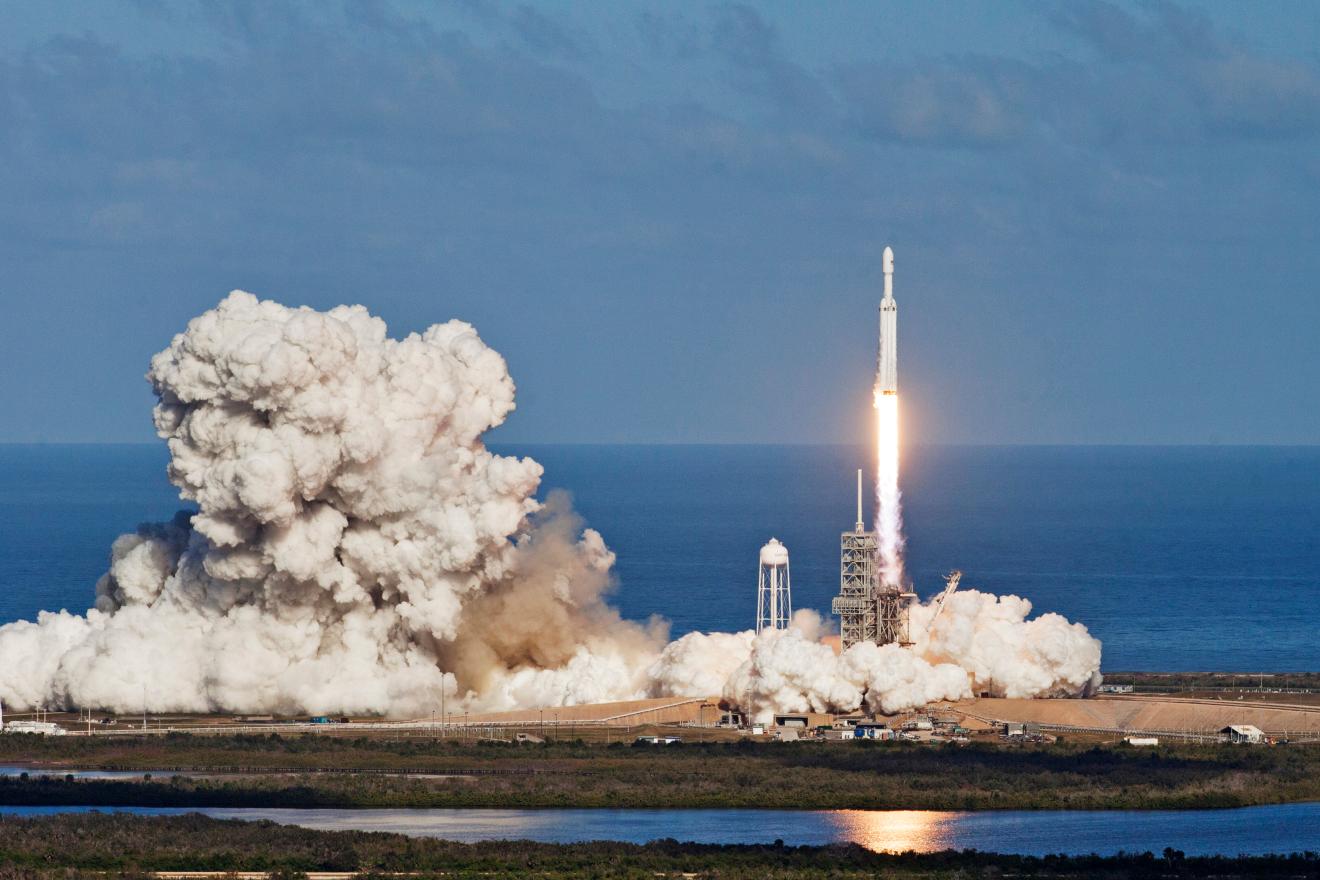
The Maximum Probable Loss Methodology sets out the method to be used to calculate the maximum probable loss that might occur due to certain space activities.

Overview 

Insurance is required to provide financial protection against the consequences of events considered sufficiently probable. You can use the methodology to determine the amount of insurance required for:

  • Australian launch permits
  • high power rocket permits
  • overseas payload permits
  • return authorisations.

See Permits and authorisations for more information about the requirements for these activities.

Estimator tool

We can provide a tool to estimate maximum probable loss, using the inputs of the Maximum Probable Loss Methodology. 

The tool is not intended to be a comprehensive calculator of maximum probable loss and is not a substitute for independent specialist advice. The results of the tool cannot be used in an application to conduct space activities.

To request the tool

Email regulations@space.gov.au to request the tool and user guide.
Latest from the Australian space sector

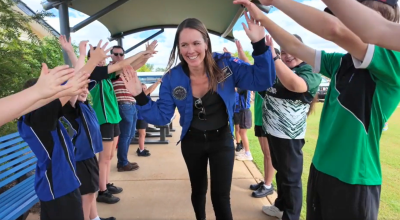
Katherine Bennell-Pegg with students at Charlesville

Aussie astronaut’s outreach program inspires thousands across the nation

NEWS • Inspiring Australia

29 May 2026

Since March, the 2026 Australian of the Year Katherine Bennell-Pegg has been touring states and territories, empowering students and communities, and promoting Australia's space sector.

Read more
Promotional graphic for an event titled space day out that will be held on 19 July.

Special event: Space Day Out

NEWS • Inspiring Australia

28 May 2026

The Agency, supported by Inspiring SA, South Australian Space Industry Centre and Lot Fourteen, will deliver Space Day Out on Sunday 19 July. The celebrations will mark the start of this year's Australian Space Week.

Read more
A visitor interacting with the Buccaneer exhibit at the Australian Space Discovery Centre

New defence satellite exhibit at the Australian Space Discovery Centre

NEWS • Australian Space Agency

25 May 2026

Visitors can learn more about the Buccaneer Main Mission and how this cutting-edge Aussie technology will help us understand how radio waves travel.

Read more
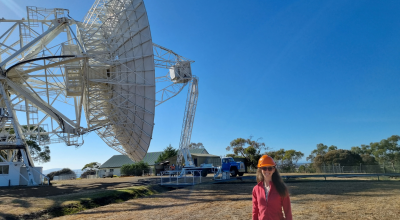
Located at Tidbinbilla, just outside Australia's capital city, the Canberra Deep Space Communication Complex is one of three Deep Space Network stations around the world. At 70-metres in diameter and the height of a 22-storey building, Deep Space Station 43 is the largest antenna in the southern hemisphere.

From Apollo to Artemis: Australia's Moon tracking capabilites

NEWS • Space history and culture

22 May 2026

Australian facilities and expertise have supported NASA’s Moon missions from the earliest lunar probes to the Artemis program. Explore with our interactive image gallery the first to the latest Aussie space tracking capabilities.

Read more
1 (MAIN) - A lunar rover and lunar lander in LunarSim (Element Robotics)

Cruising a virtual Moon

NEWS • Industry showcase: Space spotlight

21 May 2026

Can you imagine driving on the Moon at your office desk? With new simulation technology, Element Robotics is saving missions valuable time and money – and above all, making it easy.

Read more
The next-generation payload

New Myriota IoT payload ready for the market

NEWS • National capability

21 May 2026

To support space missions with Internet of Things communication, the Aussie company will use space-enabled technology it currently provides on Earth.

Read more

Our department recognises the First Peoples of this Nation and their ongoing cultural and spiritual connections to the lands, waters, seas, skies, and communities.

We Acknowledge First Nations Peoples as the Traditional Custodians and Lore Keepers of the oldest living culture and pay respects to their Elders past and present. We extend that respect to all First Nations Peoples.