Australia has welcomed the first major spacecraft return of the year with national space capability continuing its rapid ascent.
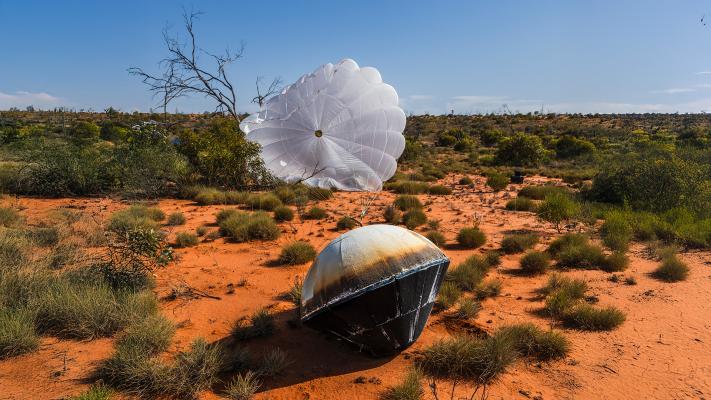
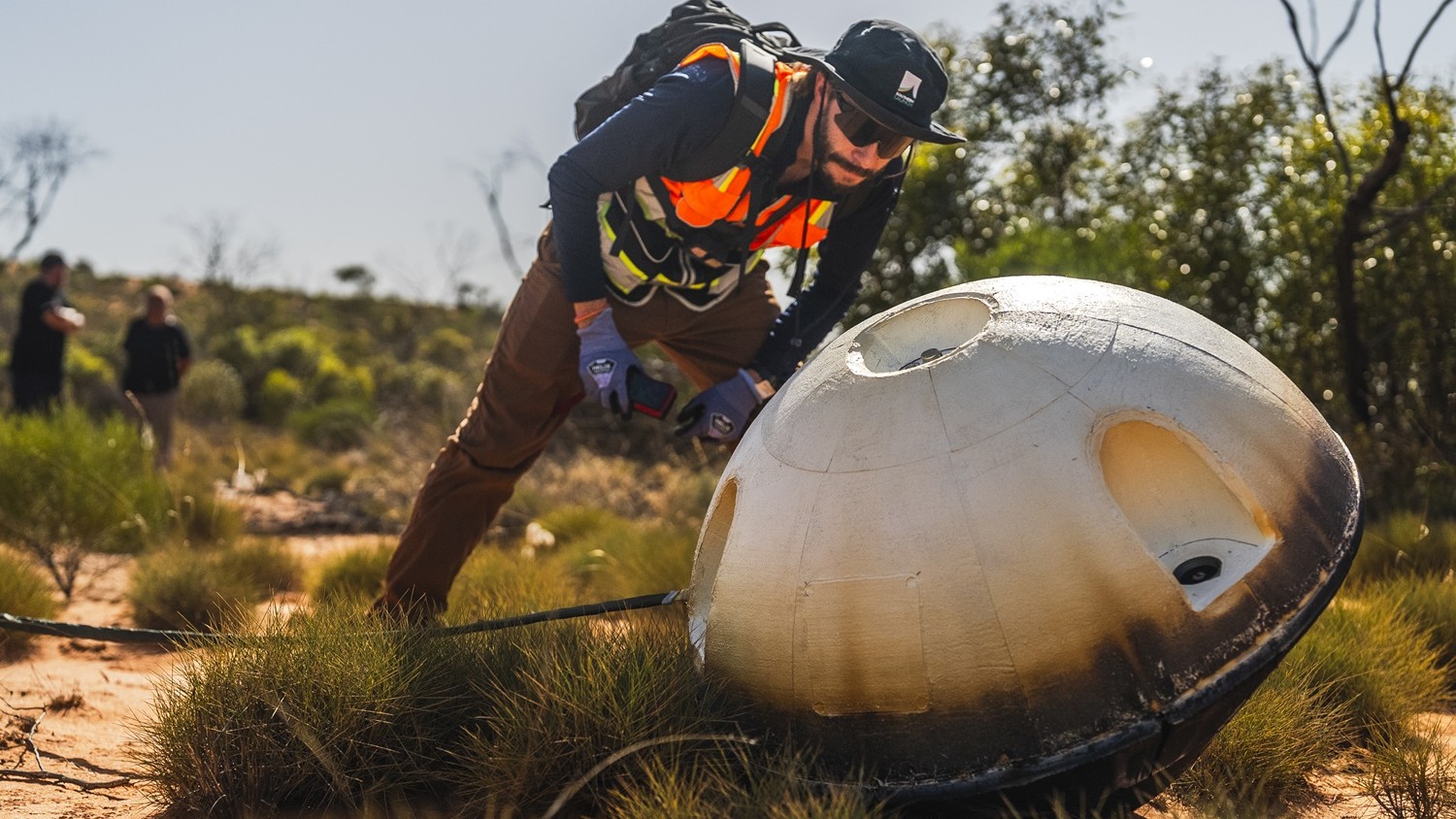
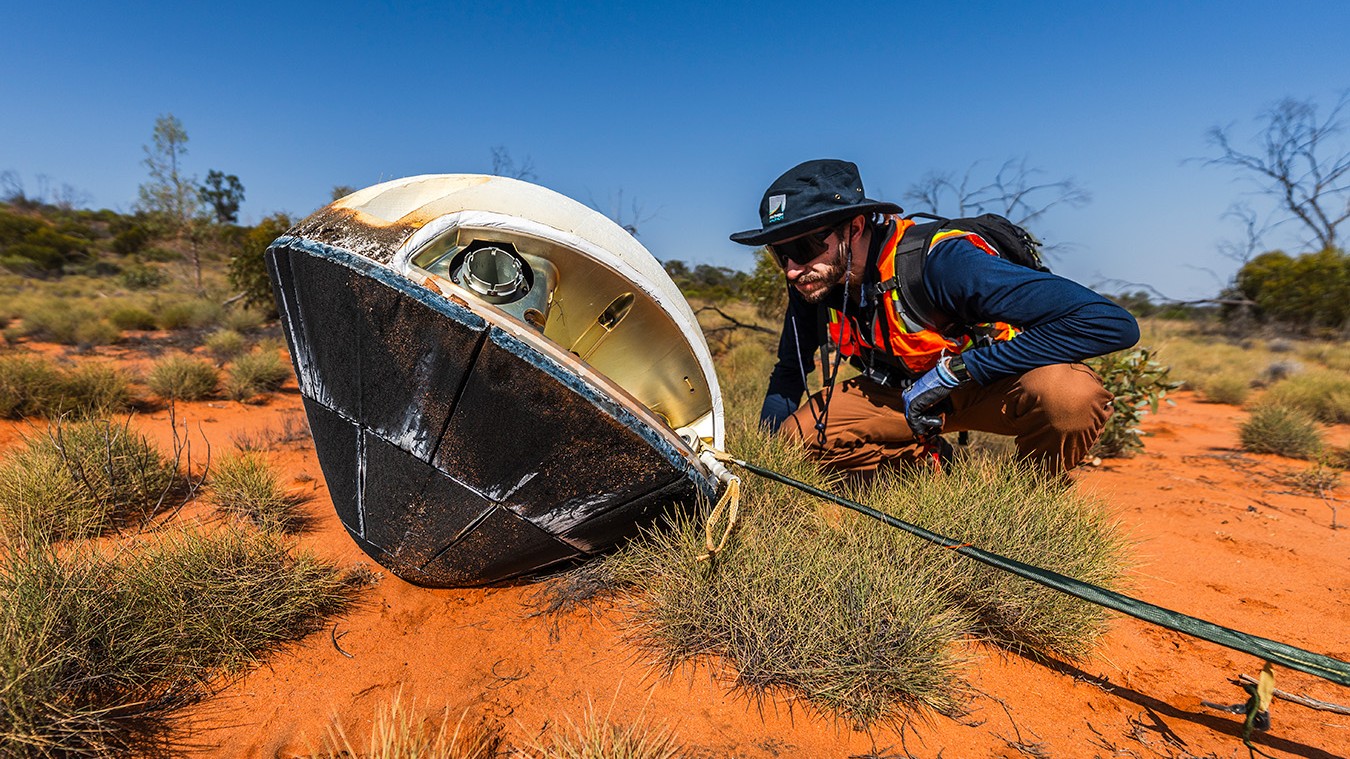
Overnight, Southern Launch successfully supported the orbital re‑entry of Varda Space Industries’ W‑5 capsule. The spacecraft safely landed at the Koonibba Test Range in regional South Australia.
The mission proved to be a platform to process pharmaceuticals and conduct other microgravity research as well as a milestone for a heat shield experiment for NASA and the American space industry.
“Every spacecraft return strengthens Australia’s reputation as a trusted global destination for safe, reliable orbital re‑entries.
The W‑5 mission reinforces our ongoing collaboration with Varda and highlights just how much capability, and awe, we can deliver right here in South Australia.”
~ Llyod Damp, CEO, Southern Launch

Supporting a thriving orbital economy
Today's landing marks Varda’s latest step in advancing in‑orbit research and manufacturing, but also highlights Australia's role in a thriving orbital economy.
The company's latest space return follows the signing of a landmark agreement between Southern Launch and Varda Space Industries at the International Astronautical Congress 2025. Their deal will now see 19 more Varda return missions to the Koonibba Test Range — a transformational boost for sovereign capability and regional innovation.
“W-5 reinforces the advantage of building the integrated system in-house. By owning the spacecraft, the capsule, and the mission operations end-to-end, we can iterate faster, fly more often, and reliably bring complex manufacturing processes back to Earth."
~ Nick Cialdella, CTO, Varda Space Industries.
The spacecraft carried with it to orbit and back advanced pharmaceuticals, novel technologies, and scientific payloads with applications from industry and government agencies as well as a unique heat shield capability.
W-5 had a layer of cutting-edge material licensed from NASA and manufactured by Varda. The material, known as C-PICA (Conformal Phenolic Impregnated Carbon Ablator), provided a stronger, less expensive, and more efficient thermal protection coating to the capsule, allowing it – and its valuable contents – to return to Earth safely.
"Heat shields allow us to bring the benefits of work done in space, including medical research, technology development, and scientific discovery, down to Earth to improve our everyday lives."
~ Greg Stover, Associate Administrator (Acting), Space Technology Mission Directorate
The W-5 achievement follows another major success at Koonibba late last year with the first launch of AtSpace’s A01 rocket, a locally built vehicle that completed its maiden flight and validated its cutting‑edge hybrid propulsion system.
As Australia’s space sector continues to surge, missions like W‑5 demonstrate the nation’s readiness to support the next era of space innovation — from launch to landing, and everything in between.

Responsibility and regulations
Building a culture of safety and sustainability
Main image credit: William Godward.