As humans prepare to go back to the Moon for the first time in more than 50 years, Australia is ready to make its mark as part of NASA’s history-defining Artemis Program.
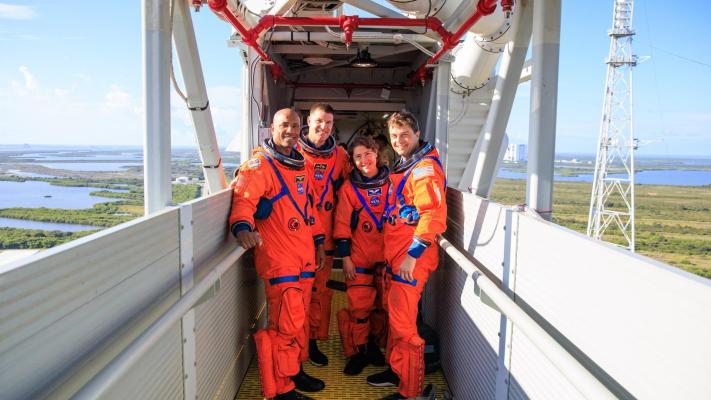
Launched today (Australian time), NASA’s Artemis II mission will see four astronauts spend approximately 10 days in space – completing a full orbit of the Moon, ahead of future Artemis missions that will put boots back on the lunar surface.
Building on our legacy from Apollo, Australia now enters a new era of lunar exploration by providing unique, cutting-edge capability to Artemis II through:
- The Commonwealth Scientific and Industrial Research Organisation (CSIRO)
- The Australian National University (ANU)
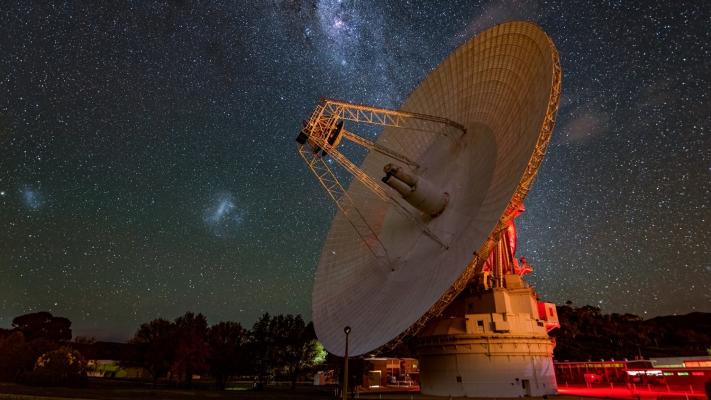
CSIRO, Australia's national science agency, will bring its tracking expertise through the antennas and facilities it operates across the country, including NASA’s Canberra Deep Space Communications Complex.
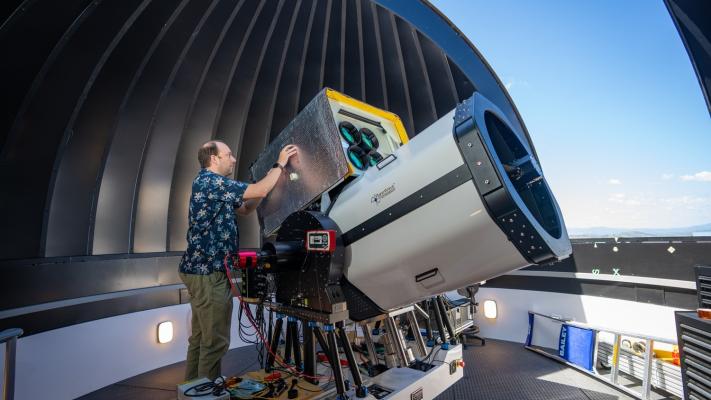
The ANU Quantum Optical Ground Station will demonstrate advanced laser (optical) communications for the mission. The facility received $4.5 million in Australian Government funding.
Strengthening space partnerships and unlocking Earth-based innovations
“Australians played a proud role in the Apollo program and now we’ll be there half a century later alongside our partners as humans head back to the Moon with Artemis.
“Artemis II is an opportunity to build off our legacy and unique geography while bringing in new Aussie ingenuity and technical know‑how.
~ Head of the Australian Space Agency Enrico Palermo
As a founding signatory to the Artemis Accords in 2020, Australia has committed to the principles and partnerships guiding safe and sustainable exploration of the Moon and beyond.
Our ongoing assistance for NASA's space exploration programs continued through the successful Artemis I launch in 2022, with Australian facilities once again supporting mission tracking and communications.
“Artemis is another reminder of the role Australia can play in landmark global space programs and reinforces our position as a trusted partner in space.
“The Australian Space Agency is proud to have supported the development of a suite of Aussie technologies that will support this next transformative moment in space history.”
~ Head of the Australian Space Agency Enrico Palermo
Future Aussie Moon projects
Australia’s role does not stop with Artemis II.
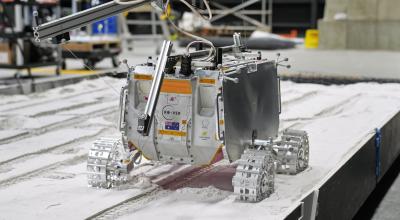
We will also bring an array of diverse technologies to the Moon as part of Artemis III and other supporting lunar missions. Many of the technologies have been backed through Australian Government programs, including Roo-ver, Australia’s first lunar rover that will go to the Moon in 2030.
Australia in the Artemis era
Learn more about the Aussie innovations and capabilities that are supporting humanity’s historic return to the Moon.