Sitting on a peak at Bisdee Tier, about 70 kilometres north of Hobart, is Tasmania’s most advanced link to the cosmos.
Key facts
Key facts
- Greenhill Observatory’s telescopes and antenna enable astronomy, space object tracking, and spacecraft communication.
- The observatory can detect and study space weather events that pose risks to services on Earth like energy, communications, navigation, and transport.
- The team is also fostering a new generation of skilled professionals ready to address space domain challenges of the future.
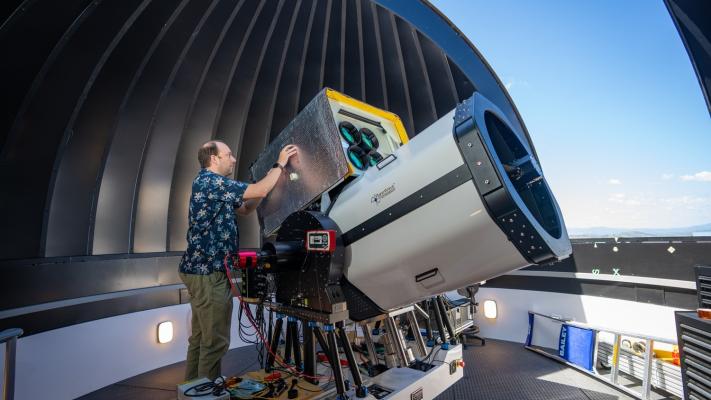
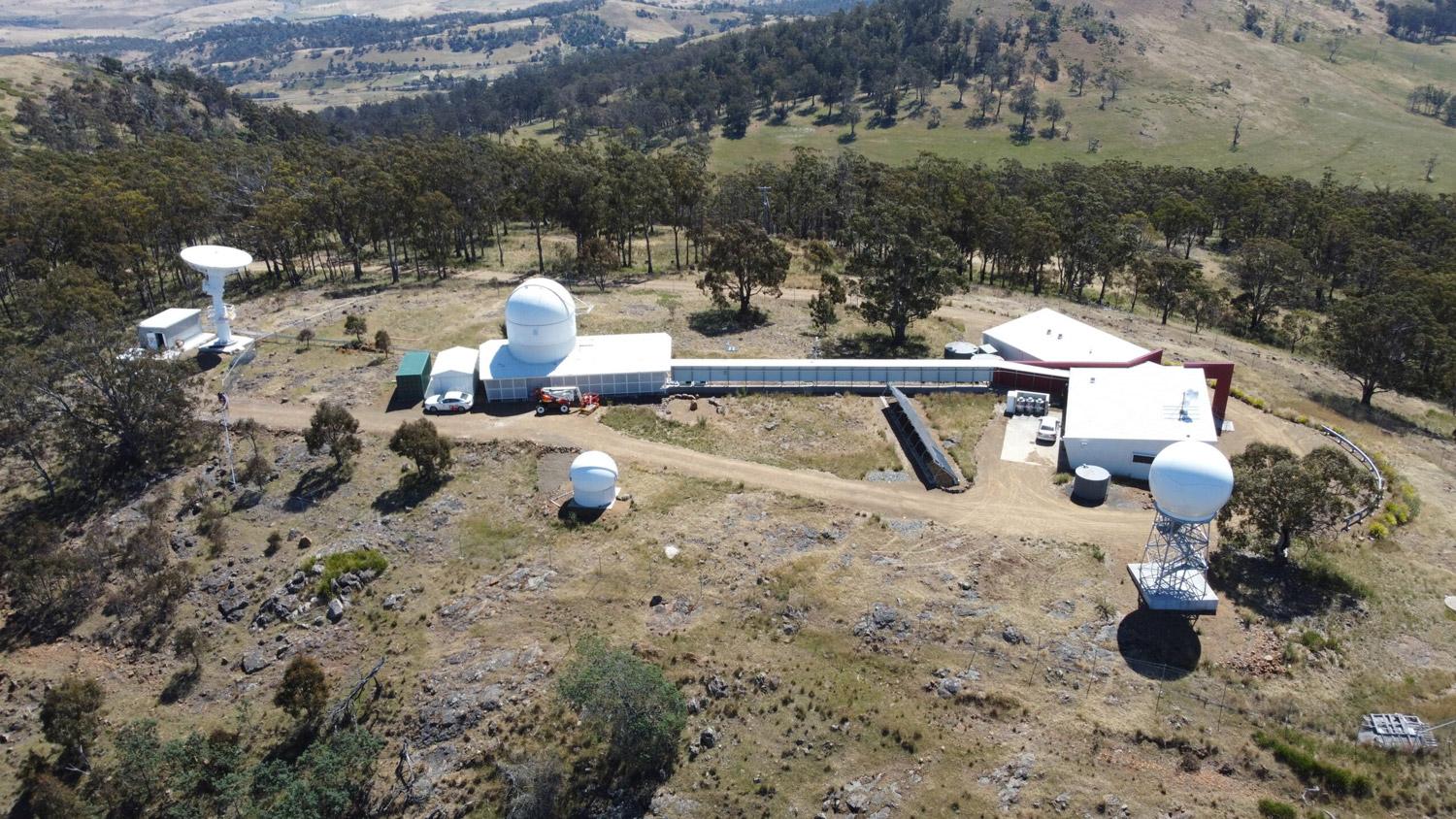
Established by the University of Tasmania (UTAS) in 2013, Greenhill Observatory was built to replace the Canopus Hill Observatory from the 1970s.
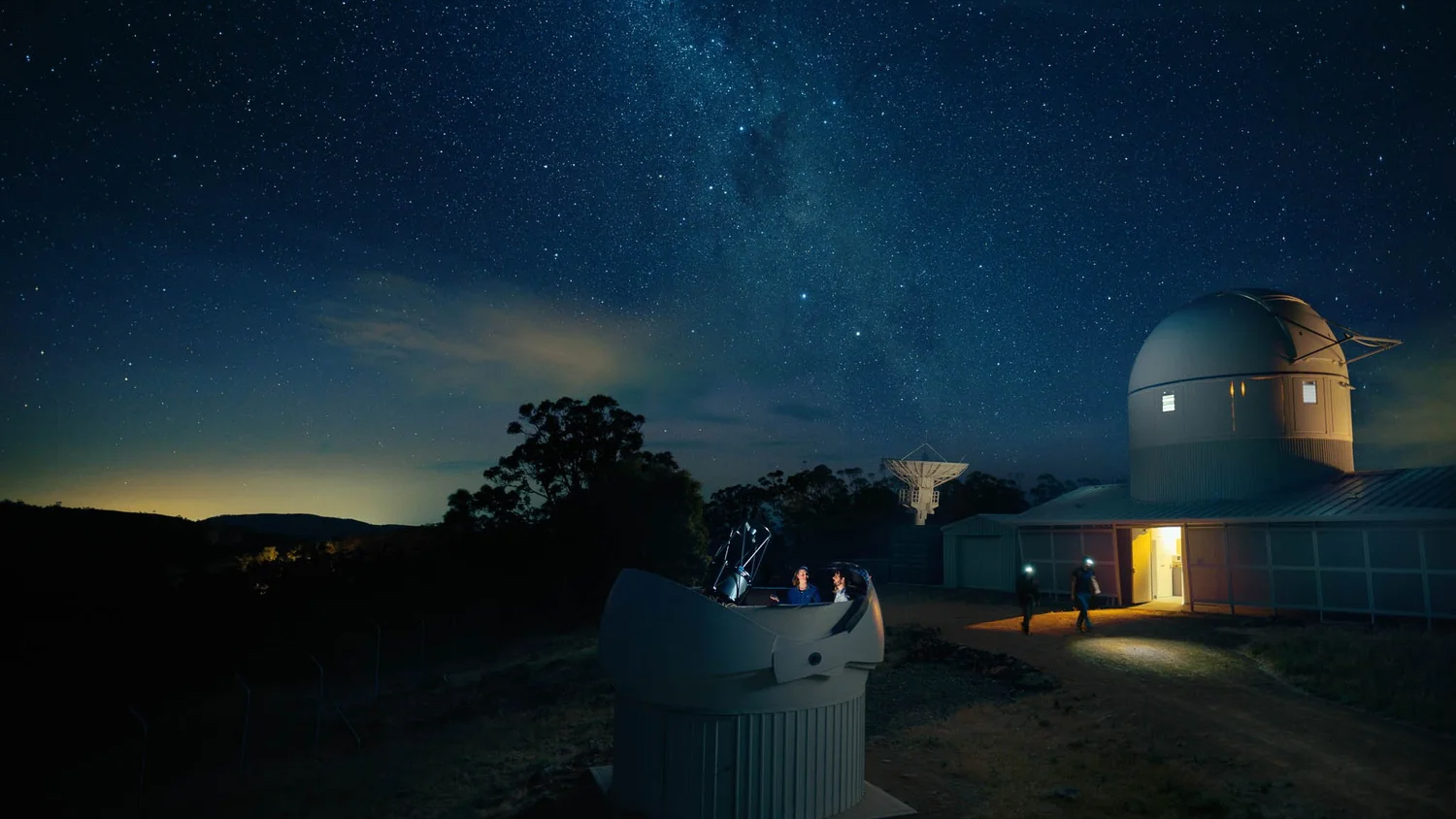
Canopus Hill became swamped by light pollution from the outward growth of suburban Hobart over the decades. By contrast, the Greenhill site is a dark, radio-quiet location in a dry part of Tasmania; an ideal home for the University to continue its optical astronomy work.
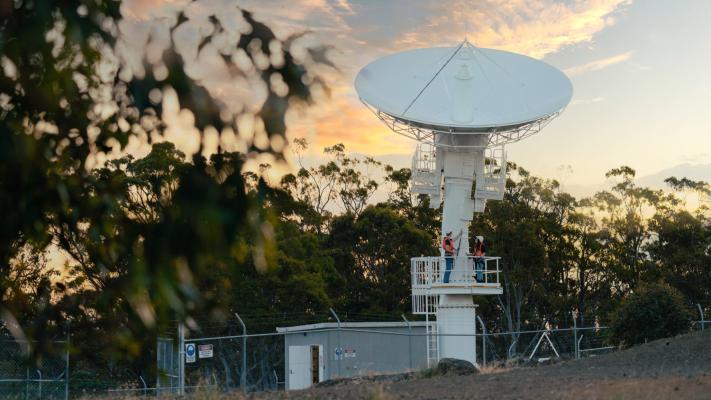
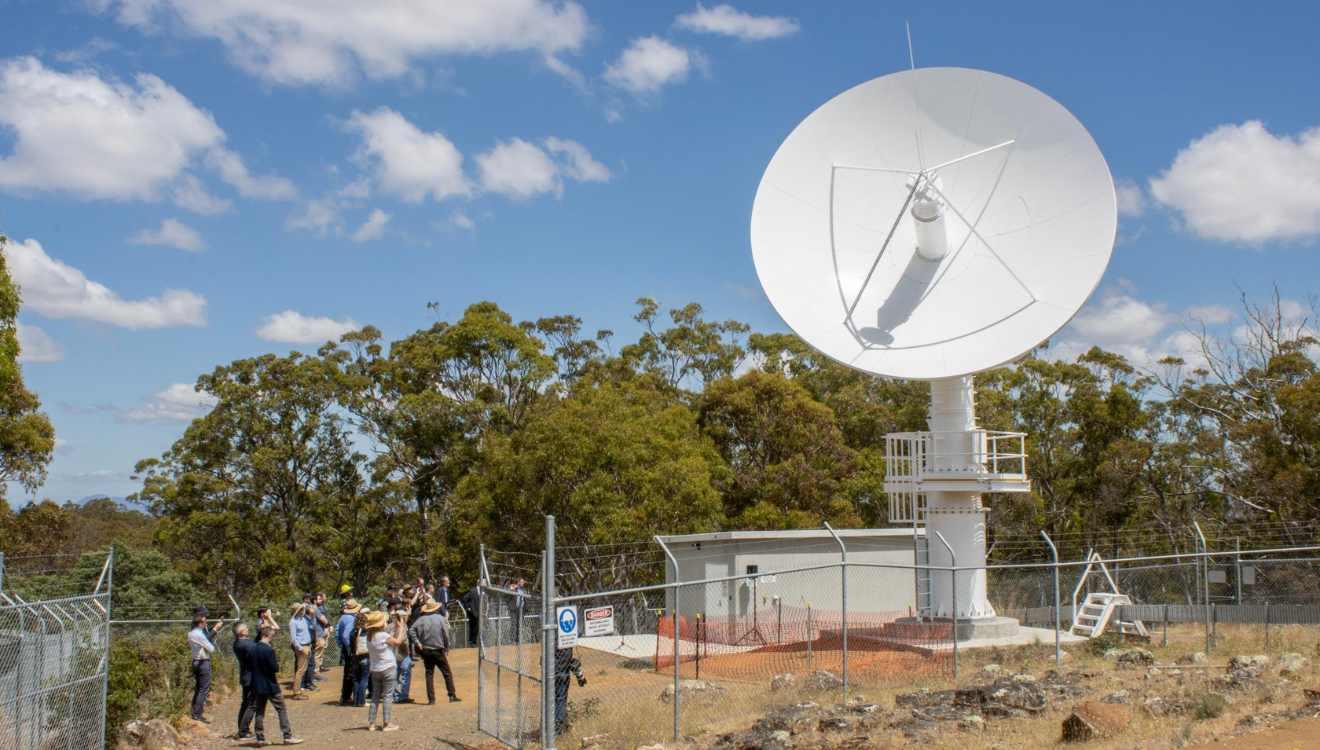
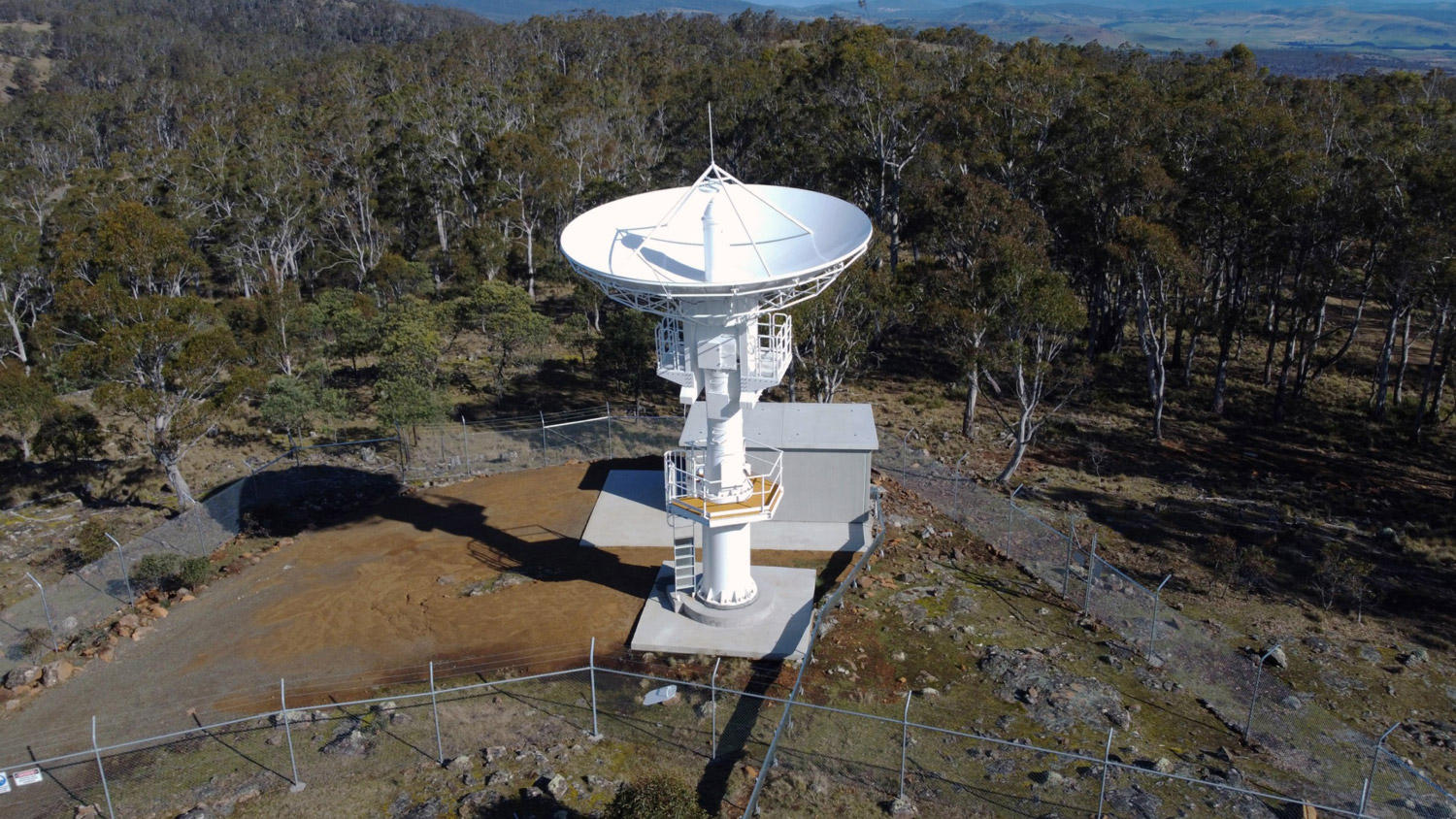
It features a 1.3-metre telescope as its astronomy workhorse, plus a 50-centimetre telescope for tracking satellites and space debris. In 2023, the observatory added a 7.3-metre space communications antenna with a $2 million investment from the Australian Space Agency’s Space Infrastructure Fund.
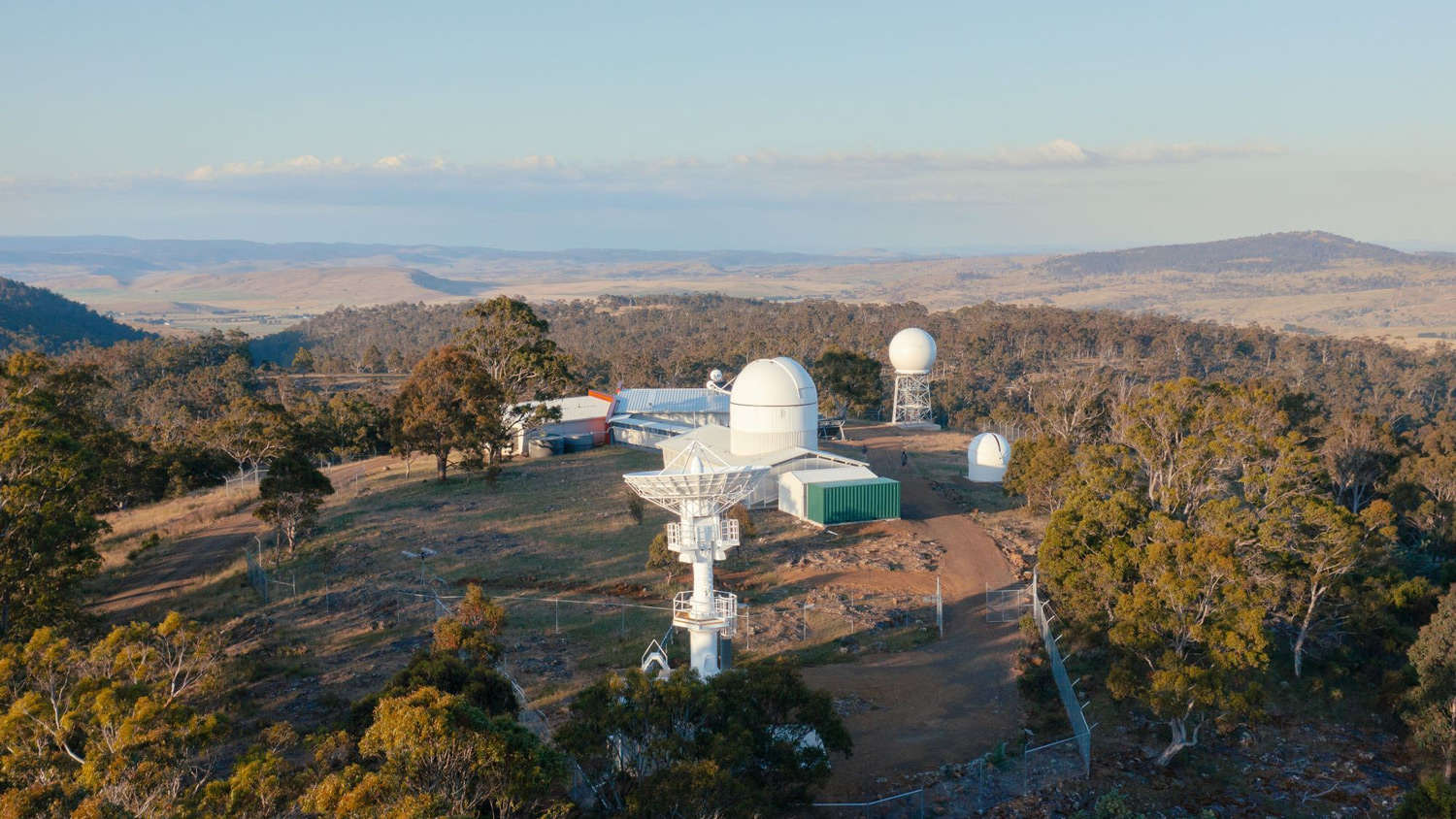
The antenna is the southernmost of its kind worldwide, and enables two-way communication with spacecraft.
Many organisations use the observatory – for example, Canberra-based Skykraft employs it to communicate daily with its rapidly growing constellation of air traffic management satellites, and the Japan Aerospace Exploration Agency (JAXA) has enlisted it as a scientific member of its upcoming Martian Moons eXploration (MMX) mission.
Meanwhile, one of its most significant contributions so far has come in the field of space weather: a variety of phenomena that can disable Earth infrastructure and satellites if not addressed.
Weather watching
Dr Guifre Molera Calves, a space scientist at UTAS, says spacecraft communications through the observatory’s antenna can provide clues about the presence of space weather events.
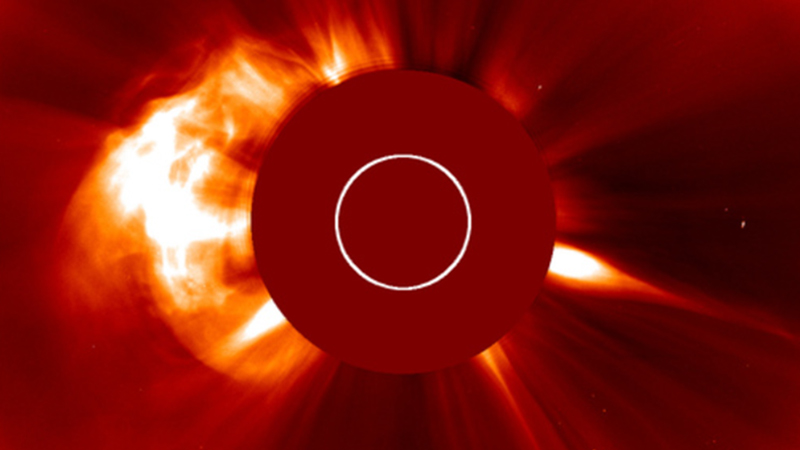
“When the signals travel through the solar system, we analyse fluctuations… then we use that to forecast if there is any coronal mass ejection (the ejection of material from the sun into space), or any solar event that could impact us,” Guifre says.
“When there is some event, we see the orbit of a satellite itself change, and then we can measure that… with the 7.3-metre antenna, we have real data from the positions of the satellites.”
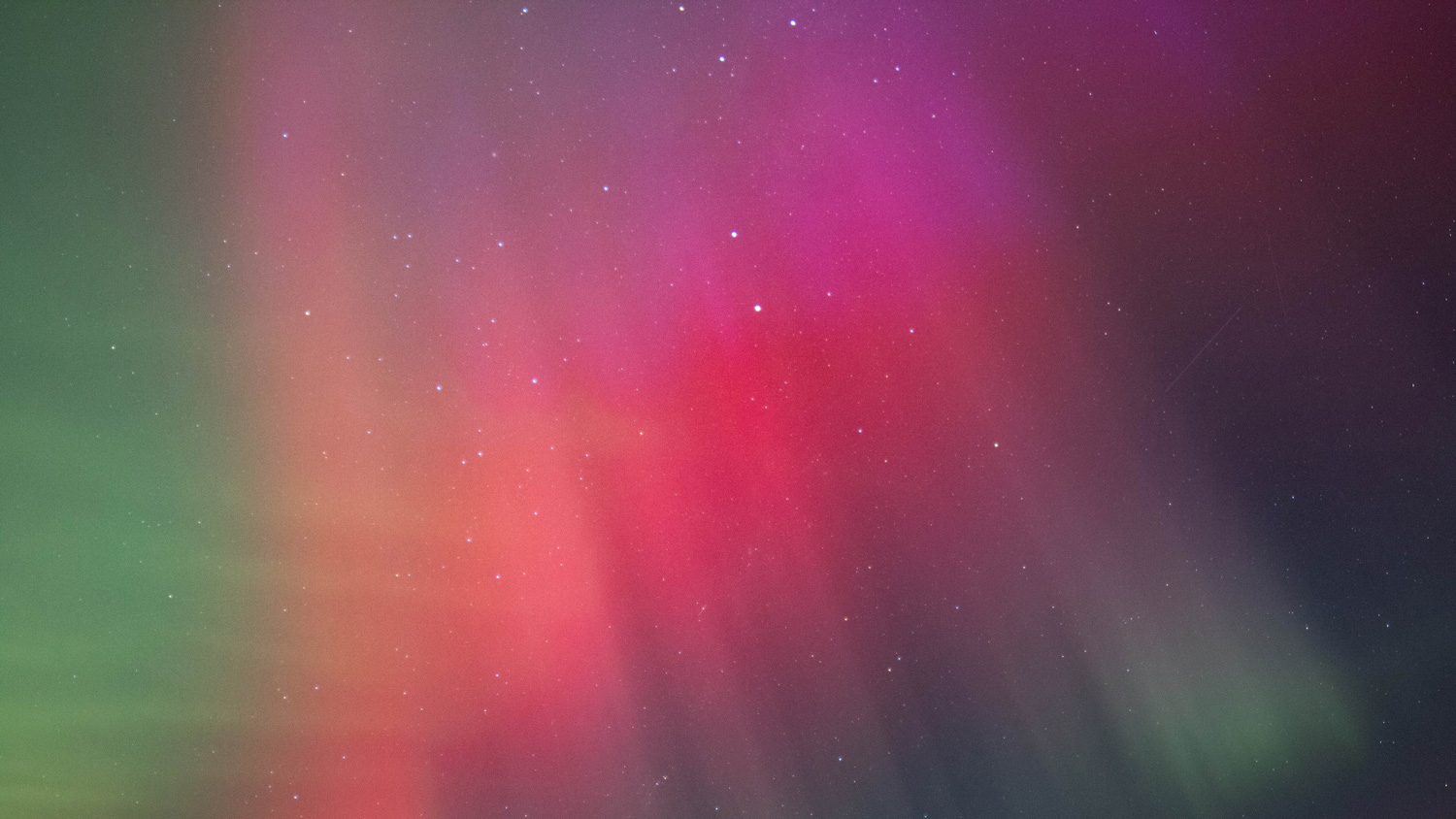
The antenna can also enable real-time surveillance through downloading satellite data – a capability that UTAS currently applies to bushfire management.
“We track satellites that do daily images of the ground, and then remote sensing and Earth observation with the University of New South Wales (UNSW) who analyse if there are bushfire risks… so basically that's a real-time bushfire mitigation or monitoring system,” Guifre says.
“That case is for bushfires, but if we want to do real-time monitoring of space weather with satellites which have sensors, we could.”
The observatory has also recently conducted radio science experiments with spacecraft to study how space weather affects Earth’s infrastructure, and help the Bureau of Meteorology protect vulnerable assets by more accurately predicting coronal mass ejections.
The dangers of space weather
Andrew Jackling is a space weather forecaster with the Bureau of Meteorology, based in Adelaide at the Australian Space Weather Forecasting Centre.
He says when material from a coronal mass ejection reaches Earth, it causes a geomagnetic storm – the wobbling of Earth's magnetic field – which has a range of concerning impacts.
“Geomagnetic storms will generally heat the upper atmosphere… that will increase the drag on low Earth orbiting satellites, so if those satellites are not appropriately boosted up during such events, they can conceivably come back down to Earth,” Andrew says.
“There's other impacts such as communications… geomagnetic storms will serve to alter the composition of the ionosphere, and that can have a lot of impacts to high-frequency communications.”
“Then there's the power grid impacts – geomagnetic storms can induce currents in the ground, which can make their way into power lines and disrupt transformers… when we're forecasting a significant geomagnetic storm, we're in touch with the Australian energy market operator to inform them.”
The forecasting process, informed by research like that conducted at Greenhill Observatory, is critical on a daily basis, so that infrastructure operators can prepare back-up strategies and satellite operators know when to order protective manoeuvres.
“We have a duty forecaster who's on each day, and as soon as they get in, the first job is to review the images from the past 24 hours – like, what has the sun done in the last 24 hours?” Andrew says.
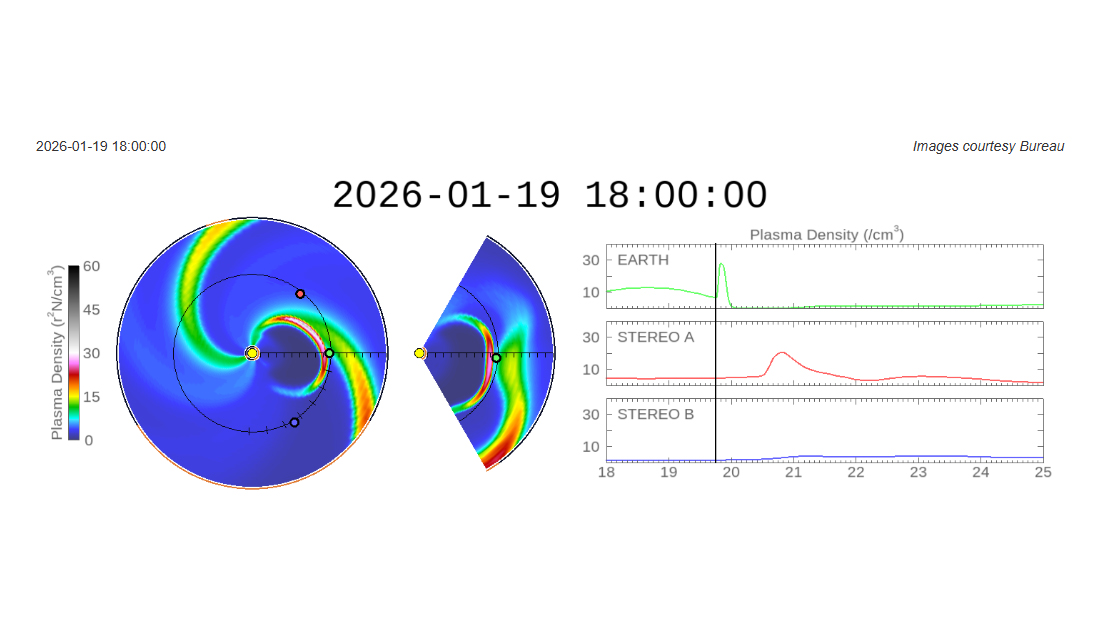
“If there is a coronal mass ejection, then it is our job to determine whether that material is Earth-directed or not… if there's any suspicion that this could be Earth directed, the forecaster makes a model of that material leaving the sun, and we have certain software to be able to do that.”
“And from there, you can arrive at a forecast… there's actually a visual in the model, so it will show you the coronal mass ejection propagating into space, and how it interacts with the Earth.”
Asteroid awareness
Beyond hazardous weather, there’s an even more extreme element of space that Greenhill Observatory can help keep us safe from: asteroids.
Professor Andrew Cole, Director of Greenhill Observatory, says asteroid tracking is a key area of research that the University has been working on using the observatory’s capability.
“We're kind of in the firing line for asteroid impacts – which is not something that people think about very often, because an average person on the ground will probably never be impacted by an asteroid during their lifetime,” Andrew says.
“You need to have a presence always monitoring the sky, and develop the right tools and approaches to understanding the risks, to get the earliest possible warning.”
Alongside its own research work, UTAS has been collaborating with the Australian Space Agency on methods to better coordinate Australia’s broader range of infrastructure and more effectively understand the position and impact risk of asteroids.
Andrew adds that the capabilities used for asteroid tracking are also useful from a national security perspective.
“Anything that's moving quickly through the sky – it doesn't have to be natural in origin, it could be human created… you really have to be able to verify for yourself the trajectories, masses, sizes of things,” he says.
“If you're completely ignorant of what's going on, then you're completely at the mercy of what someone might decide to tell you or not.”
A new wave of talent
From a broader industry development perspective, both Andrew and Guifre are pleased to have seen the observatory play a role in the maturity of Australia’s space sector in recent years.
“I think in the past half decade or so, there's been kind of an increasing awareness that astronomy research – which has always been a very great strength of the Australian system – has links to these more practical space industry applications,” Andrew says.
“There's been a bit of growth in developing internships or partnerships between the universities and other sectors… there's much more of an awareness of the possible linkages, and maybe a willingness to kind of explore joint models for these things.”
Guifre agrees, having noticed a shift in the career pathways his students take.
“A few years ago, maybe the students or PhDs finished and the places they could go were limited, and most of them would continue in academia,” he says.
“Now, for example, my PhD students finish and they have been applying to astronautic companies or space domain awareness companies.”
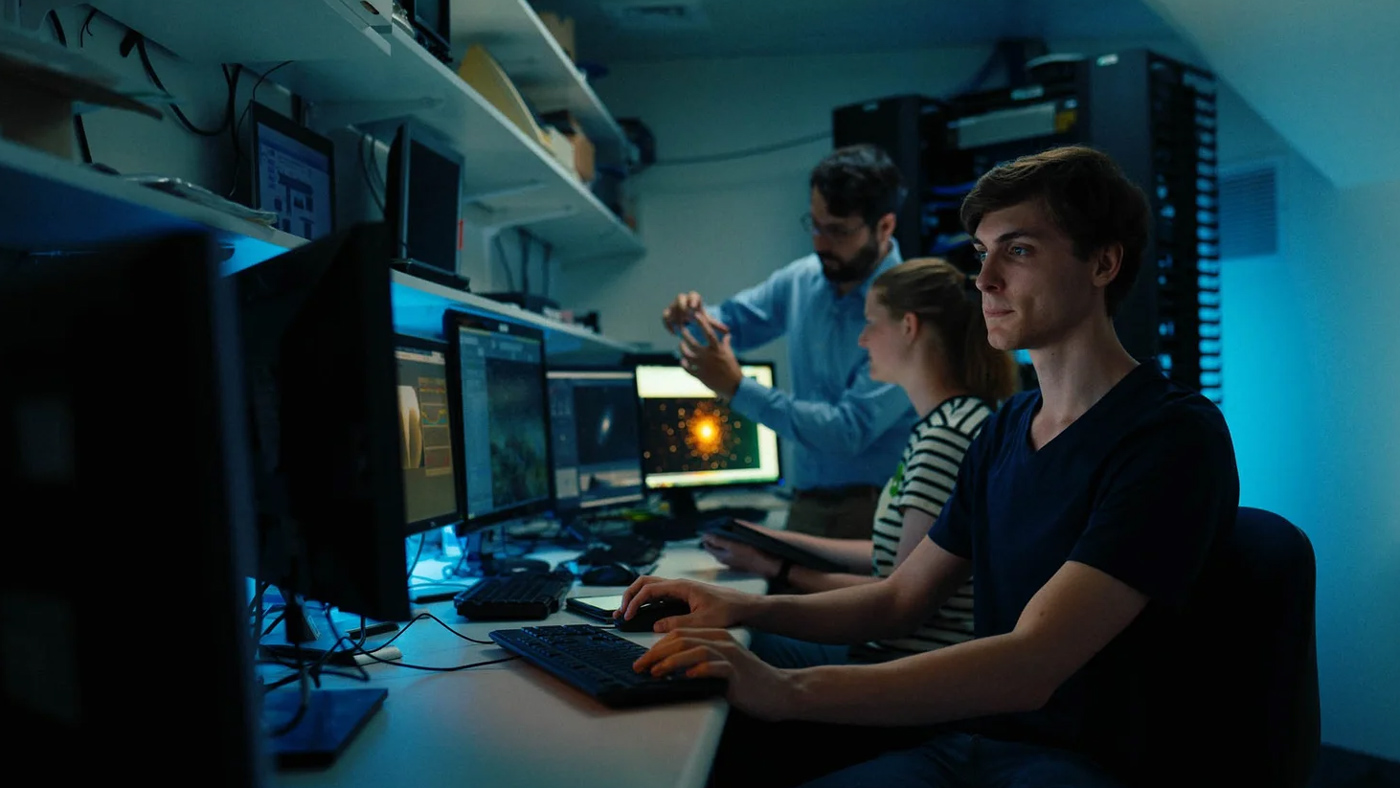
Looking at it more philosophically, Andrew feels the observatory contributes not only by supporting research and safe operations in space today, but also by preparing young minds to take on the problems of tomorrow.
“You don't know what you don't know – and by developing people with the advanced skills to understand really advanced communication systems, impressive computing tools… you're preparing people for answering problems we haven't asked yet.”
“We're sort of building up the intellectual capital, the technological capital… developing a future workforce of really technically skilled people who will be in position to be up to the challenge when something unexpected happens.”
Industry Showcase
Australian space innovations making an impact.
Main image caption: The 7.3m antenna funded by the Australian Space Agency.
Credit: University of Tasmania