Turning classroom STEM into space activities.
The seventh edition of the Kibo Robot Programming Challenge, or Kibo-RPC, is now underway.
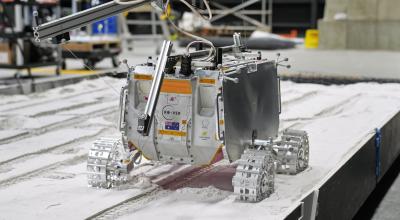
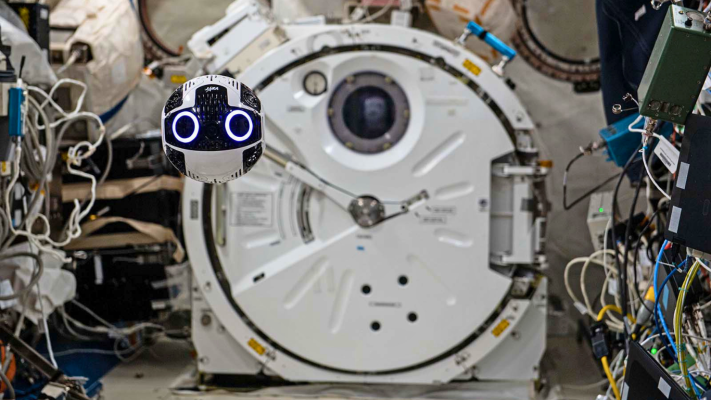
This is an educational competition where student teams write code to control a robot inside the International Space Station’s Japanese Experiment Module, Kibo.
Hosted by Japan Aerospace Exploration Agency in cooperation with NASA, this Asia-Pacific regional program is designed to make space more accessible to young people while developing STEM and engineering skills.
This year will mark the program's seventh edition and in Australia this space educational initiative is supported by the Australian Space Agency and delivered by One Giant Leap Australia. The winners of the Australian leg of this Challenge will go on to compete with top teams from around the region.
Register now
Australian students in primary school, high school and university level as well those homeschooling can register for this unique opportunity.
How KIBO RPC works
Students are given a mission scenario, such as navigating a free-flying robot through the International Space Station (ISS) module to inspect locations, read markers, identify objects, or complete specific tasks. They then program the robot to move accurately, make decisions, and complete the mission as efficiently as possible.
Students are not simply solving a classroom problem – they are writing code for a robot operating in space. Through the challenge, they gain practical experience in programming, robotics, mathematics, physics, teamwork, problem-solving, troubleshooting, simulation, mission planning, and international collaborations
For Australia, this program helps build the next generation of space-capable talent, showing young people that space careers can begin with curiosity, teamwork and a few lines of code.
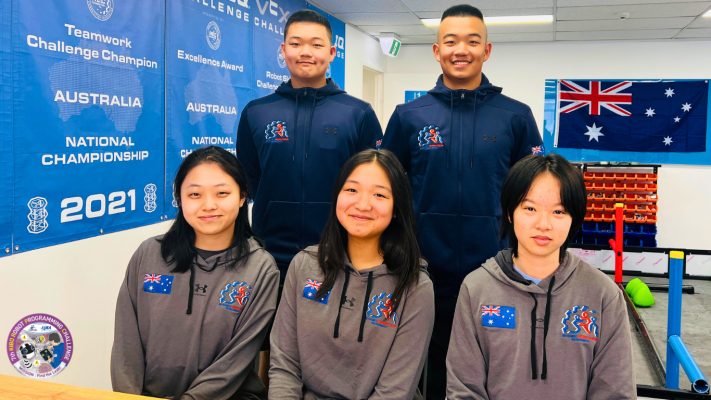
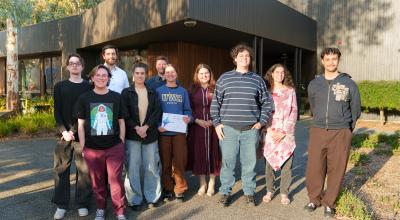
Dream Rover was the winning team from last year's Kibo-RPC in Australia.
Gaining real and out-this-world STEM confidence
At last year’s Kibo-RPC, a team of young Australians from Team Dream Rover demonstrated how far a shared passion for space, robotics and problem-solving can go – all the way to the ISS.
Even more remarkably, several team members were from the same family in Sydney, turning a global STEM challenge into an unforgettable family achievement.
In this feature, members of Dream Rover reflect on how the experience was both technically challenging and deeply inspiring.
Annabel Li | Programmer and researcher
It was thrilling. When we first created the team, we didn’t expect to progress so far because we were all quite young and we were going against many teams who were in university. However, I’m glad our hard work paid off and we won!
This experience has shown me how STEM is applied in real life, including through projects connected to the International Space Station. I have found this especially valuable, and cool, because it has helped me better understand what working in STEM careers can involve.
Esther Li | Research and programming assistant
It felt extraordinary, almost like meeting a celebrity. I have always heard about the International Space Station and its important contributions to space research. Having the opportunity to be part of a mission involving our code running on the ISS felt both exciting and surreal.
It was a meaningful and rewarding experience. The team feels like a family, which is particularly special because some of my teammates are also my family members. Although I have only been part of the team for a short time, I already feel a strong sense of belonging and support.
Joshua LI | Team and programmer lead in 2025
I was most excited by the collaborative nature of space exploration and problem-solving through KIBO. Working on a challenge hosted by JAXA and NASA was highly motivating, as it reflects the future of robotics and humanity’s role in space. It was also exciting to know that our code would go beyond a computer or local server and contribute to a mission connected to the ISS.
It was accounting for the unpredictability of the real world. While the simulation environment was mathematically precise, programming for an actual space module required us to consider factors such as airflow, lighting changes and hardware drift. For example, scanning QR codes, identifying objects and ensuring Astrobee remained within approved zones required careful planning and problem-solving.
Ethan Li | Team leader 2021-24
Teamwork made a real difference when we had to balance everyone’s schedules to complete the work. At the start of the season, each team member had different commitments and availability, so effective teamwork, planning and time management were essential. By coordinating meeting times and working together consistently, we were able to make meaningful progress.
No matter how difficult a challenge may seem, or how unsolvable a problem may appear, never give up. With persistence and time, complex ideas can become much clearer. In my case, after starting university, I finally came to understand quaternions, which showed me that perseverance really can make a difference.
Register now
Australian students in primary school, high school and university level as well those homeschooling can register for this unique opportunity.