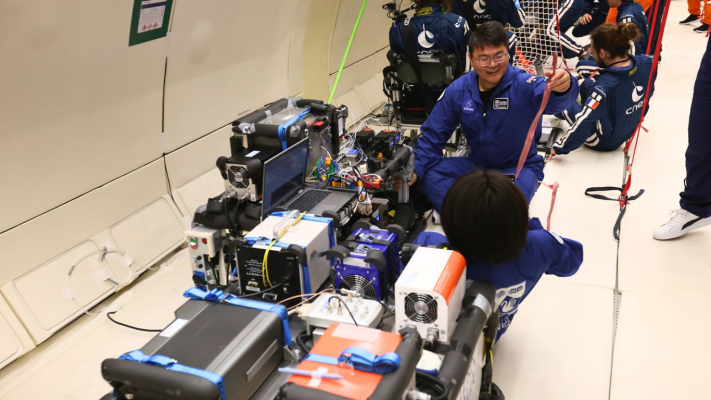
Aussie space science takes flight.
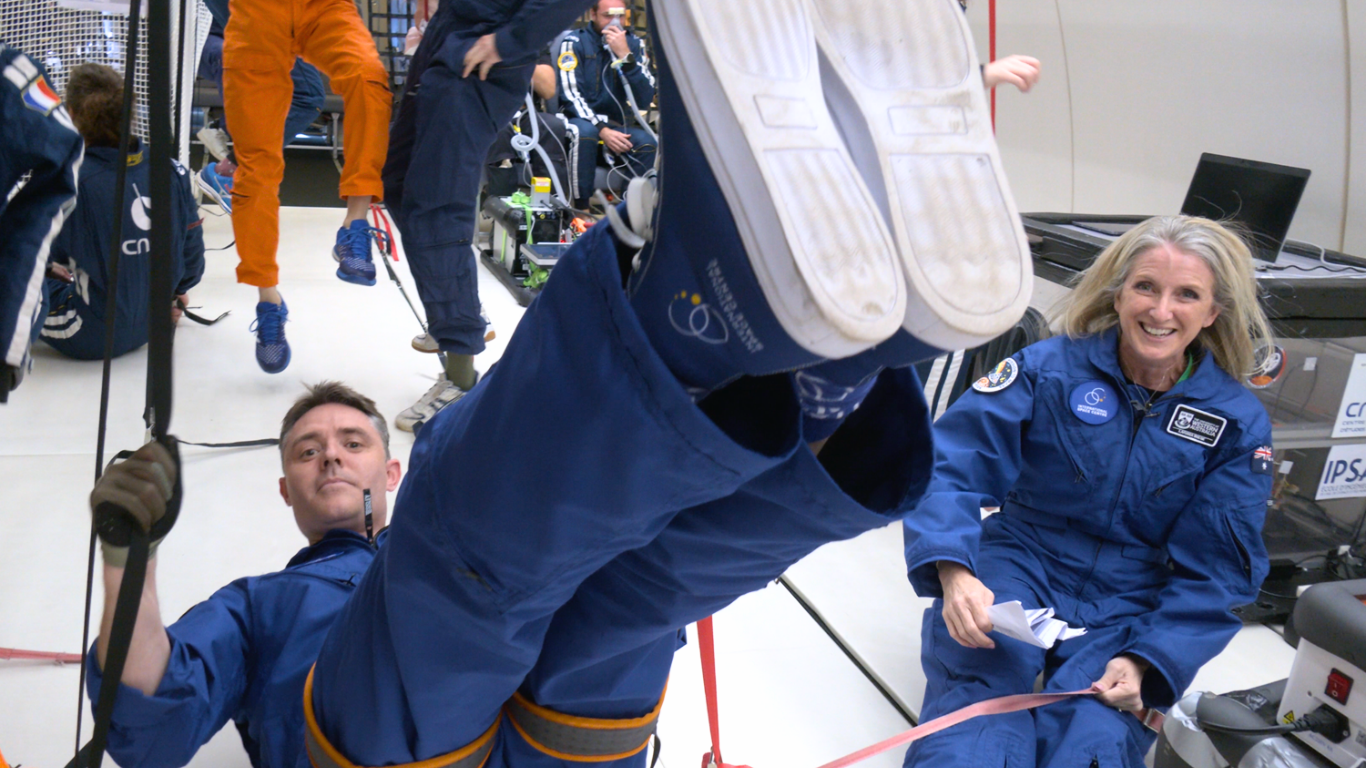
The University of Western Australia (UWA) team completed three flights aboard Novespace’s Airbus A310 Zero-G.
Across 93 parabolic manoeuvres, the aircraft created brief periods of variable gravity, providing conditions impossible to reproduce in a conventional laboratory.
Their findings could help future missions use resources available on the Moon or Mars, reducing the need to transport materials from Earth.
This in turn could also support more efficient chemical manufacturing here at home.
The campaign brought Australian researchers together with the French Space Agency (CNES), highlighting Australia’s growing contribution to international space science.
Zero-Gravity laboratories
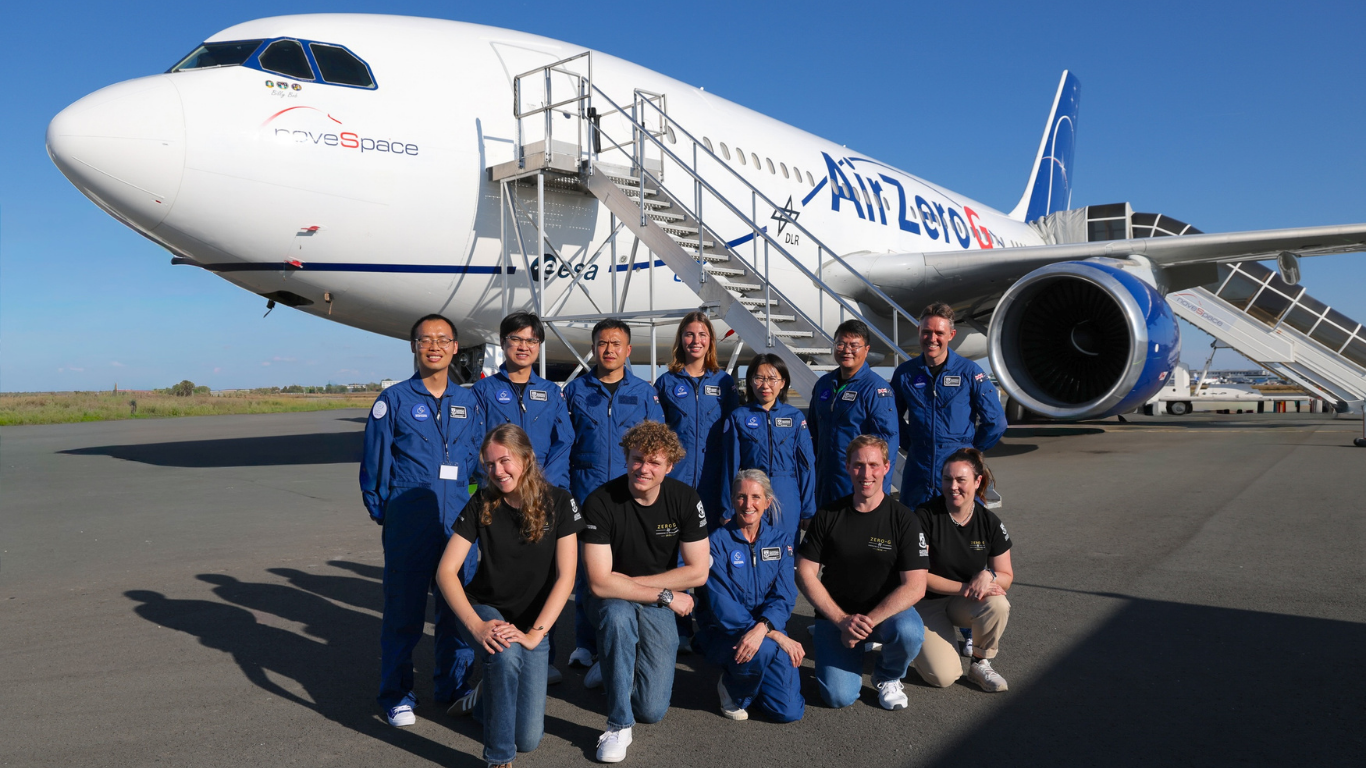
What did the campaign’s 93 parabolic manoeuvres allow your team to investigate that would not be possible in a conventional laboratory?
Repeated periods of near-weightlessness – each lasting around 25 seconds, alongside phases of hypergravity and normal gravity.
This allowed us to investigate how changing gravity affects a light-driven catalytic reaction using the same experimental system.
We have been studying the solar-driven conversion of methane and carbon dioxide into syngas, a feedstock for fuels and chemicals. In a conventional laboratory, gravity continuously influences buoyancy, heat transfer and gas movement.
The flights allowed us to examine how changes in gravity perturb steady-state reaction conditions. This is particularly important for photothermal catalysis, where the dynamic microenvironment influences the mechanism and extent of the reaction. Repeating these transitions allowed us to assess whether the observed changes were repeatable.
These experiments enabled us to investigate the underexplored role of gravity in photothermal catalysis, with direct relevance to space exploration.
The resulting insights can help identify which aspects of terrestrial reactor design remain suitable for space and which require adaptation.
How could converting methane and carbon dioxide into syngas support future space exploration and improve fuel or chemical manufacturing on Earth?
Syngas, a mixture of hydrogen and carbon monoxide, is a versatile starting material for fuels such as methanol and many industrial chemicals. For future space missions, producing it from suitable local or recycled feedstocks could support chemical manufacturing where those products are needed, reducing dependence on supplies transported from Earth.
Understanding how the reaction operates under different gravity conditions (e.g. space, lunar, Martian environments) is an important step towards that goal. On Earth, our approach could use solar energy to convert two green-house gases of methane and carbon dioxide to fuels towards decarbonisation. It could also convert feedstocks such as biogas into useful products, using renewable energy to achieve sustainable carbon cycle.
What was the greatest challenge of preparing and conducting this experiment in repeated periods of near-zero gravity, and did anything surprise the team?
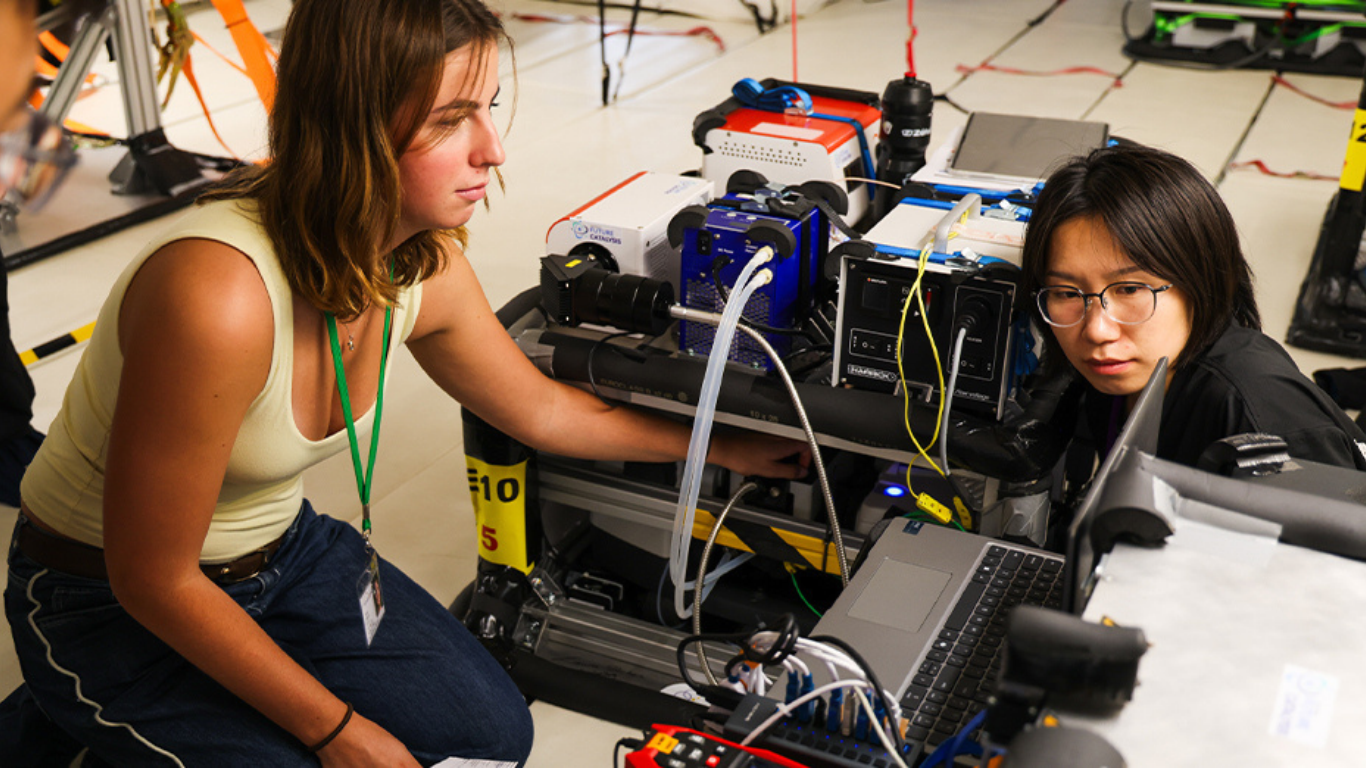
The greatest challenge was designing a system with so many constrains to collect reliable, comparable measurements during microgravity windows of only about 25 seconds.
The equipment had to operate safely in a flight through repeated gravity transitions, with precise timing and careful monitoring of light, temperature, gas flow and composition, reaction intermediates and products.
One surprise was that many devices appeared to change with gravity. This means we must also understand the behaviour of the devices themselves, so we can distinguish changes by instrumentation from changes in the catalytic process.
How could experiments like this strengthen Australia’s research capabilities and international standing in chemical catalysis and space science?
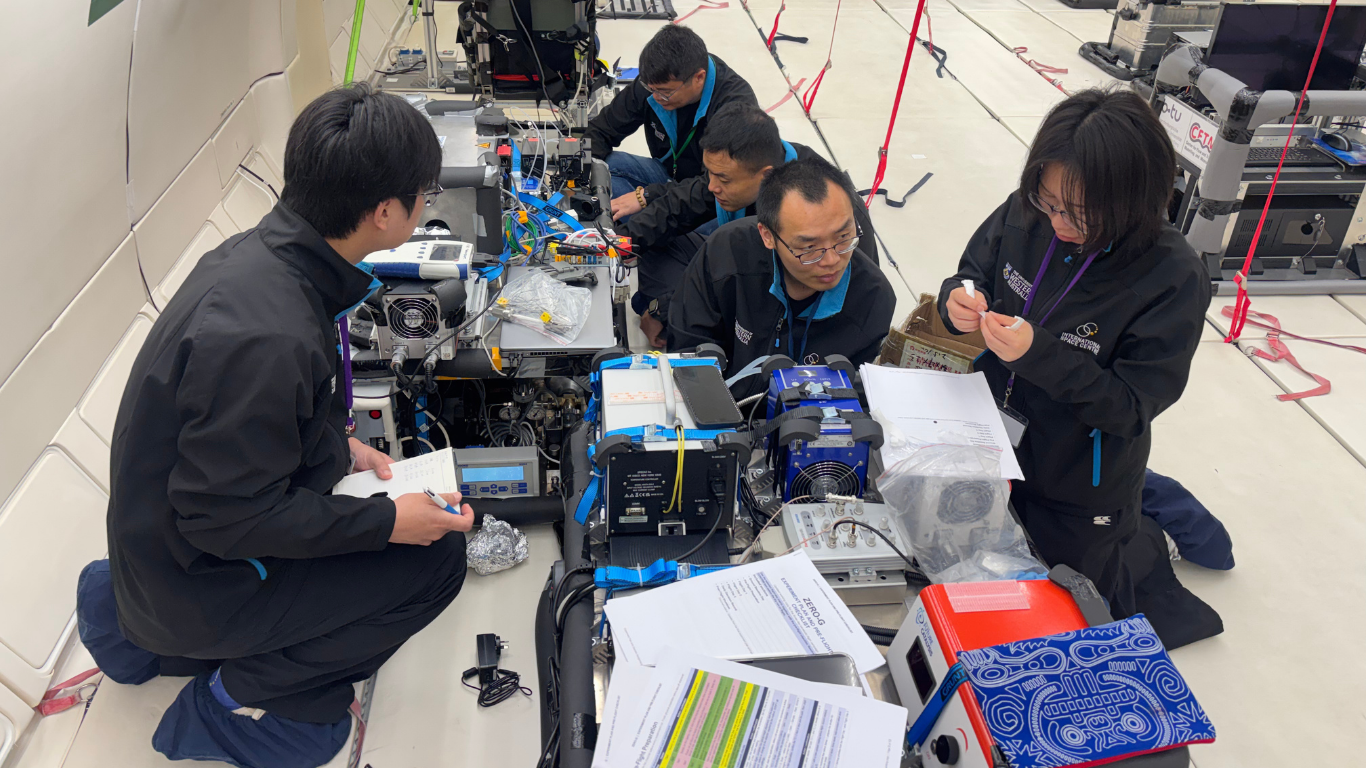
These experiments, partially funded by the Australian Research Council, build Australia’s capacity to design and test catalytic technologies under conditions relevant to space. They connect chemistry, engineering and space science, while giving students and early-career researchers experience in international research campaigns.
Collaboration with Novespace and the French space agency CNES strengthens research partnerships and creates opportunities for future joint projects. By contributing new knowledge about how gravity affects chemical processes, Australia can establish a distinctive role in space catalysis, with benefits for both future exploration and sustainable settlement on Earth.
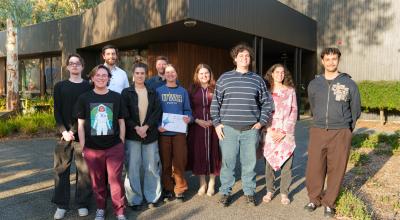
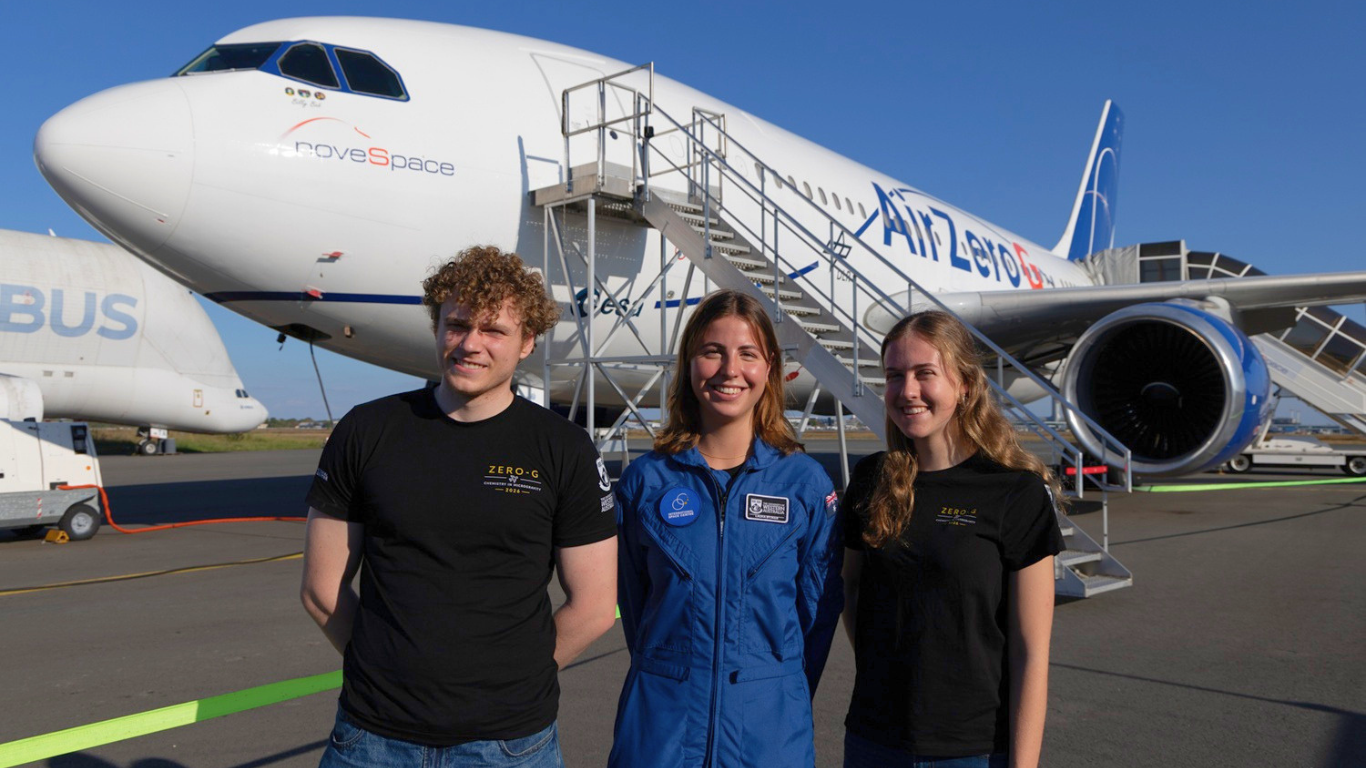
Three student interns helped prepare and conduct the experiment. What did they contribute and learn, and what opportunities at the intersection of space, chemistry and Earth science would you encourage young Australians to explore?
The interns were exposed to preparing and conducting the experiment in three parabolic flights. That helped them gain experience in microgravity research, teamwork and practical problem-solving. ISC also helped them develop storytelling and science communication skills to explain the experiment’s purpose and share the experience with wider audiences.
I encourage young Australians to explore internships and projects connecting space chemistry, planetary geology, catalysis, materials and resource recovery. These fields offer opportunities to investigate how lunar and Martian resources could support future missions, and to communicate discoveries that matter both in space and on Earth.
Why space matters
Learn about some of the practical, and seamless, ways space technologies is helping us protect Australia's way of life.
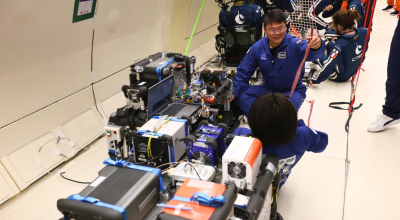
Main image caption: Professor Hongqi Sun and Dr Zhe Lu run the experiment during a microgravity phase of the parabolic flight.
Credit for all images used in this news article: The University of Western Australia