Could your science idea be tested in space?
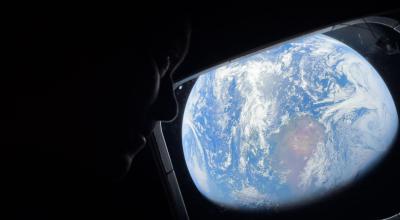
Australian students now have the chance to turn their curiosity into an experiment that could be performed by an astronaut aboard the International Space Station (ISS).
Applications are open for the latest edition of the Asian Try Zero-G, an educational program led by the Japan Aerospace Exploration Agency (JAXA) and supported by the Australian Space Agency.
It challenges students from across the region to develop a creative experiment exploring how physical phenomena behave in microgravity.
The experiments are demonstrated on the ISS' Japanese Experiment Module known as Kibo.
This unique opportunity comes at a pivotal time in space science and exploration as JAXA's Martian Moons eXploration aims to unravel mysteries of Mars. Samples from this historic mission will land in South Australia by 2031.
How does Asian Try Zero-G work?
One Giant Leap Australia helps deliver this educational program and showcase young Aussie space talent.
Students can enter individually or as a team and submit a new idea or refine one from an earlier application.
Proposals should explore a physical phenomenon that can be visually observed in microgravity. They must also include a clear hypothesis supported as logically or mathematically as possible.
Following national assessment, shortlisted proposals will undergo feasibility and technical reviews. The final experiments will be prepared for an astronaut to conduct inside Kibo in 2027.
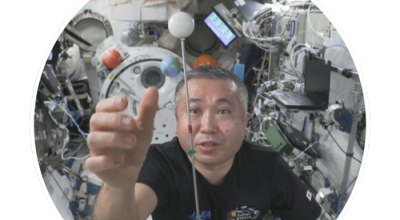
Registrations for Asian Try Zero-G open until 30 November 2026
Aussie students can propose a microgravity experiment that could be performed by an astronaut in orbit.
Young Aussies have already shown how far a great idea can travel
Asian Try Zero-G connects Australian students with international expertise, human spaceflight and the possibilities of science beyond Earth.
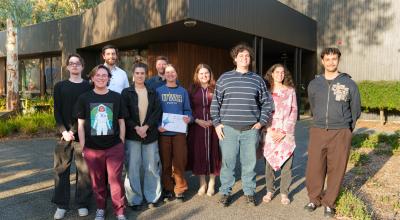
In its previous edition, Aussie school students Hayley Yousef and Kaila Elias designed Water Spring, an experiment using a slinky to explore how water responds to contraction and expansion forces in microgravity.
Their proposal was the only Australian experiment among 11 selected from more than 500 applications involving 1,176 students across 14 countries and regions.
“Knowing that an experiment we designed will be carried out in space by an astronaut is both surreal and deeply inspiring.
“This experience has shown me the incredible potential of a single idea and how far it can go, sometimes even all the way to space.”
~ Aussie school student Kaila Elias, who previously participated in Asian Try Zero-G
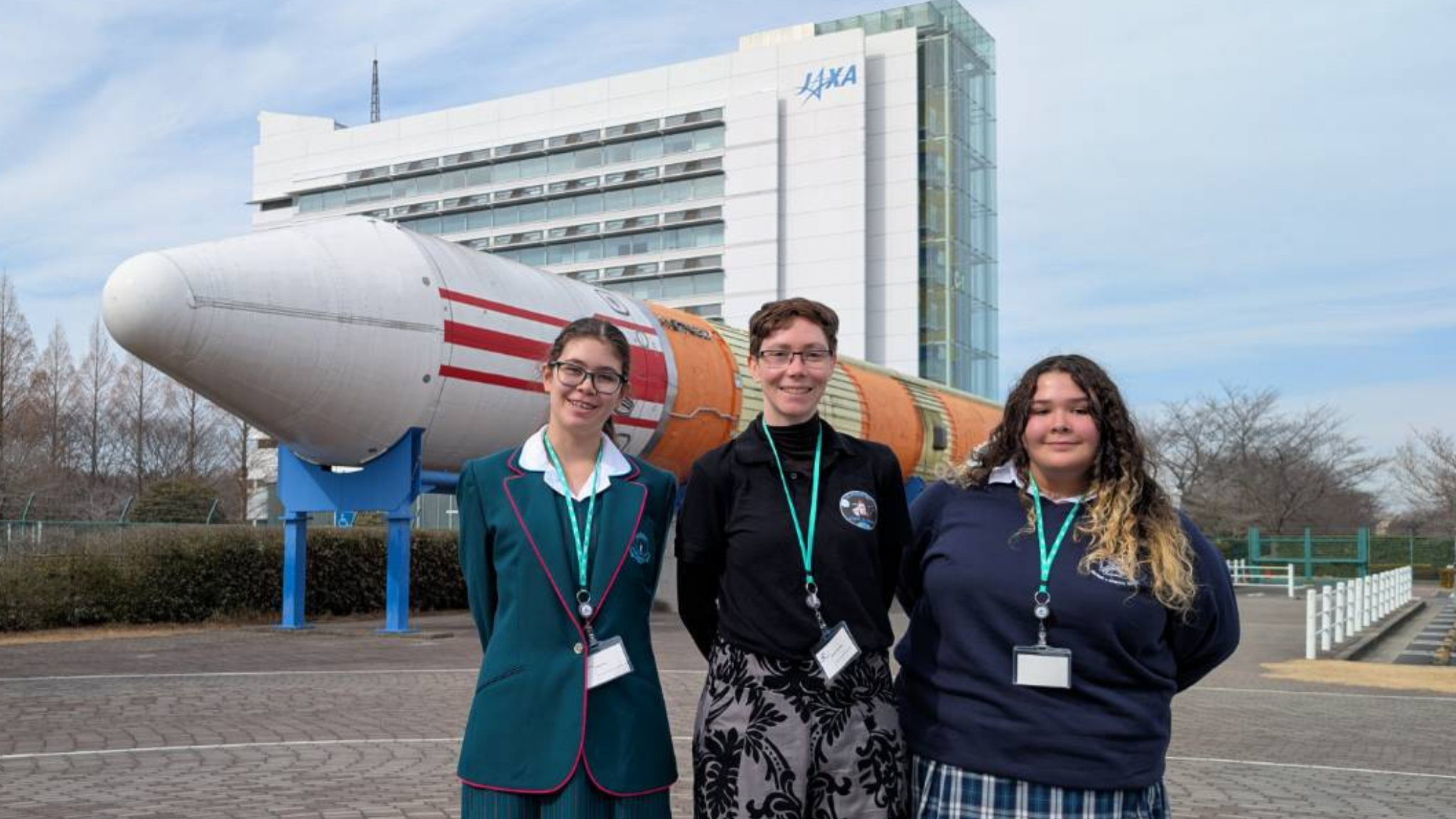
Launching more Aussie school science ideas
JAXA and the Australian Space Agency are partners in hands-on educational initiatives that connect Australian students to real-world space missions and STEM learning.
Two other Australia-Japan space education opportunities were announced earlier this year.

KIBO-RPC
Deadline: 4 November 2026
KIBO-RPC
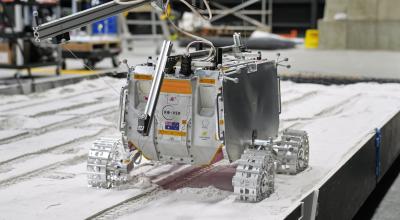
Student teams that participate in the Kibo Robot Programming Challenge (RPC) write code to control autonomous robots inside the International Space Station

Space Harvest Ideathon
Deadline: 30 April 2027
Space Harvest Ideathon
A collaborative program challenging students to explore space biology, agriculture, and sustainable food production for long-duration human space missions.
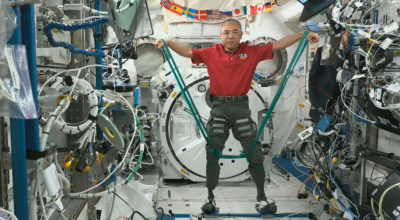
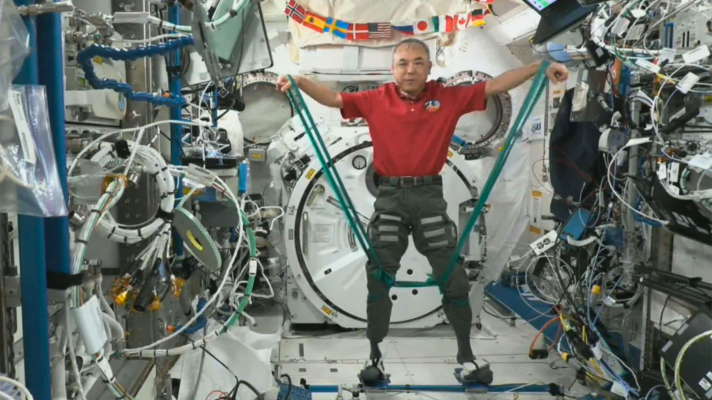
Mainimage caption: JAXA astronaut Furukawa Satoshi performs "Starfish exercise for Microgravity" proposed by students from Thailand for Asian Try Zero-G 2023.
Credit: JAXA/NASA
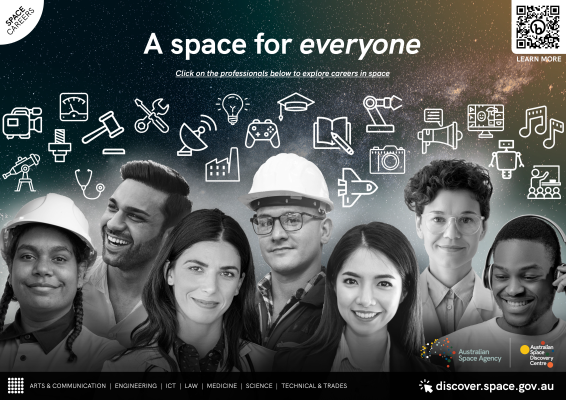
Space careers booklet
This resource covers all the space careers we talk about online, and can be downloaded by students, teachers or parents to read, share or use in the classroom.
Which space career is right for you?
Navigate a day on the Moon in our short interactive quiz to find out which role best suits your strengths.