New insights into a cosmic mystery.
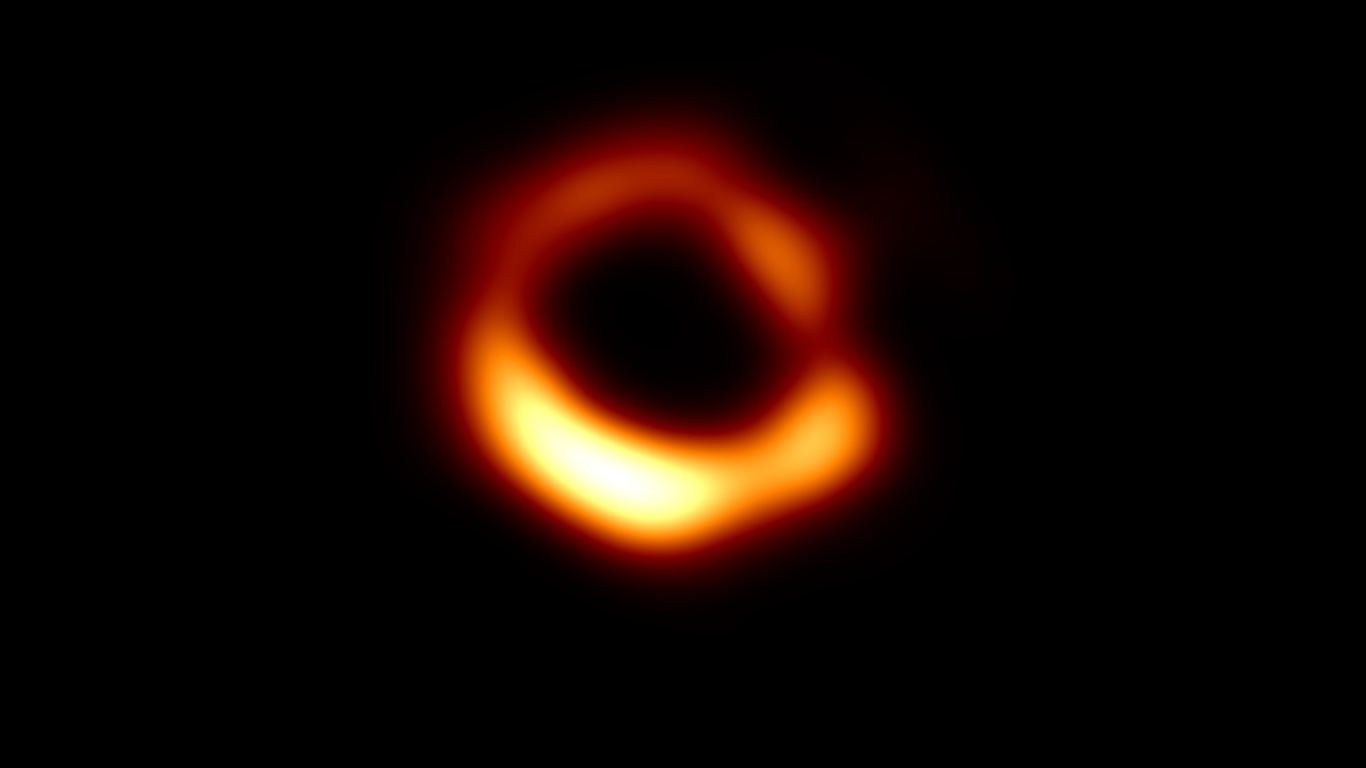
The first direct image of a black hole’s shadow captivated the world in 2019. Created by hundreds of scientists through the Event Horizon Telescope collaboration, it revealed the supermassive black hole at the centre of the galaxy M87 and became an icon of modern science.
A team from CSIRO has now validated that landmark result using a powerful new imaging technique.
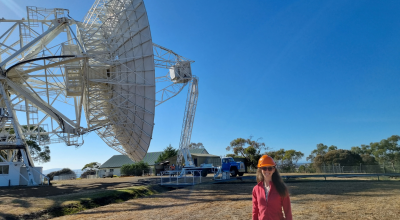
Leading the study is CSIRO astronomer Dr Samuel Lai, whose path to studying black holes began unexpectedly.
Sharpening views ...light years away
Growing up in metropolitan Hong Kong, Samuel had limited opportunities to develop an interest in space.
He began his studies at the University of California, Los Angeles, in cognitive neuroscience before a chance decision led him to astrophysics.
The switch launched a global scientific journey. Samuel completed a master’s degree in London, worked at major observatories on Mauna Kea in Hawaii, US, and moved to Australia to undertake a PhD at tThe Australian National University.
Now an Early Career Research Fellow at CSIRO, Samuel combines expertise from across disciplines to investigate how matter behaves around compact objects, including supermassive black holes.
An out of this world solution to real-world problems
In this feature, Samuel shares the story behind his team’s breakthrough, his unexpected journey into astrophysics and Australia’s growing strengths across astronomy, data science and artificial intelligence.
In 2019, the original image of the black hole in galaxy M87 captured the world’s imagination. Why was independently validating it so important?
A scientific discovery can only be considered a discovery if the result is independently reproducible.
This is a formal part of the scientific process and it’s even more important with high-profile discoveries like the first black hole image in galaxy M87, which has become one of the most recognised scientific results in the modern era.
From a physics perspective, the ring structure is a key prediction of Einstein’s theory of general relativity.
Independently reproducing the ring structure is once again validating how Einstein’s theory remains the leading theory describing gravitational phenomenon in the universe.
The challenge of imaging a distant black hole is like standing in your backyard and trying to take a photo of a doughnut on the Moon.
What makes producing a reliable image of something so distant technically difficult?
In order to achieve the equivalent of imaging a doughnut on the Moon from Earth, we need to construct an Earth-sized telescope, which is clearly impossible.
Instead, we can create a virtual Earth-sized telescope by combining signals from individual radio telescopes scattered across continents.
However, errors in the signals sourced from disparate telescopes and the Earth’s atmosphere complicate the imaging problem.
Co-author Nithyanandan Thyagarajan, CSIRO Principal Research Scientist and project leader, developed a new mathematical formalism of combining radio signals across triplets of telescopes, which fundamentally cancels out errors introduced at each station, achieving clean data from which to reconstruct an image.
Despite the clean data, imaging is still complicated by data sparsity. After all, in the original 2017 dataset on the black hole at the center of M87, there were only seven participating radio observatories.
This means that many possible images can explain the observations, and that the result is highly sensitive to data processing decisions or imaging algorithms.
To address this, we turned to recent innovations in artificial intelligence and machine learning, guided by the expertise of co-authors Ivy Wong, CSIRO team leader, and Foivos Diakogiannis, CSIRO Principal Research Scientist.
Recent developments in artificial intelligence showed how such problems can be addressed with generative models.
How did your team’s new technique use mathematics, artificial intelligence and telescope data to confirm that the black hole’s ring was real, without being told what the final image should look like?
Insights from abstract algebra led to the development of the new error-resistant mathematical formalism and measurement products which underpin our imaging algorithm and independence.
Central to our new approach is a bespoke machine-learning algorithm, which we designed and trained to generatesets of image reconstructions consistent with the measurements.
For this work, we turned to machine learning in order to solve the imaging problem, where many varied solutions are plausible.
Recent developments in artificial intelligence showed how such problems can be addressed with generative models.
However, to prevent bias in favour of ring-like structure, we train our models on terrestrial images and test them on astrophysical objects. This ensures that our algorithm learns the underlying mathematical mapping from measurements to images.
Therefore, when we finally unblinded our new methodology on the event-horizon-scale datasets on Dec 4, 2025, we found that the ring structure was unequivocally recovered across generated samples.
Throughout the process, we had no expectation for what it would end up looking like.
Our work demonstrates the strength of Australia’s collaborative ecosystem, where astronomers can meet with computer scientists to solve complex problems.
What does this breakthrough demonstrate about Australia’s national capabilities in astronomy, advanced imaging, data science and artificial intelligence?
Despite its relatively low population density, Australia is well-positioned at the frontier of astronomy, data science, and artificial intelligence.
Our work is an amplified snapshot of the everyday excellence driving Australian science and innovation, showcasing translation of modern artificial intelligence techniques to problems relevant to radio astronomy.
However, researchers in Australia are routinely leading the world by tackling extreme data challenges associated with next-generation radio facilities like the Square KilometreArray and its precursors.
Our work demonstrates the strength of Australia’s collaborative ecosystem, where astronomers can meet with computer scientists to solve complex problems.
At the same time, it highlights Australia's world-class supercomputing infrastructure, which enables researchers to develop, train, and scale novel machine-learning solutions.
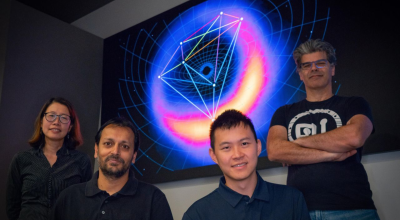
This work is an example of Australian ingenuity spanning the whole spectrum from theory to application. Achieving this with our small and independent team of four highlights how efficiently Australian research investment delivers high-impact output.
The CSIRO-developed technique has the potential to improve medical imaging and mapping earthquakes.
In what ways can your innovation can be turned into practical benefits on Earth?
The underlying mathematical formalism is widely generalisable and applicable in any situation where data from multiple sensors are combined to map unknown structures. This type of situation is present not only in astronomy, but also in medical imaging, seismology, and engineering.
For example, in certain medical imaging applications, an interferometric array of transmitters and receivers measures the signals reflected from structures inside the body, producing high resolution, cross-sectional, and three-dimensional images non-invasively.
Likewise in seismic imaging, multiple stations are used to map subsurface composition, detect natural resources, and identify sites vulnerable to seismic events. Earth-facing radio satellites are also used to detect small-scale changes in the Earth’s surface through interferometric techniques.
I would encourage young Australians to work in distinctly human pursuits, such as curiosity-driven problem solving and critical thinking.
What would you say to young Australians inspired to contribute to the next major scientific discovery?
Young Australians have experienced a disproportionate impact stemming from the rapid advancement of artificial intelligence in just a few short years, whether in education or early employment opportunities.
Major scientific discoveries, however, are not merely a list of answers, but a product of human creativity, ingenuity, and sound judgement.
Now that artificial intelligence is increasingly capable of lower-level tasks, I would encourage young Australians to work in distinctly human pursuits, such as curiosity-driven problem solving and critical thinking.
Our future will require more individuals trained in fundamental sciences, such as mathematics, physics, and chemistry, rather than fewer.
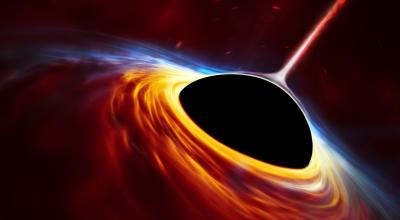
Eight black hole questions you’ve always wanted answered
Black holes are so massive and dense not even light can escape, making them something of a cosmic mystery.
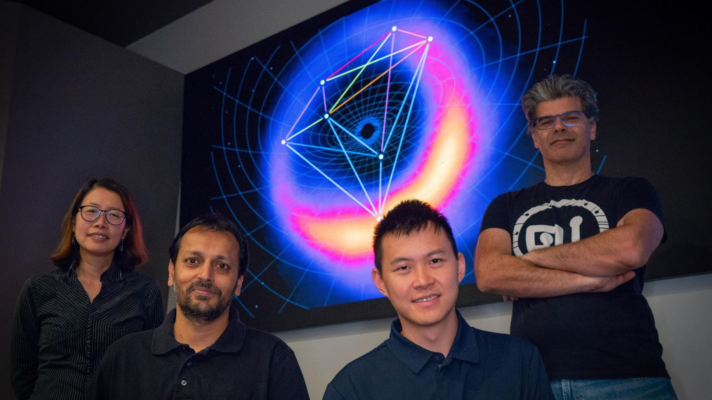
Main image caption: A small team of four from Australia’s national science agency, CSIRO, have confirmed the iconic 2019 black hole image. From left to right: Dr Ivy Wong, Dr Nithyanandan Thyagarajan, Dr Samuel Lai, Dr Foivos Diakogiannis.
Credit: CSIRO.