
Growing future Aussie skills by cultivating crops in space.
Australia's next generation is getting another opportunity to reach for the stars, with the launch of the Space Harvest Ideathon, a new international education program challenging students to help solve one of humanity's most important future space challenges: How to grow food beyond Earth.
Open to primary school, secondary school and undergraduate university students, the free program gives young Australians the chance to explore sustainable food production for future missions to the Moon, Mars and beyond.
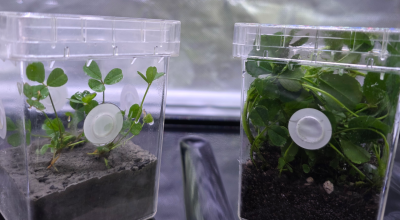
Participants will investigate how plants grow in simulated lunar and Martian soils, identify crops best suited to space environments, and develop ideas that could one day help support astronauts living and working far from Earth.
Delivered by One Giant Leap Australia and supported by the Australian Space Agency, the Australian component forms part of a broader regional initiative led by the Japan Aerospace Exploration Agency (JAXA) – further strengthening Australia's growing space relationship with Japan and partners across the Indo-Pacific.
Register now for Space Harvest Ideathon
Primary school, secondary school and undergraduate university students are invited to tackle food production beyond Earth.
How does Space Harvest Ideathon work?
Students can participate in one of two challenge streams: How to Grow and What to Grow.
• The How to Grow challenge invites participants to design and conduct experiments using lunar and Martian soil simulants to explore innovative approaches to growing food in space.
• The What to Grow challenge asks students to research and propose the crops best suited to supporting astronaut nutrition, wellbeing and quality of life during long-duration missions.
Participants will have access to educational resources, experiment guidance and online learning opportunities, giving students and teachers a practical way to engage with real-world space science while developing STEM skills.
Building on the success of Kibo
Space Harvest is the second major student-focused space education opportunity supported by the Australian Space Agency this year, building on the momentum of the Kibo Robot Programming Challenge (Kibo-RPC).
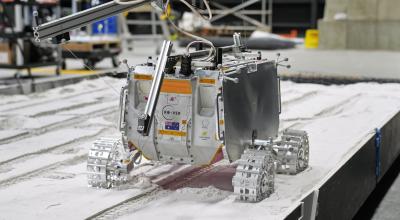
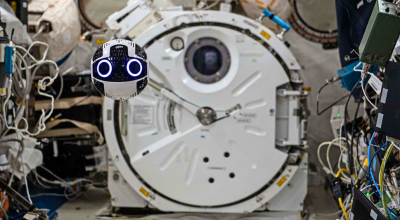
While Kibo-RPC introduces students to coding, robotics and engineering by tasking teams with programming free-flying robots aboard the International Space Station's Japanese Experiment Module, Kibo, Space Harvest expands that learning into space biology, agriculture and human habitation.
Together, the programs provide Australian students with hands-on exposure to the diverse skills required for future space missions, from robotics and automation to food production and sustainability.
From programming robots aboard the International Space Station to designing crops for future lunar habitats, Australian students are gaining practical experience in the technologies and disciplines that will underpin the next era of space exploration.
Growing tomorrow's space workforce
Beyond inspiring curiosity, initiatives such as Space Harvest play an important role in developing the skills, knowledge and ambitions needed to support Australia's growing space sector.
The program encourages students to think like scientists, engineers and explorers while tackling challenges that future space missions will need to solve. At the same time, it helps build a pipeline of talent equipped to contribute to Australia's expanding space industry and broader innovation economy.
Looking ahead to a historic mission
The launch of Space Harvest comes at a particularly exciting moment for international space collaboration. Next month, JAXA is scheduled to launch its landmark Martian Moons eXploration (MMX) mission, which will travel to Mars and its moons, Phobos and Deimos, collect samples from Phobos and return them to Earth.
As one of the most ambitious planetary science missions ever undertaken, MMX aims to unlock new insights into the origins of the Martian system and help pave the way for future human exploration of deep space.
For Australian students, the timing provides a powerful reminder that today's classroom experiments could contribute to tomorrow's discoveries.
Register now for Space Harvest Ideathon
Primary school, secondary school and undergraduate university students are invited to tackle food production beyond Earth.
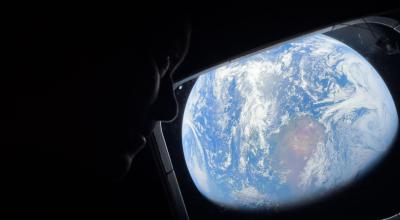
Main image credit: JAXA astronaut Soichi Nouchi inside the International Space Station.