The wide-open skies of South Australia are fast becoming a front-row seat to the next era of space innovation.
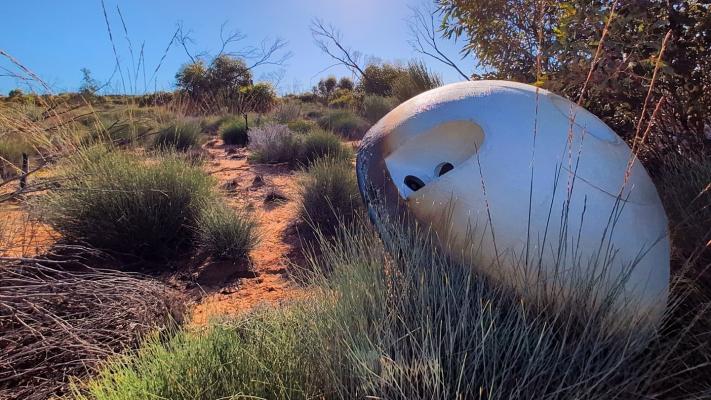
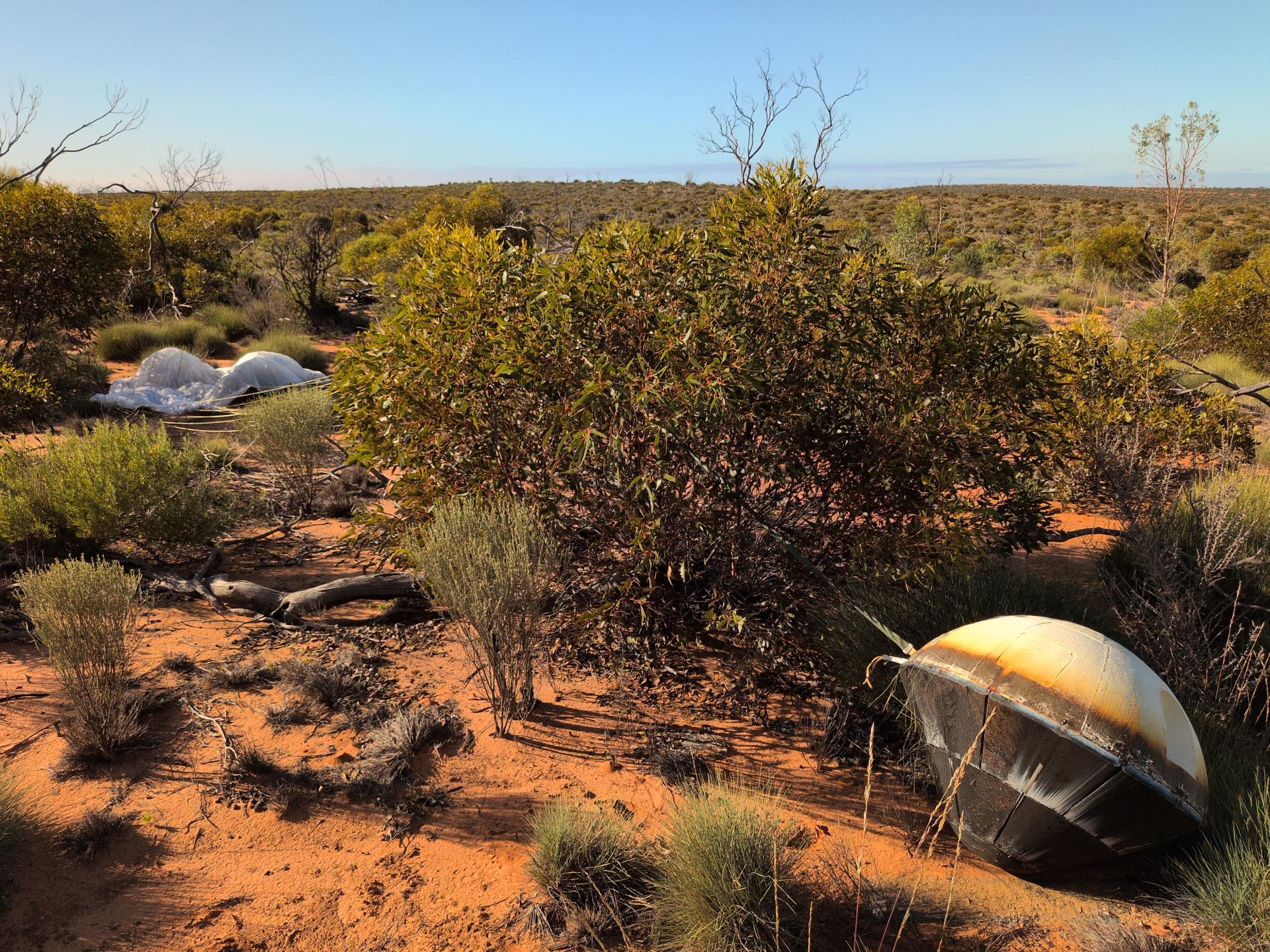
Varda Space Industries’ W‑6 space capsule returned to Earth yesterday after a mission focused on autonomous hypersonic flight and next‑generation thermal protection systems.
The capsule touched down at Southern Launch’s Koonibba Test Range, completing a journey that began with a ride to orbit on a SpaceX Transporter mission in March.
The landing of Varda's latest commercial space capsule demonstrates how the Australian outback has proved to be a reliable, controlled location for payload returns from orbit – a critical ingredient for a thriving space economy.
South Aussie outback becomes a returns hub
In a landmark moment for the Australian space sector, Varda's W-2 capsule landed in Southern Launch’s Koonibba Test Range.
The successful Earth re-entry and landing of the W-2 capsule marked not only the first commercial return on Australian soil, but also the first commercial return to a commercial spaceport anywhere in the world.
Varda's W-3 capsule returned to Southern Launch’s Koonibba Test Range after a 61-day journey in space.
W-3 carried an advanced navigation system which was developed by the US Air Force and Innovative Scientific Solutions Incorporated. This payload was tested at re-entry speeds it was designed to withstand but has never encountered before.
Varda's W-5 capsule returned to Southern Launch’s Koonibba Test Range after being launched a SpaceX's mission in November 2025. It carried with it a specialised payload for the U.S. Navy focusing on data collection during re-entry.
The W-5 mission was the first re-entry of Varda’s next-generation satellite bus, designed specifically to meet the rigorous demands of both orbital pharmaceutical processing and high-velocity re-entry.
Varda's W-6 space capsule lands at Southern Launch's Koonibba Test Range and had onboard:
- An autonomous navigation system that uses celestial navigation and other space objects to determine location.
- A nose tile that is embedded with small samples of advanced thermal protection materials.
- “E-char” tiles on the heatshield that will collect performance data for NASA on a new kind of heatshield material

Australia's space advantage
Yesterday's space capsule return underscores why Australia is emerging as a return hub for the world’s new wave of in‑space manufacturing and microgravity experimentation.
Each re-entry brought down not just hardware, but high-value results – effectively turning Australia into a space science capability, where missions can be tested, recovered, measured and improved in rapid cycles.
"Four capsules safely returned in just over 12 months is a proven, repeatable capability...Our partnership with Varda is a powerful example of what's possible when world class re-entry infrastructure meets world class in space manufacturing – and Australia is right at the centre of it."
~ Llyod Damp, CEO, Southern Launch
"Every re-entry builds on the last. W-6 is another demonstration that frequent, low-cost, reliable return is easily accessible. The data our partners are taking home from this mission would have taken years to collect through traditional testing methods."
~ Dave McFarland, Vice President of Hypersonic test and targets, Varda
"The Koonibba community takes immense pride in every mission that returns to our lands. Our children are growing up watching spacecraft return from orbit right on their doorstep, and that is inspiring the next generation to dream bigger than ever before."
~ Corey McLennan, CEO, Koonibba Community Aboriginal Corporation.
Credit: Southern Launch

Responsibility and regulations
Building a culture of safety and sustainability.
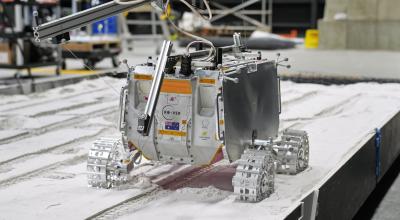
Main image caption: Varda's W6 space capsule that landed at Southern Launch's Koonibba Test Range in regional South Australia.
Credit: Southern Launch