Mission overview
Mission overview
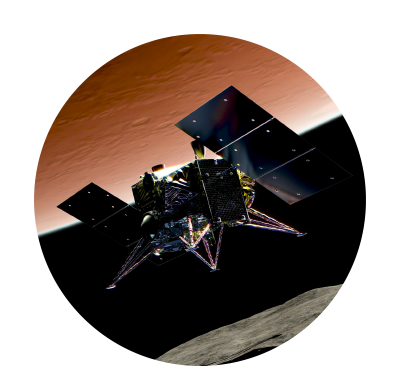
The Martian Moons eXploration (MMX) mission will be humanity’s first attempt to unravel mysteries of Mars by exploring Phobos and returning samples from its surface to Earth.
Led by the Japan Aerospace Exploration Agency (JAXA), MMX is an international mission involving space agencies from the United States, France and Germany, along with the European Space Agency.
The mission was launch from Japan on 20 October 2026 and land in Australia in 2031.
Scientific goals of MMX
The origin of Mars and the planet's two moons has long been considered one of the unsolved problems in the theory of the Solar System's formation.
This historic mission will help address many scientific objectives, including:

A world-first planetary science probe
Through gathered samples and observations of the Martian moons, specifically from Phobos, this space probe will highlight the origin of the Mars system and the pathways for the emergence of habitability and life can be explored.

Exploring one of the most distant worlds
MMX is also a vital technology demonstration mission. To retrieve samples from Phobos, which is about 22 kilometres in diameter, the spacecraft will travel deep into Mars’ gravitational influence and farther than most previous sample return missions.

Acquisition of exploration technology
While pushing the boundaries of deep-space exploration, MMX will advance technologies for round-trip journeys to the Martian system, future exploration of planetary moons and reliable deep-space communication with ground stations.
Australia’s support for MMX
Australia’s support for MMX
The Australian space sector will help return samples from one of the world's most ambitious deep space missions to South Australia in 2031.
The mission will strengthen national expertise on several fronts including spacecraft recovery, science and technical capabilities as well as create multiple opportunities for Australian industries and researchers.

From Ryugu to Earth: Bringing Hayabusa2 home
This short film explores the special partnership between Australia and Japan to bring samples from the 4.6-billion-year-old asteroid Ryugu to Earth.
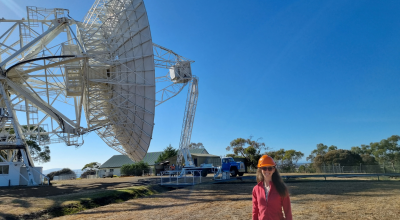
In December 2020, amidst pandemic restrictions, the Australian Space Agency led a whole-of-government approach to successfully retrieve the asteroid sample that landed in South Australia’s Woomera Prohibited Area.
Strengthening space cooperation
Strengthening space cooperation
This mission will mark a new chapter in 50 years of space cooperation with Japan.
The mission reflects the enduring strength of the partnership between Australia and Japan, which has grown from sharing satellite data and conducting joint research to supporting historic sample return missions.

Inspiring the next generation
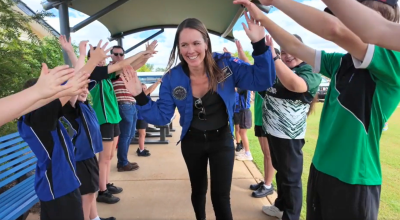
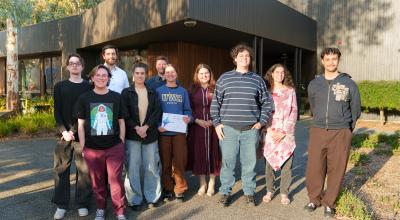
JAXA and the Australian Space Agency are partners in hands-on educational initiatives that connect Australian students to real-world space missions and STEM learning.
Locally facilitated through the One Giant Leap Australia Foundation, these opportunities include:

KIBO-RPC
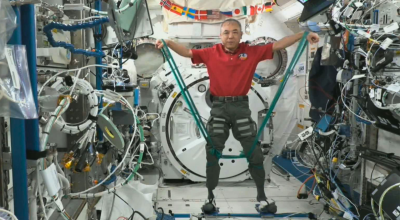
Student teams that participate in the Kibo Robot Programming Challenge (RPC) write code to control autonomous robots inside the International Space Station.

Space Harvest Ideathon
A collaborative program challenging students to explore space biology, agriculture, and sustainable food production for long-duration human space missions.

Asian Try Zero-G
This space educational pathway provided student-designed hypotheses to be physically tested in orbit by astronauts aboard the International Space Station.

International partnerships
The Australian Space Agency is the gateway for the global space sector to engage with Australia across a wide range of space programs and activities.
Main image caption: Deimos with Mars in the background as taken by the Emirate Mars Mission on 10 March 2023.
Credit: Emirates Mars Mission.