
Same Red Planet, but new Frontier.
Next month, the Japan Aerospace Exploration Agency (JAXA) is scheduled to launch its ambitious Martian Moons eXploration mission (MMX) on a journey to collect the first samples from Phobos, the larger of Mars’s two moons.
The mission will lift off fifty years after NASA’s two Viking probes – that were first operational spacecrafts on the Red Planet. Viking 1 touched down in Chryse Planitia on 20 July 1976, followed by Viking 2 in Utopia Planitia on 3 September.
Both missions combined an orbiter and a lander, enabling the Vikings to explore Mars in unprecedented detail, over several years.
Image gallery
Between them, the two Viking orbiters returned 52,663 images of Mars and mapped about 97 percent of the surface at 300 metre resolution. The landers returned 4,500 photos of their two landing sites.
Explore through our interactive photo gallery five decades after NASA’s historic Viking probe that transformed Mars exploration.


Martian Moons eXploration
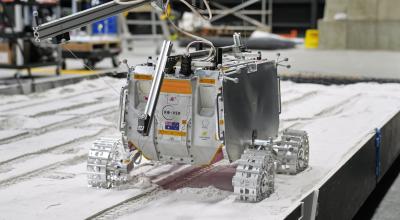
This mission aims to help answer major scientific questions about the origin of the Martian moons, and samples from this historic mission will land in South Australia by 2031.