
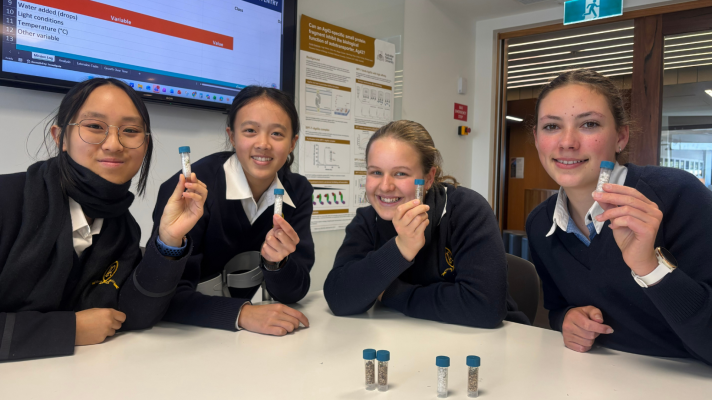
100,000 Aussie students are set to solve one of the most important questions facing future space exploration – how will spaceflights affect plants?
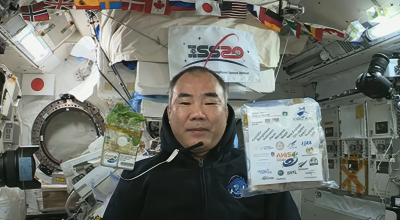
Through Mission Sprouts, students will conduct experiments using seeds that have travelled to the International Space Station, bringing genuine space research into classrooms across the country.
The Australian Space Agency-backed program has attracted extraordinary interest since its launch in July. More than 1,400 schools submitted expressions of interest, significantly exceeding initial expectations.
Originally aiming to reach around one in 10 Australian schools by the end of the year, Mission Sprouts will now place free experiment kits into one in seven schools nationwide.
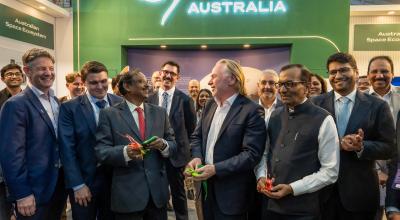
The first 400 of the 1,437 kits were distributed at ConASTA 73 in Brisbane, where Australian astronaut Katherine Bennell-Pegg officially announced the program.
The 2026 Australian of the Year said that response to Mission Sprouts by schools has been incredible. It shows how space is a magnet to draw young people into science and maths, and to help them stick with it.
A big part of what I want to use my 2026 Australian of the Year tenure for is helping young people stay engaged with science and maths.
I didn’t touch my first real space mission until I worked at a space agency! Aussie kids will now be able to do this in their classrooms!
~ Australian astronaut and 2026 Australian of the Year Katherine Bennell-Pegg
Turning curiosity into capability
Mission Sprouts is delivered through a collaboration between the Australian Space Agency, Swinburne University of Technology and the National Australia Day Council.
To help meet the strong demand, the ARC Centre of Excellence in Plants for Space has joined the collaboration and is supporting additional kits. Its involvement will connect even more teachers and students with real-world scientific research.
This national program arrives at a crucial time for Australia’s STEM pipeline.
Australian Government data indicates that enrolments in senior secondary mathematics and physics across the country have fallen, while concerns continue about science proficiency and digital literacy outcomes. Industry leaders have warned that growing demand for technical and advanced manufacturing skills will require stronger engagement with STEM from an early age.
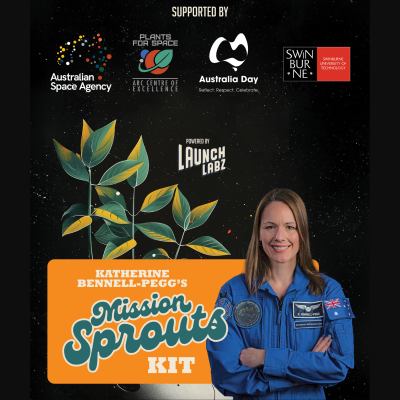
“Australian innovation thrives on collaboration, and building our future workforce is a critical piece of that puzzle. We’re excited to be working with our space sector partners to deliver even more kits to teachers and students across the country.”
~ Professor Matthew Gilliham, Director of the ARC Centre of Excellence in Plants for Space.
Making space science accessible and achievable
Through this program, students will gain hands-on access to genuine space-flown materials – something that has traditionally been rare due to the limited availability of research samples that return from orbit.
In the classroom, students will compare space-flown seeds with seeds grown entirely on Earth. They will observe, record and analyse their results while learning the fundamentals of scientific inquiry, critical thinking and evidence-based decision making.
The curriculum-aligned resources build on Swinburne’s successful AstroSprouts pilot and are designed to integrate easily into classroom programs.
"Mission Sprouts transforms curiosity into capability, giving students the confidence to ask big questions, analyse real data and imagine themselves as future scientists, engineers and innovators.”
~ Sara Webb, Associate Dean, Innovation and Engagement at Swinburne University of Technology and Co-Founder of LaunchLabz.
By placing world-leading research directly into students’ hands, Mission Sprouts is transforming curiosity into capability. It gives young Australians the confidence to ask ambitious questions, analyse authentic data and imagine themselves as future scientists, engineers and innovators.
The response also demonstrates the power of space to open pathways into science, technology, engineering and mathematics at a time when Australia needs to strengthen STEM participation and build its future workforce.
"We're showing students that world-leading space research isn't something that only happens overseas, it's happening right here in Australia, and they can be part of it."
~ Dr Rebecca Allen, Co-Director of Swinburne’s Space Technology and Industry Institute and Co-Founder of LaunchLabz.
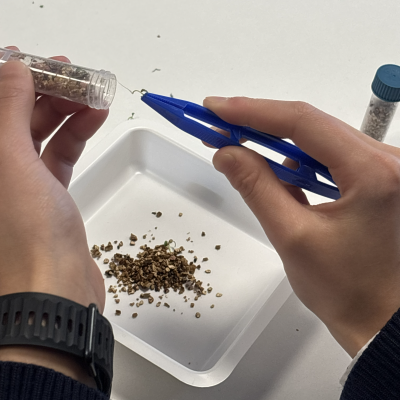
A student experimenting with their Mission Sprout kit.
Growing Australia’s space future
Mission Sprouts reflects the increasing maturity of Australia’s space sector and its focus on developing the talent needed to support future growth.
Research into growing plants in microgravity could help enable long-duration missions to the Moon and Mars. It could also generate benefits on Earth, including advances in agriculture, food security and health.
“Plants are essential to human life, whether we’re living on-planet or off. We’re thrilled that this program will showcase STEM as a powerful tool not just for exploring the universe, but for solving the food and sustainability challenges closest to home.”
~ Associate Professor Kim Johnson, Program Lead of the ARC Centre of Excellence in Plants for Space.
For industry, the program provides an encouraging glimpse of the emerging talent pipeline. It shows how collaboration across government, research and education can turn Australia’s space ambitions into practical opportunities for young people.
Most importantly, Mission Sprouts brings space science within reach. It shows students that pioneering research is not something that only happens overseas. It is happening here in Australia, and they can be part of it.
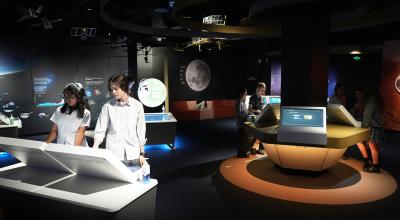
Making more space for schools
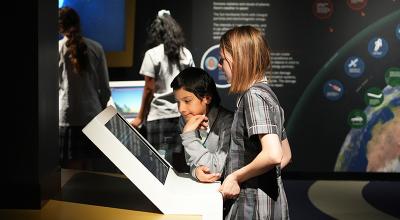
The Australian Space Discovery Centre is dedicating weekdays during school terms exclusively to delivering education programs.
Latest from the Australian space sector
Latest from the Australian space sector
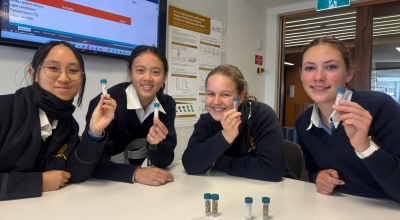


Main image: Students from Ruyton Girls School in Kew, Victoria with the Mission Sprout experiment. Credit: Swinburne University of Technology