You need a return authorisation (standard return) to return a space object to Australia or, as an Australian national, to return a space object outside Australia.  

Alternatively, if you are an Australian national with a payload being carried by another space object and being returned overseas, you will need a return authorisation (overseas payload).

A return authorisation (standard return) is not required if the return is part of a connected return covered by an Australian launch permit. 

The Agency's Office of the Space Regulator (OSR) can provide advice and guidance on whether you need a return authorisation and how to apply. 

Process

Acknowledging that a return authorisation requires substantial evidence to satisfy criteria under the Space (Launches and Returns) Act 2018¸ we take an iterative approach to the application process.  

Before applying you should read and understand the application guidelines.   

You first submit an expression of interest form through the Regulatory Application Hub. You should include supporting evidence demonstrating your current progress against application requirements. We review your expression of interest to determine whether you have sufficient information for the application process to commence.   

NOTE submitting an expression of interested is not an application submission. You will need to submit further documents.  

During this workshop we:  

  • establish the status of your application  

  • develop a shared understanding of application requirements that need to be met  

  • set and agree application submission and assessment timeframes  

  • clarify roles and responsibilities  

  • establish principles for how we engage throughout the application and assessment process. 

After the workshop we provide you with a copy of a customised application plan which will help guide you through the remaining stages of the application process.  

You submit application information in line with your application plan, uploading all documents to the corresponding application in the Regulatory Applications Hub.   

We commence assessment of completed information and seek clarification or provide feedback, as required.  

During the assessment process we consult with federal, state and territory authorities to see if there is any reason a standard return authorisation should not be granted. Reasons may include Australian security, defence, or international relations. We may request further information.  

When there is sufficient evidence you meet criteria for granting an authorisation, we make recommendations to the Minister (or their delegate).  

The Minister (or delegate) decides whether to grant the return authorisation, taking into consideration advice from the Agency.  

The Minister has discretion to seek further information from applicants and return authorisation holders.  

Costs and timelines

There are no fees for applying for a return authorisation, or for having your application assessed.   

Application timelines are typically about 6 months from when you have submitted sufficient information to commence the application process.   

For more information, download and read the latest guidelines available at the top of this page.  

Application criteria include

  • competence  

  • environmental approval 

  • insurance and financial coverage 

  • safety of design, construction, and operation (including flight path) aligning with Flight Safety Code 

  • Australia’s security, defence, or international relations 

  • whether your object is or contains a nuclear weapon or weapon of mass destruction 

  • risk hazard analysis aligning with the Flight Safety Code 

  • if applicable, the terms of agreement or arrangement between Australia and the launching State. 


NOTE This list is not exhaustive. For more information, download the latest guidelines available at the top of this page.  

Submit your EOI

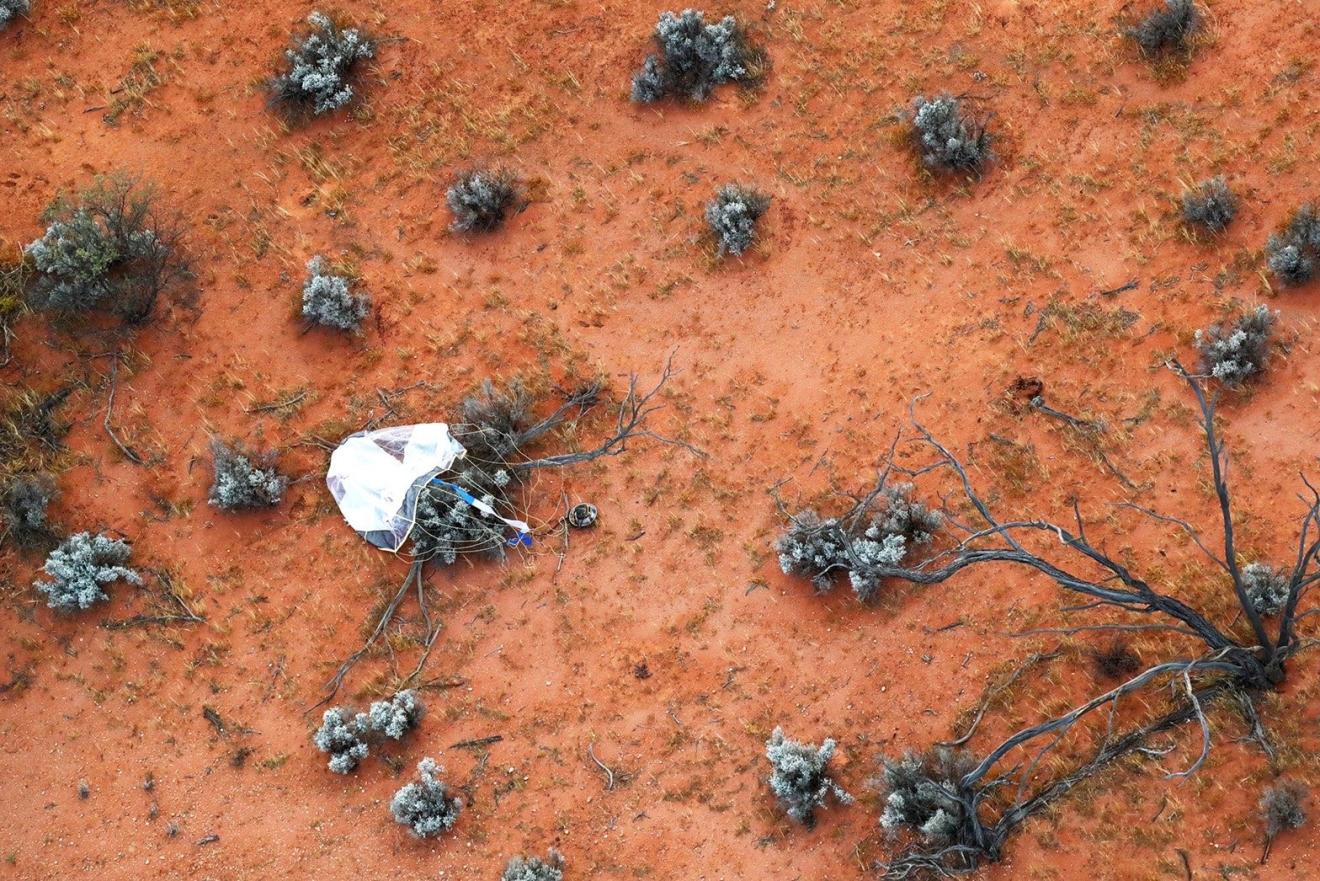
Caption: In 2020, a capsule (pictured above) landed in regional South Australia. It was as part of Hayabusa2, a JAXA’s asteroid sample-return mission that the Agency had supported. 

Latest from the Australian space sector

Students must design, test and build a prototype

Young Aussie kids invited to take on Mission: SPACE challenge

NEWS • Inspiring Australia

20 March 2026

Expressions of interest are now open for this national program will be delivered by Scitech and is powered by the Australian Space Agency to shape the imaginations and capabilities of the next generation.

Read more
Chris Shaw, CEO and co-founder of Advanced Navigation with miniaturized inertial system

$50 million NRFC investment for Aussie Earth and space navigation technology

NEWS • National capability

18 March 2026

Funding from the National Reconstruction Fund Corporation boosts Advanced Navigation's valuation to more than $1 billion.

Read more
SLS and Orion lifted off from Launch Complex 39B at Kennedy at 1:47 a.m. EST on Nov. 16, illuminating the night sky. An initial assessment showed the rocket performed with precision, meeting or exceeding all expectations during its debut launch. NASA/Joel Kowsky.

A Century of Lift‑offs

NEWS • Space history and culture

16 March 2026

Robert Goddard, assisted by his wife Esther, sent the first liquid-fuelled rocket aloft on 16 March 1926. Explore with our interactive image gallery how far the technology has come, since he lit the fuse on a tiny rocket 100 years ago!

Read more
space technology

Roo-ver Research: The University of Melbourne

NEWS • Industry showcase: Space spotlight

10 March 2026

With temperatures ranging between hundreds of degrees on the Moon, the University of Melbourne is managing the temperature of Australia’s first lunar rover.

Read more
A digital poster for Ausralian Rover Challenge 2026

Special event: Inside Australia's first Moon rover program

NEWS • Inspiring Australia

5 March 2026

Join us at the Australian Space Discovery as we will live stream Adelaide University's 2026 Australian Rover Challenge and host a special hybrid event about Roo-ver.

Read more
A view of earth from space from Australia’s SpIRIT nanosatellite

Small sat, big step: Aussie SpIRIT concludes operations after landmark success

NEWS • Australian Space Agency

4 March 2026

Ending more than 25 months of pioneering operations in orbit, the novel nanosatellite was supported by Australian Space Agency with almost $7 million in grants.

Read more

Our department recognises the First Peoples of this Nation and their ongoing cultural and spiritual connections to the lands, waters, seas, skies, and communities.

We Acknowledge First Nations Peoples as the Traditional Custodians and Lore Keepers of the oldest living culture and pay respects to their Elders past and present. We extend that respect to all First Nations Peoples.