Decades of space cooperation will soon bring Mars closer to Earth.
As Japan prepares to launch one of the world's most ambitious deep space missions, Australia is once again set to play a crucial role in a scientific journey that stretches millions of kilometres beyond Earth.
The Japan Aerospace Exploration Agency's (JAXA) Martian Moons eXploration (MMX) mission is edging closer to launch – marking the latest chapter of almost 50 years of space cooperation between Australia and Japan.
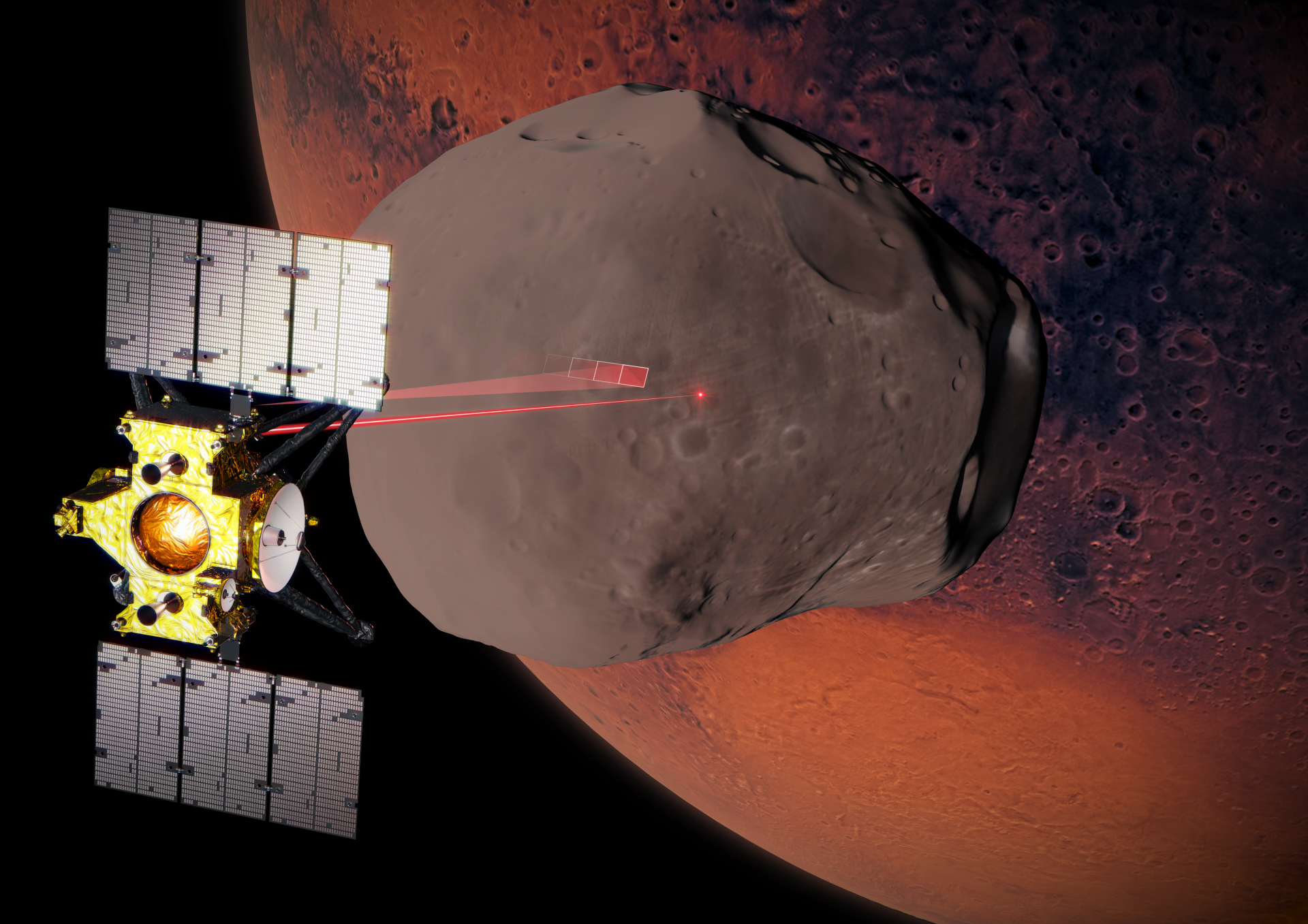
MMX will collect samples from Phobos, the larger of Mars’ two moons, and return them to Earth. In 2031, South Australia is expected to welcome the mission’s sample return capsule, continuing Australia’s proud history of supporting Japanese spacecraft returns.
The mission reflects the enduring strength of the partnership between Australia and Japan, which has grown from sharing satellite data and conducting joint research to supporting historic sample return missions and inspiring the next generation through space education.
It also demonstrates Australia’s growing contribution to some of the world’s most significant space endeavours.
A partnership built over decades
Australia and Japan have worked together in space since the 1970s, collaborating across weather forecasting, Earth observation, space science and advanced aerospace research.
For many Australians, the benefits of this cooperation appear every evening during the weather report.
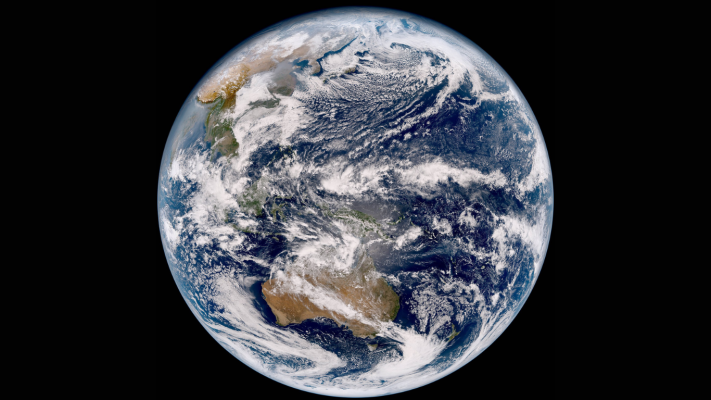
Since 1977, imagery from Japan’s Himawari weather satellites has provided vital data for Australian weather forecasting and modelling. The latest satellite in the series, Himawari-9, continues to deliver high-resolution imagery used by meteorologists and broadcasters across the country.
Cooperation between the two countries has extended well beyond meteorology. During the late 1980s and early 1990s, Australia received Earth observation data from Japan’s Marine Observation Satellite-1.
Australian and Japanese researchers have also worked side by side on scientific programs ranging from high-altitude balloon campaigns in Central Australia to advanced astrophysics research in the South Australian outback.
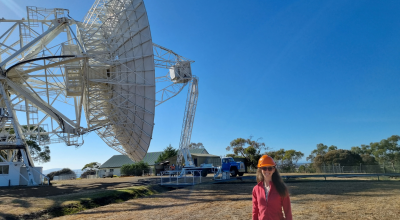
One of the most notable collaborations was the CANGAROO gamma-ray observatory near Woomera, where Australian and Japanese researchers spent two decades studying some of the universe’s most energetic phenomena.
Together, these projects established a strong foundation of scientific exchange, shared expertise and trust between the two countries.
About 50 years of space cooperation
Since 1977, a major source of Australia’s satellite weather imagery has been satellites of the Geostationary Meteorological Satellite Himawari series operated by the Japan Meteorological Agency.
Visible and infra-red images from Himawari-9 are seen every day during the weather reports on Australian television.
Data from Himawari satellites has also provides significant input into current Australian weather modelling.
In this decade, Japanese researchers conducted scientific ballooning campaigns from Alice Springs and other sites in Australia.
A tracking station located at Tidbinbilla in the Australian Capital Territory, and a Japanese radio telescope were used in conjunction with NASA's Tracking and Data Relay Satellites (TDRS). These infrastructures were used to create a Very Long Baseline Interferometer (VLBI), with a baseline 2.16 times the diameter of the Earth, to study remote radio sources in deep space.
This was a precursor to Japan’s VSOP (VLBI Space Observatory Program) satellite, which operated between 1997 and 2005
Australia received remote sensing data from Japan’s Marine Observation Satellite-1.
Through this decade, Australia served as a test and landing location for several Japanese space projects.
This included thirteen tests of the ALFLEX (Automatic Landing Flight Experiment) technology demonstrator vehicle for Japan’s HOPE spaceplane development program were conducted at Woomera in 1996, with further landing test of the High-Speed Flight Demonstration (commonly referred to as HSFD) vehicle undertaken at Christmas Island in 2002.
Australian and Japanese universities and research institutes collaborated on the CANGAROO project (Collaboration between Australia and Nippon for a Gamma Ray Observatory in the Outback) in the field of high energy astrophysics.
This involved the development of a gamma ray telescope at a dark site 12 km north of Woomera.
JAXA returned to Woomera for test flights of a scale model of its NEXST-1 supersonic transport aircraft, providing new sounding rocket infrastructure that has since served Australian scramjet research, in which Japan’s National Aerospace Laboratories has also participated.
Japan generously provided the launch of Australia’s technology demonstrator satellite FedSat (Federation Satellite) as a gift to Australia in celebration of the Centenary of Australian Federation.
FedSat, Australia’s first locally developed satellite since 1970, was designed to showcase Australia’s growing capabilities in the field of space technology.
It was launched from the Tanegashima island, the same location as the upcoming MMX mission.
On 13 June 2010, Hayabusa (JAXA’s first asteroid sample-return mission) successfully returned to Earth after landing on a small asteroid named Itokawa.
It was retrieved from the Woomera Prohibited Area, with the Australian Government and JAXA working closely to ensure the re-entry activities were safe.
Australia partnered with JAXA on its Hayabusa2 Return mission. The Australian Space Agency led a whole-of-government approach to successfully retrieve an asteroid sample that landed in South Australia’s Woomera Prohibited Area.
This was also regarded as complex operation as the return mission occurred during the COVID-19 pandemic.
The Australian Space Agency formalised a partnership with JAXA on its mission in 2023, which will see samples from the Martian moon, Phobos, land in South Australia in 2031.
The Australian Space Agency co-hosted the Asia Pacific Regional Space Agency Forum with JAXA in Perth in November 2024.
During the World Expo in Osaka, Japan, the two nations showcased their space partnership and growing opportunities between the space sectors
From October 2025, an asteroid sample from Ryugu and a Hayabusa2 1:20 scale model has been on display at the Australian Space Discovery Centre in Adelaide, Australia.
From testing technologies to returning spacecraft
Australia’s vast landscapes, technical expertise and world-class infrastructure have also made it a valuable partner for testing experimental technologies and supporting the safe return of spacecraft.
Throughout the 1990s and early 2000s, Japanese aerospace teams conducted advanced flight experiments in Australia, including landing tests for reusable spacecraft technologies and supersonic flight demonstrators.
Australia later played a central role in the return of JAXA’s Hayabusa and Hayabusa2 missions, which delivered precious asteroid samples to the Woomera Prohibited Area.
The successful recoveries demonstrated Australia’s ability to support highly complex international missions and strengthened its reputation as a capable and trusted space partner. They also established valuable experience that will help Australia prepare for the return of MMX.
This longstanding partnership has also supported important milestones for Australia.
In 2002, Japan launched FedSat, Australia’s first locally developed satellite in more than three decades, from the Tanegashima Space Center. The mission showcased Australia’s emerging space technology expertise and marked the first international payload launched aboard Japan’s H-IIA rocket.
From satellite launches and Earth observation to research and spacecraft recovery, cooperation with Japan has supported Australia’s space capabilities while delivering benefits to both nations.
Australia's role in the journey to Mars
In 2023, the Australian Space Agency and JAXA formalised their cooperation on MMX, paving the way for Australia to support another historic sample return mission.
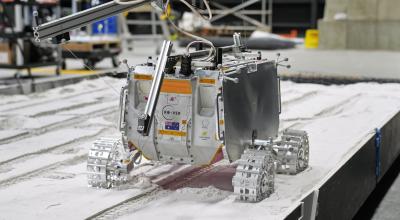
MMX aims to investigate the origins of Mars’ moons, Phobos and Deimos. By studying samples collected from Phobos, scientists hope to better understand how the Martian system evolved and how water may have been delivered to the inner solar system.
The mission will also demonstrate technologies required for future deep-space exploration, including capabilities that could support robotic and human missions farther into the solar system.
Australia’s support for the capsule’s return in 2031 will build on decades of cooperation with Japan and the experience gained through the Hayabusa missions. It will also provide opportunities for Australian researchers, engineers, government agencies and industry to contribute to a globally significant scientific endeavour.
MMX is therefore more than a single mission. It brings together the defining elements of the Australia–Japan space relationship: scientific discovery, technological cooperation, trusted operational support and a shared commitment to the future.
Inspiring the next generation
That shared commitment also extends to education.
In partnership with JAXA, the Australian Space Agency is supporting two major space education opportunities for students this year: the Space Harvest Ideathon and the Kibo Robot Programming Challenge (Kibo-RPC).
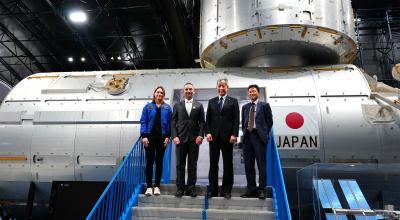
Kibo-RPC introduces students to coding, robotics and engineering by challenging teams to program free-flying robots aboard Kibo, the International Space Station’s Japanese Experiment Module.
Space Harvest complements this experience by encouraging students to explore space biology, agriculture and the challenges of sustaining human life beyond Earth.
Together, the programs give Australian students practical exposure to the diverse skills that will underpin future space missions, from robotics and automation to food production and sustainable habitation.
These education initiatives bring the Australia–Japan partnership into classrooms and give young Australians an opportunity to participate in the same spirit of international collaboration that has supported satellites, scientific research and sample return missions for more than five decades.
As Australia prepares to help bring samples from another world safely back to Earth, MMX represents more than a scientific milestone. It demonstrates how sustained international cooperation can unlock discoveries beyond the reach of any one country, while creating new opportunities for Australian researchers, engineers, educators and technology companies.
For students watching today’s Mars missions unfold, the return of MMX in 2031 could become a defining moment, inspiring the scientists, innovators and explorers who will shape the next chapter of Australia’s future in space.
Applications open for Space Harvest Ideathon
This Agency-backed initiative is giving young Australians hands-on experience in solving future food production challenges for space exploration.
Main image caption: Image taken by Japan's Himawari 9. Credit: Japan Meteorological Agency